| Name | CT3I Improved The “Green Phone” |
| Date | early 1970s-2000 |
| Manufacturer | Amritsu |
| Usage | Boothes |
| Notes | Various technological improvements (see below) |
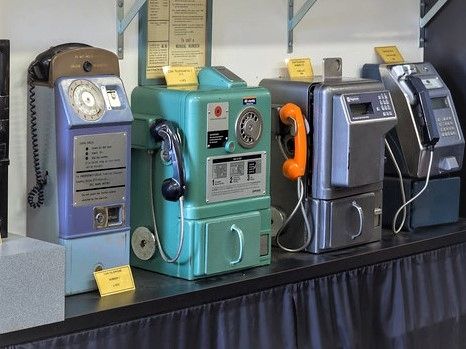
| Further notes |
| CT-03 Improved (CT3I) The “Green Phone” Originally introduced in the early 1970s, the improved version of the CT3—popularly known as the “Green Phone”—became a familiar sight across Australia. Built by Anritsu and often painted in lime green or later in grey/silver, it remained widespread until the 1990s. These phones became prime targets for theft. In response, Telstra introduced the Kirk Safe in 1986, named after its inventor, Telecom technician Alan Kirk. This heavy-duty modification dramatically improved the coin safe’s security. A Sydney Morning Herald article (17 October 1987) highlighted the issue, citing one Fairfield East phone box that was robbed twice within 18 months prior to receiving a Kirk Safe. In 1986 alone, there were reportedly up to 1,200 attempted robberies. Other upgrades included: -Reinforced handset cords -Upright coin plates to prevent damage from liquids -Stainless steel dials replacing plastic ones -Push-button keypads introduced in later years -Modified coin return chutes to prevent coin traps -Improved sealing against piezoelectric “spark gun” tricks Though now rare, the Green Phone was once ubiquitous and easily identifiable by its red coin warning light and prominent “Do not press unless instructed by operator” button. |
 Pay phone Story
Leave a comment