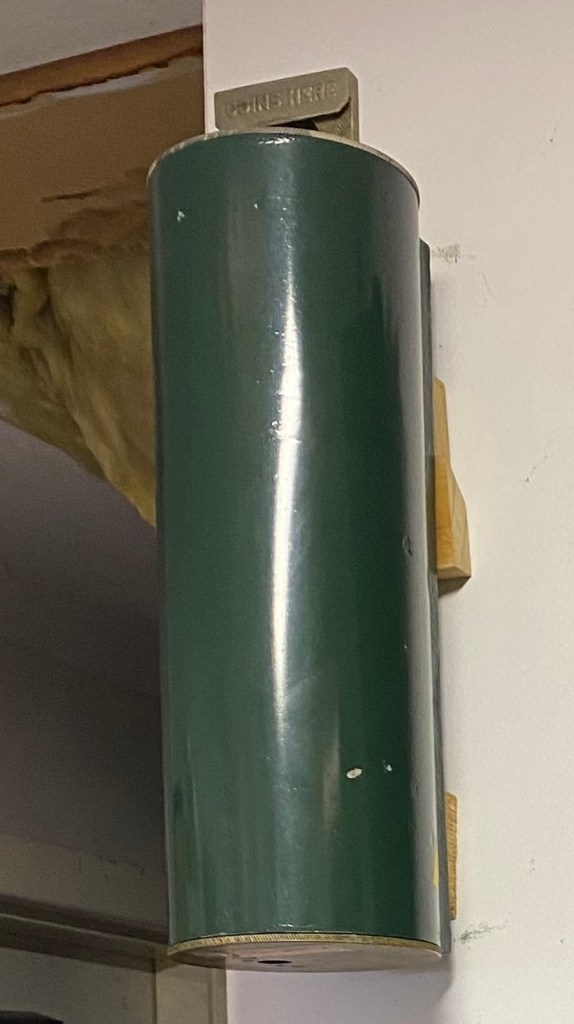
| Name | Coin Box- Cylindrical |
| Date | 1920 |
| Manufacturer | PMG |
| Usage | Supervised location |
| Notes (see full notes below) | Coin box that was connected to a handset. The precursor to the Variable Tarif public telephone. |
| Coin receptacle or container of which there were three main varieties; although there were also local versions in some other states. |
| DEVELOPMENT OF THE PUBLIC TELEPHONE IN NSW |
| Records indicate that the first public telephone in New South Wales was provided at the Telegraph Receiving Room at the GPO on 8th March, 1983. Even by 1893 the fledgling telephone system had made inroads into the established means of communication, but commerce and general public alike still remained dependent on the telegraph system. It was perhaps appropriate therefore, that the first public telephone should support the existing telegraph system that it would eventually, once trunk lines were established completely replace. 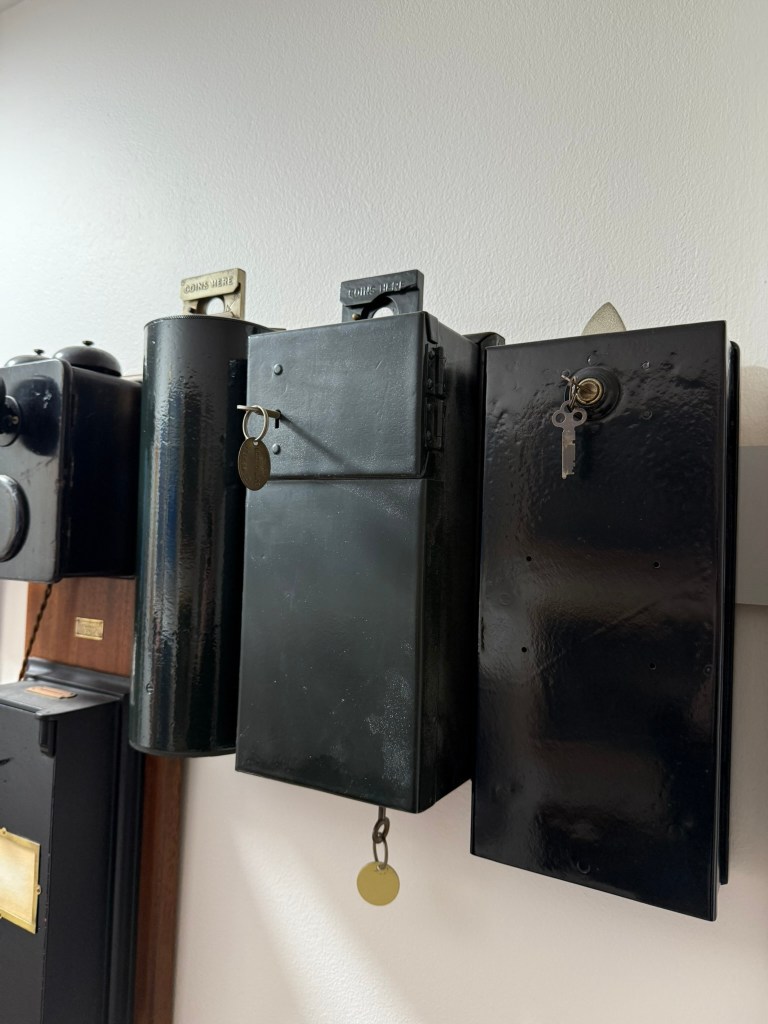 The numbers of and demand for, public telephones increased and by the 1914-18 war a network of public telephones were established at all official post offices in builtup areas and large numbers of unofficial post offices in country areas. The telephone instruments used were the same as those provided for subscribers by the PMG. Not much is known about instruments before 1914-18 except that Commonwealth Ericsson instruments were widely used in country areas. In association with the telephone instrument itself was a coin receptacle or container of which there were three main varieties (Fig.2,3,4); although there were also local versions in some other states. 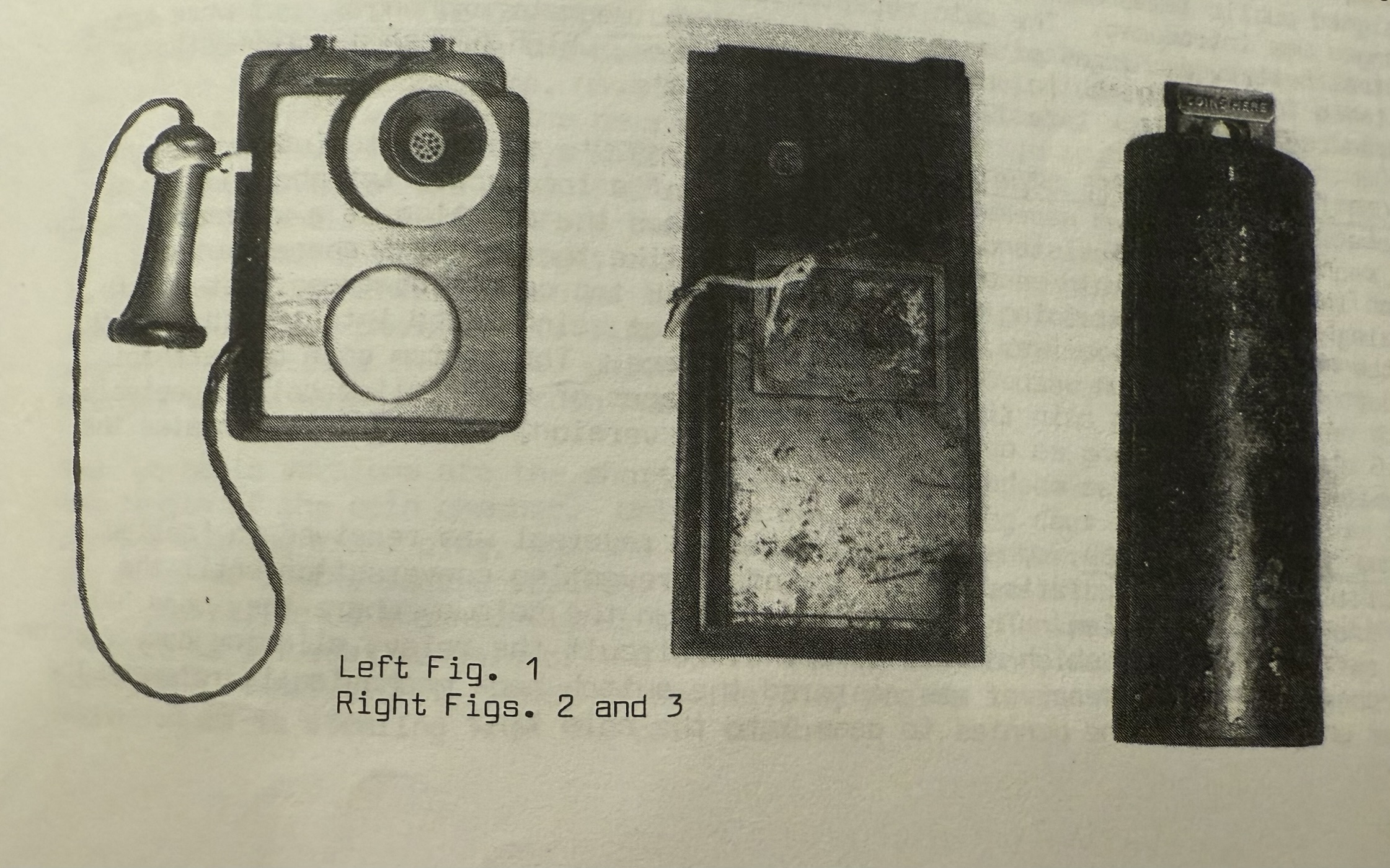 To make a call from a public telephone you first pre-paid over the counter at the post office, and were then assigned to an instrument usually housed outside or on the verandah (in a silence cabinet) at the post office. The operator manually called up the other party and then reverted the call to the caller. It was inevitable that pre-payment at the telephone was adopted as it was much more convenient than prepayment at a counter for a party which might not be available. The coin containers allowed for pre-payment ‘on answer’. The operator was first raised and then she obtained the called party then requested payment from the caller. Coins inserted (at first one penny and later two pence local call fee) into the coin receptacle via the coin head, and these passed down the coin chute and on the way tripped a small weighted pendulum (see Fig.5) which vibrated causing two springs connected in the transmitter circuit of the telephone to make intermittent contact, thus creating a buzzing noise which indicated to the operator the number of coins inserted. There was of course no provision for refund. Trunk lines were established intra state extensively to 1910 and after that date, inter state routes were provided. These calls were still pre-paid over the counter at major centres. An installation peculiarity was that particular attention was necessary on installation to ensure that the mounting was rigid and that the springs were correctly adjusted so that well aimed blows on the side of the case did not generate false deposit signals. The system of pre-payment on answer continued until about 1935 when an explicitly designed public telephone to take advantage of the changes in the operation of exchanges was introduced. The coin receptacles had worked well on city manual or central battery exchanges or on country manual and magneto exchanges, but were not suitable for semi automatic and automatic exchanges, which had been progressively introduced through the late 1920s and early 1930s. 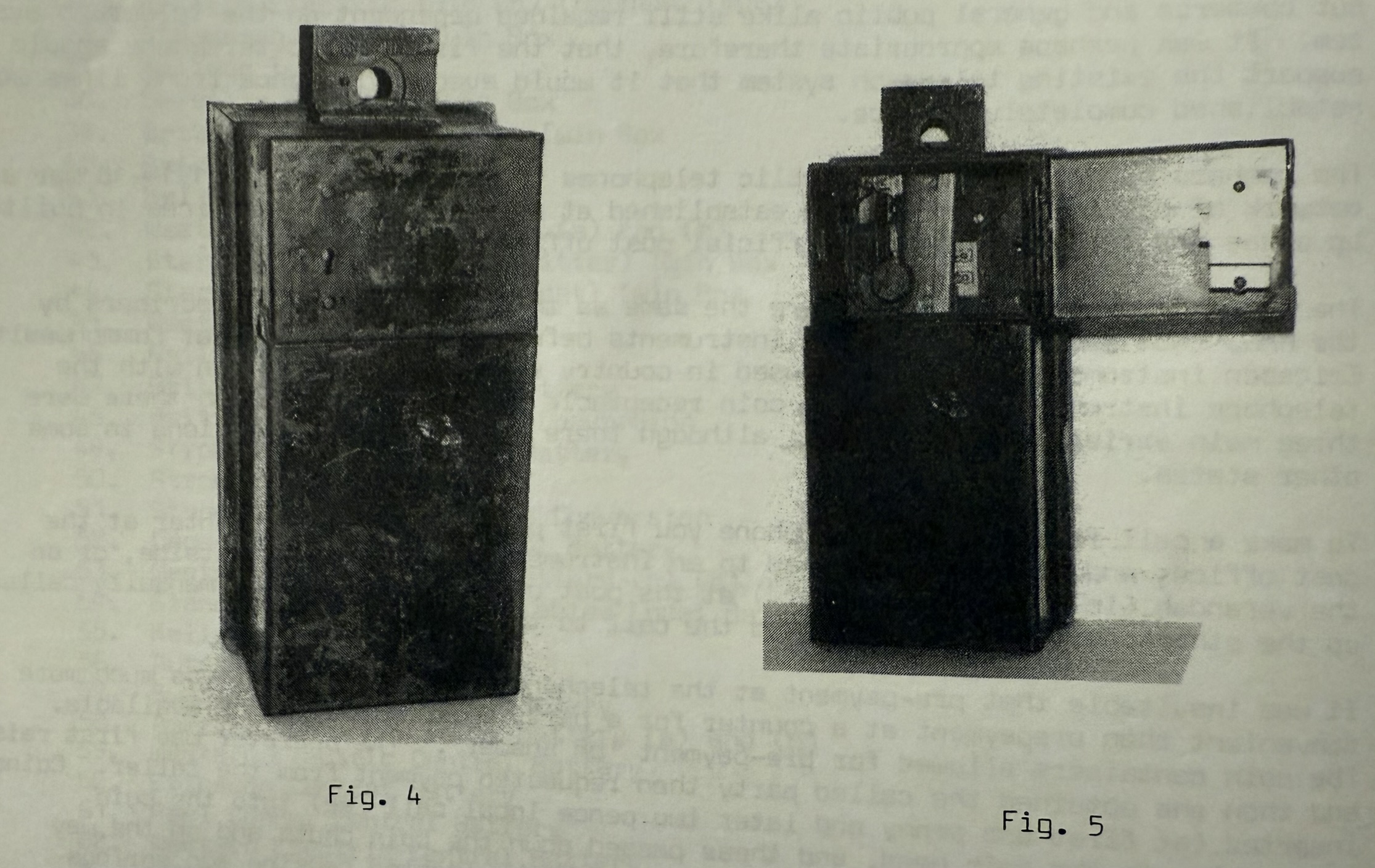 Source- (with thanks to) History of the telephone in New South Wales / by Jim Bateman [Croydon, N.S.W.] : J. Bateman, 1980 ISBN: 0959478701 |
 Pay phone Story
Leave a comment