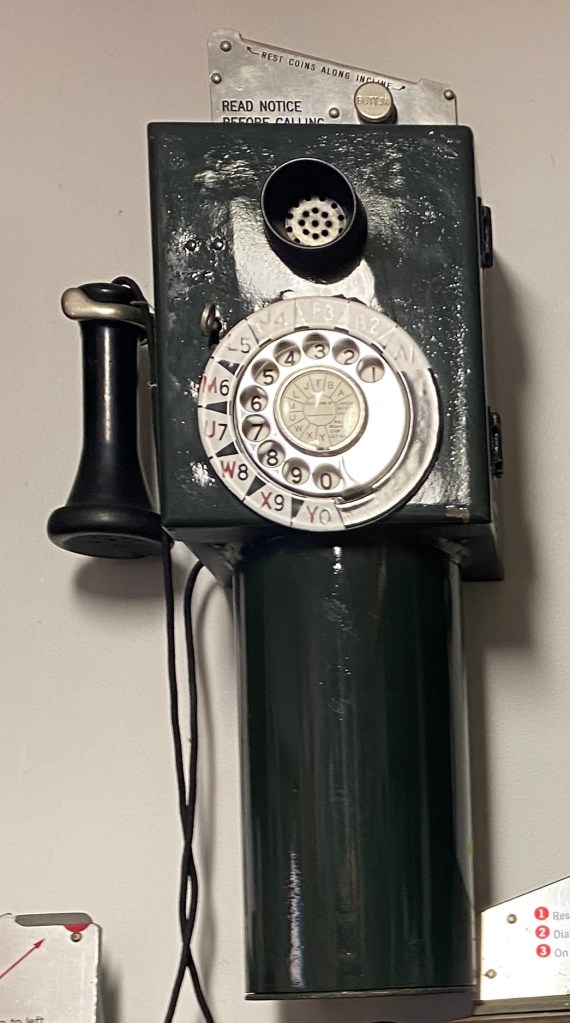
| Name | Variable Tarif Short Barrell Green |
| Date | 1930 |
| Manufacturer | PMG Sydney Workshops |
| Usage | Supervised locations |
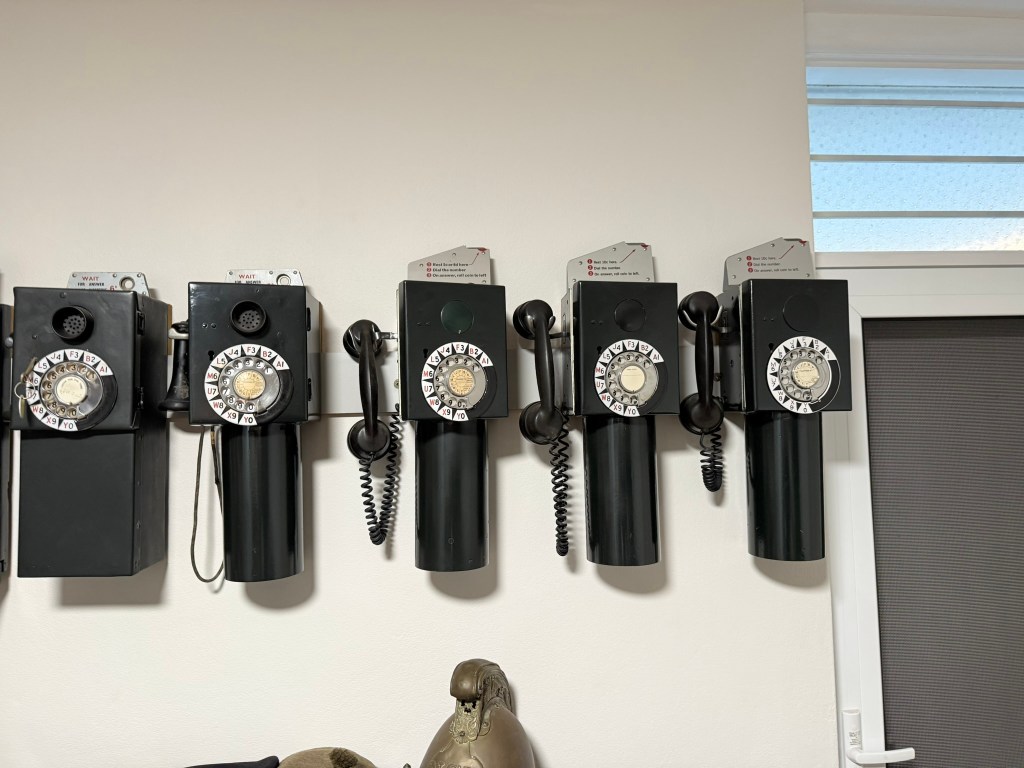
| Notes | The Short Tom- everyone’s favourite! |
| See more notes below. |
| Further notes |
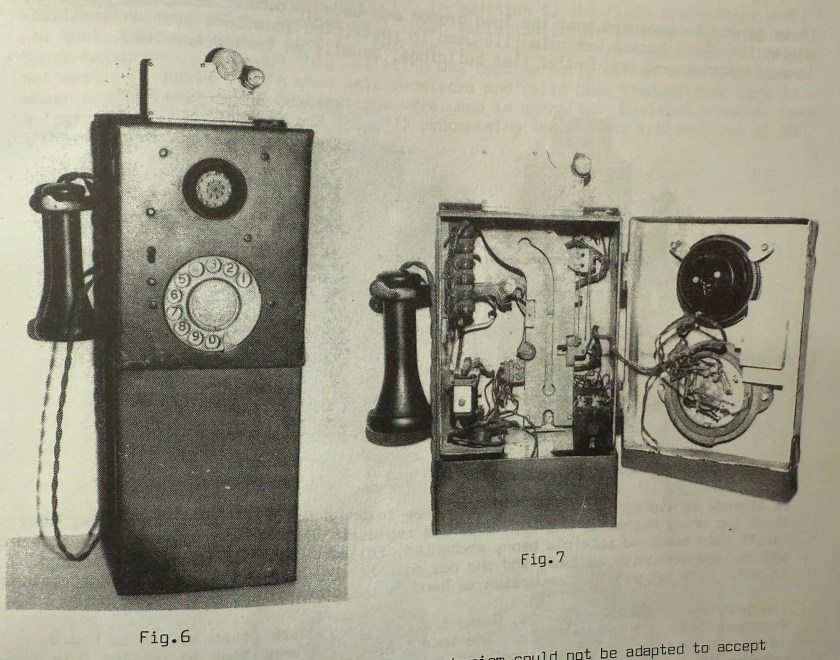 AUTOMATIC FIXED UNIT FEE OPERATION (BARREL TYPE): A variation of the type depicted in Figs. 6 and 7 above was the barrel version which had the same mechanism, but varied in outward appearance, having a round coin receptacle. This type was introduced in the 1920s during the days of two-pence operation and was adapted through the years in a variety of ways which will be discussed later, eventually being withdrawn finally in the late 1970 1 s in conjunction with the Coin Telephone No.3 program. In their original form they looked and worked as in Fig.7 and later as in Figs. 11 and 12 with straight coin chute to overcome problems in jamming. The barrel type is generally known as the Variable Tariff instrument, but this term applies only to a phase of its life when it was fitted with an adjustable penny mechanism (depicted in Fig.14) which allowed for tariff changes without serious changes to the mechanism or coin head. 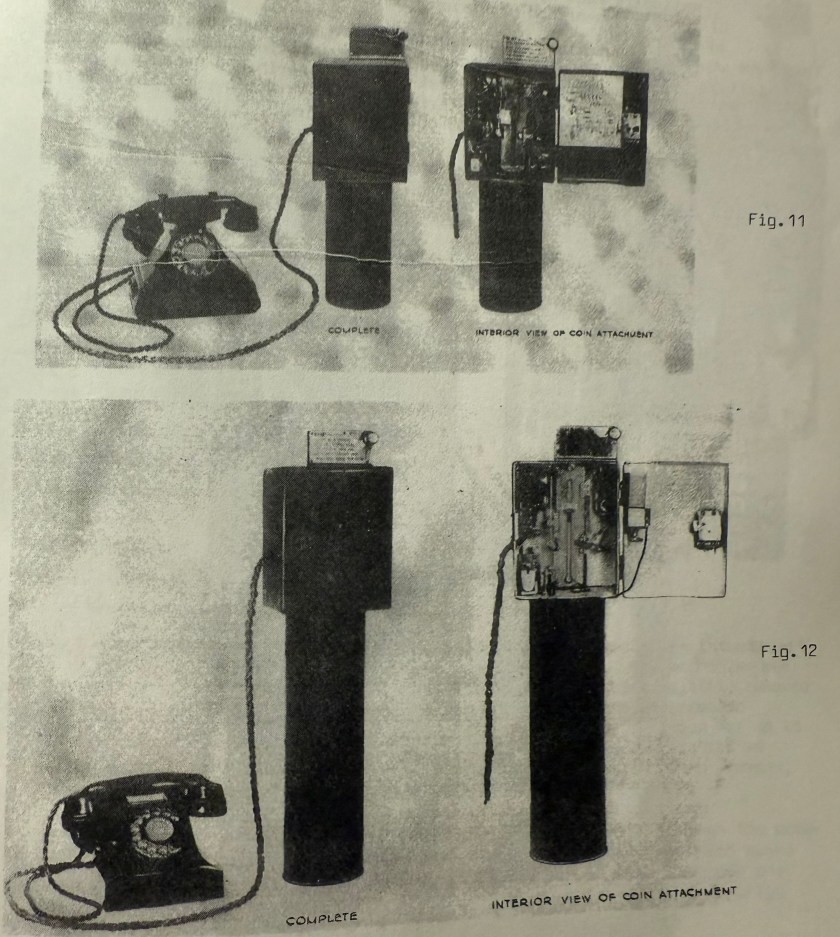 The two basic versions are the short breech and the long breech, which reflected the length of the coin chamber. Unlike a bottom opening door as in Fig.6 these had a thick locking brass plug, and the barrel itself was thick steel rather than pressed metal as in the square version. They were vandal resistant for their day but all types relied on a conventional lock to open the mechanism compartment, which did not seem to interest vandals of the time, who if the money was secure left the instrument itself alone. Today of course they are as interested in •smashing up the mechanism as in stealing from the coin chamber. 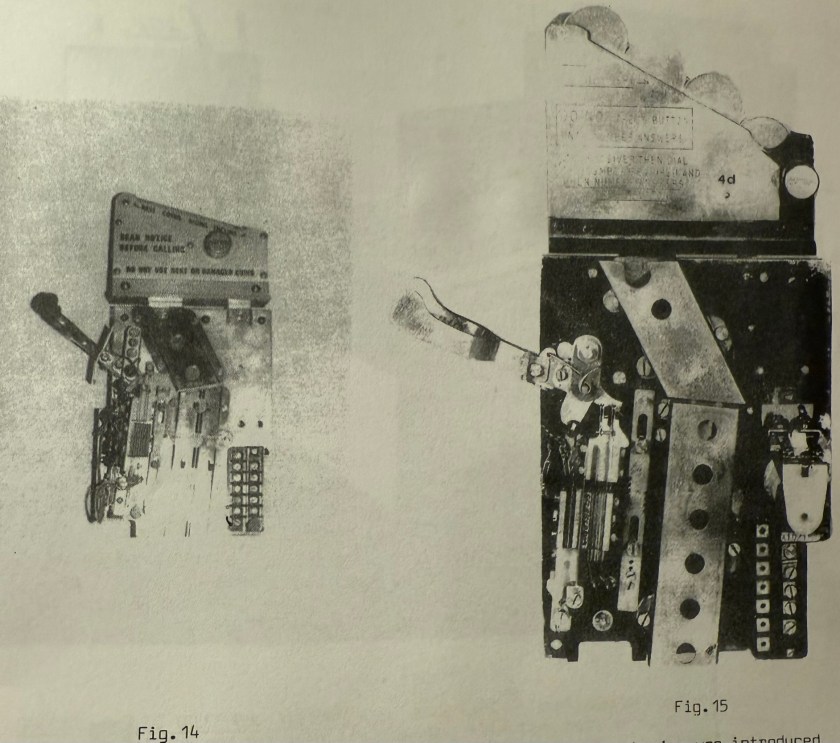 It_is generally accepted that the long breech was used in public telephone cabinets whilst the short breech was primarily used in restricted locations such as institutions, factories and residential flat buildings, usually as leased services. As already mentioned the instrument above was to undergo several basic changes; the above two penny mechanism and coin head was replaced in 1955 by the four penny Variable Tariff coin head and multiple penny mechanism, followed by the six penny coin head and revised mechanism in 1964, and the new coin head in 1966 and the ten cent revision in 1975, with progressive conversion to handset operation. ‘ 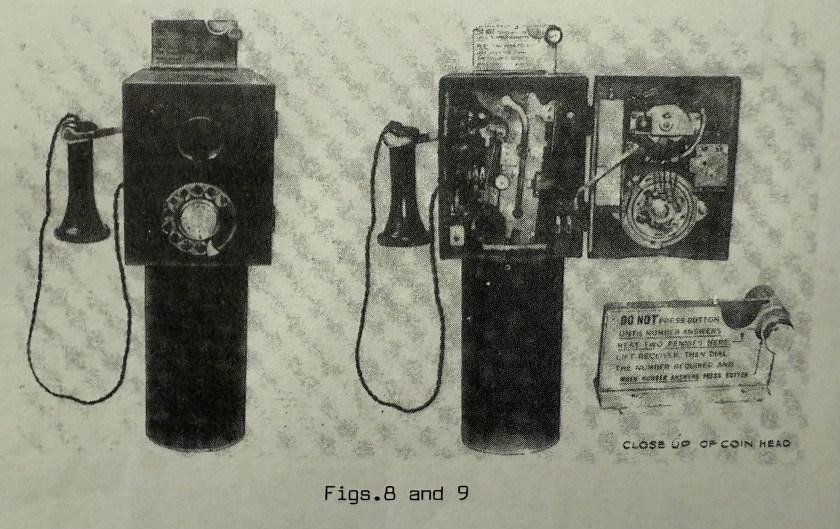 The instruments depicted in Figs. 6 and 8 were painted dark green and as in Fig.8 featured solid back transmitters. The insert type of transmitter as in Fig. 6 is a later modification. The bell receivers were P.MG pattern with rubber grumet to ease wear on the cord, and they were in the above period generally painted dark green. Source- (with thanks to) History of the telephone in New South Wales / by Jim Bateman [Croydon, N.S.W.] : J. Bateman, 1980 ISBN: 095947870 |
 Pay phone Story
Leave a comment