| Name | Tritel Payphones |
| Date | 2000 |
| Manufacturer | Payphone- Protel 7800 |


| Further notes |
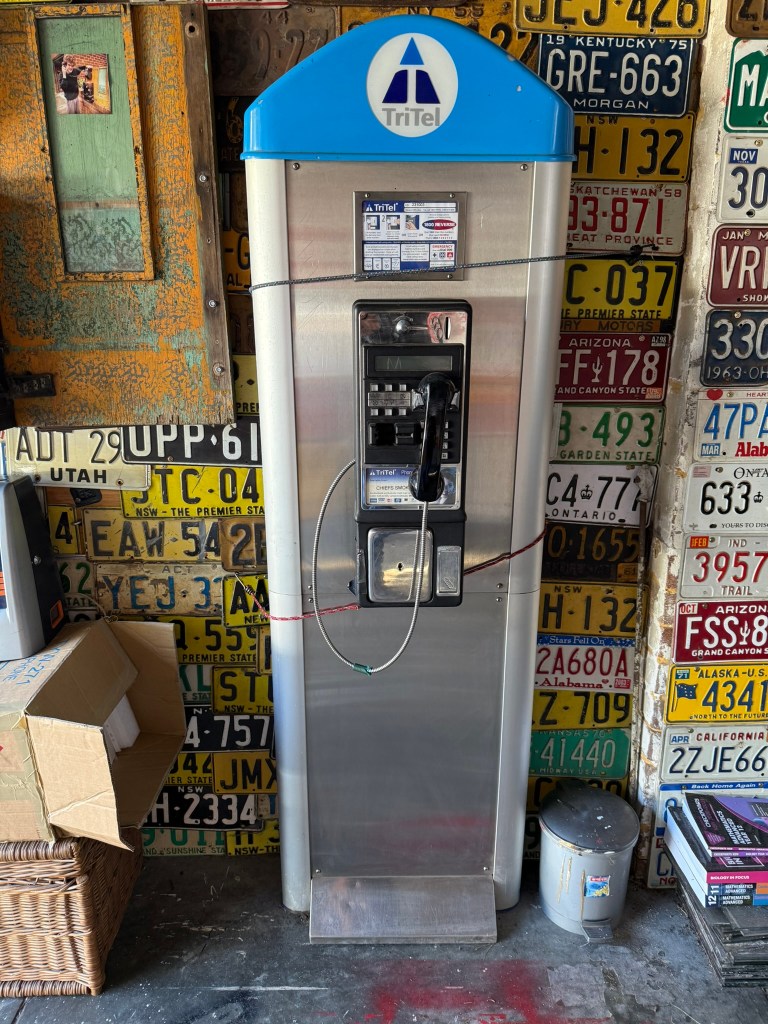
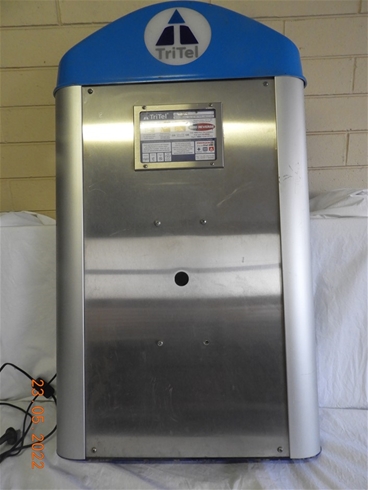
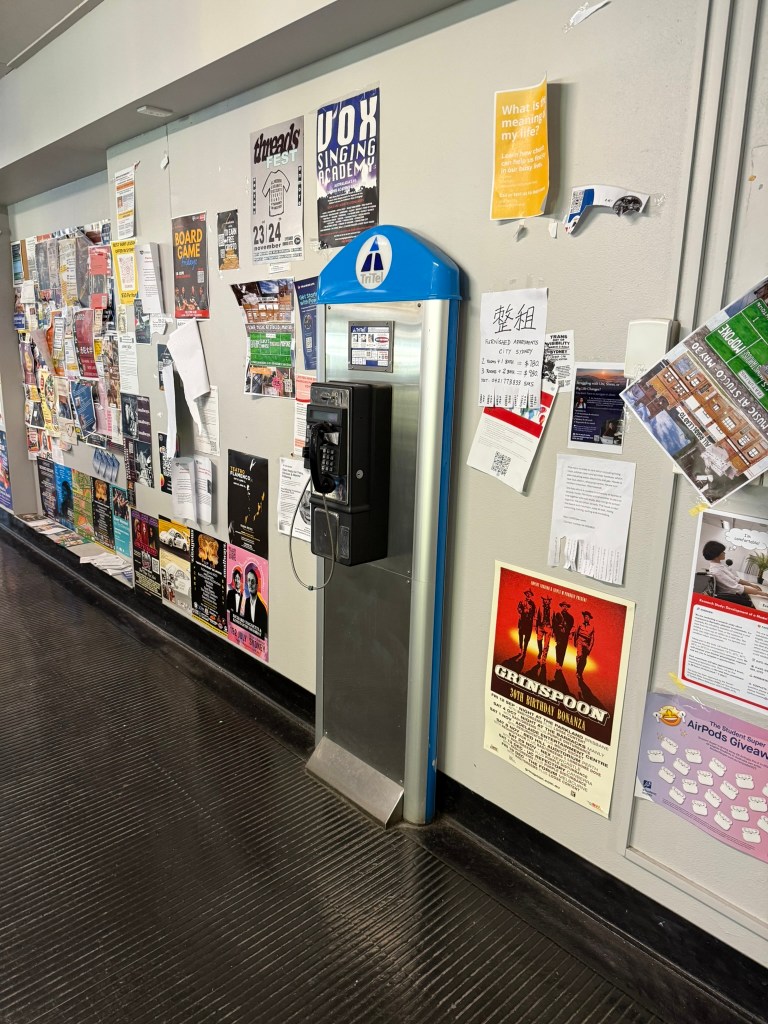
| TriTel Australia Pty Ltd, based in Sydney, emerged as a smaller competitor in the Australian payphone market, which was predominantly controlled by Telstra. In 1999, TriTel raised concerns with the Australian Competition and Consumer Commission (ACCC) regarding difficulties in obtaining wholesale local call pricing and access to Telstra’s smartcard technology. Following these concerns, Telstra agreed to engage in discussions with TriTel and allowed them to become a wholesale customer, with the ACCC monitoring the negotiations to ensure fair competition. Below- Tritel spotted at Wentworth cafeteria at Sydney University in June 2025. No dial tone. |
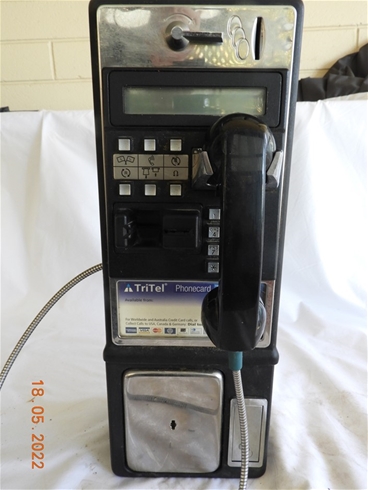
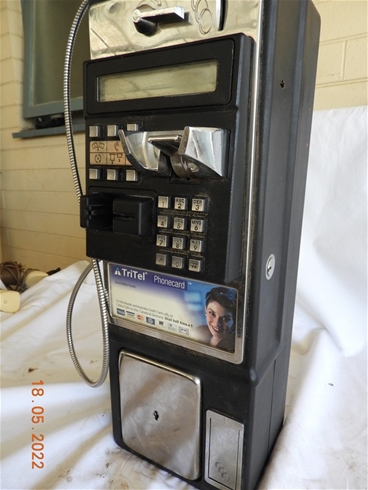
| The Protel 7800 is a payphone model produced by Protel Inc., a company that was one of the major global manufacturers of payphones starting in the 1980s. Protel’s payphones, including the 7800, were part of a broader family of Customer-Owned Coin-Operated Telephones (COCOTs) — phones owned and operated by private entities rather than national telecommunications monopolies. The “7800” designation refers to a specific circuit board/chassis version used in COCOT payphones; enthusiasts and collectors refer to it by that model number (often alongside other Protel boards like the 310, 2000, 7000, and 8000). Users online describe the Protel 7800 payphone as: A unit sometimes sporting LCD or VFD displays (uncommon compared with more basic coin phones). Notoriously tricky to program via modem/software, at least compared with some other Protel models. Manufacturer: Protel Inc. Founded: 1983. Specialty: Payphones built around patented “Smart Line Powered Technology” — meaning the phone electronics were powered directly from the telephone line with no external power supply. Global Reach: In the 1980s and later, Protel sold over one million payphones and deployed them in 72+ countries worldwide. Protel payphones were a staple of many customer-owned payphone operations, especially in North America, where deregulation and the emergence of COCOTs in the 1980s–90s enabled companies other than Bell/GTE to enter the payphone business. Use Around the World Protel payphones — including units based on the 7800 platform — were seen in: North America (USA & Canada): The largest concentration was in the U.S. and Canada, where independent COCOT operators used Protel electronics inside traditional housings or custom installs. Over 70 Other Countries: Protel reported installs globally across Africa, Latin America, Europe, and Asia during its peak sales era. These phones often operated on standard analog phone lines (POTS/COCOT/B-1) and were installed in public areas, businesses, and private lots. Typically a COCOT payphone like a Protel 7800 would: Accept coins (quarters, dimes, nickels). Be line-powered (no mains power needed). Support voice prompts and optional displays. Be programmable for call rates and telephone numbers via software or keypad. |
 Pay phone Story
Leave a comment