| Name | Earliest Cabinets |
| Date | Pre-1930 |
| Manufacturer | PMG |
| Usage | Public call box |
| Notes | See below |

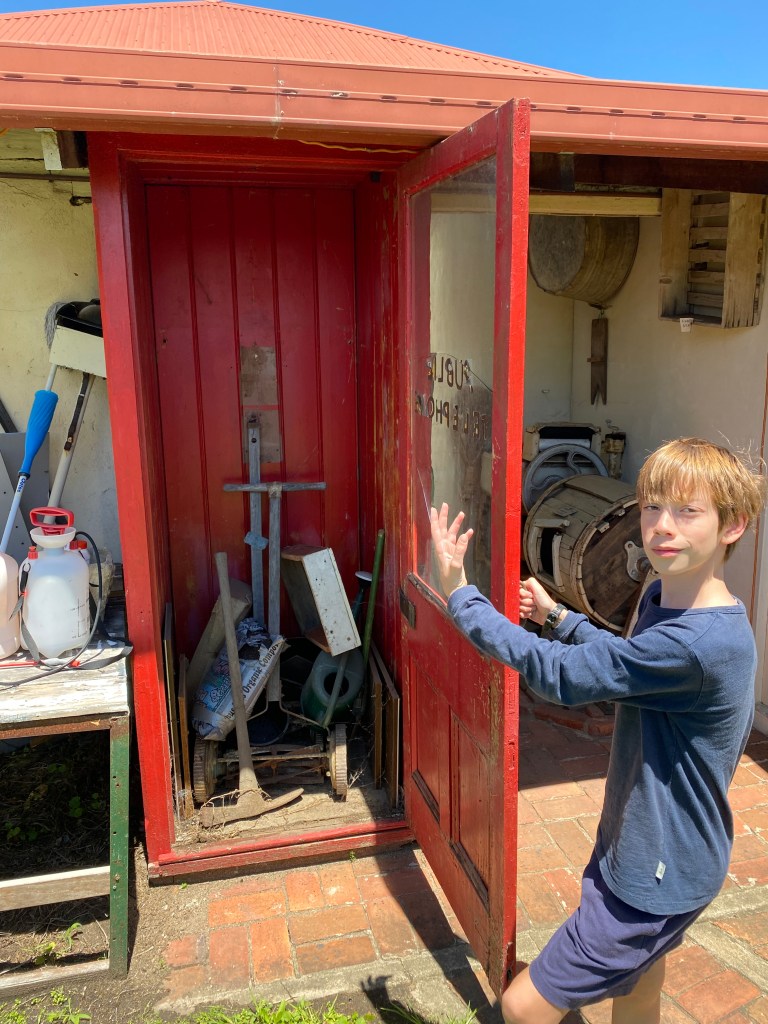
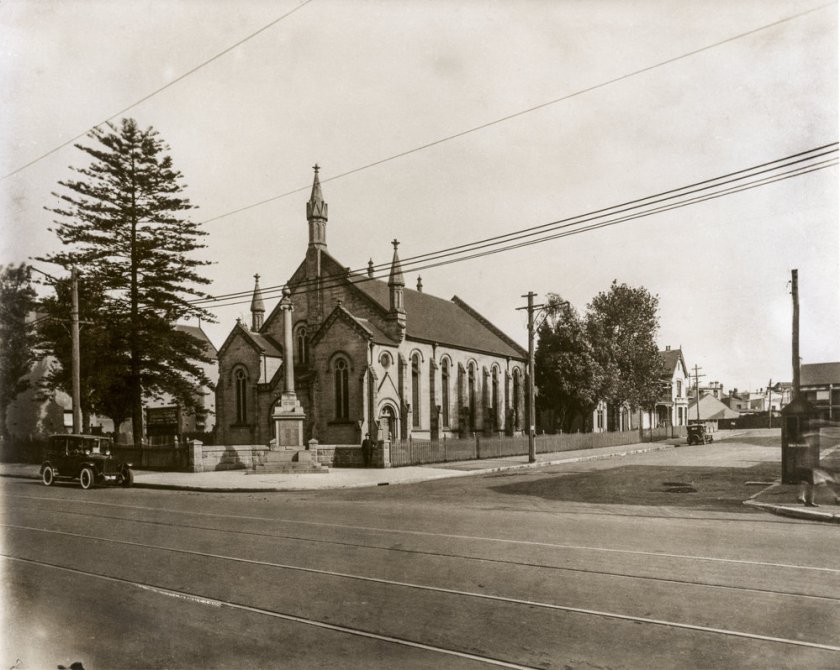
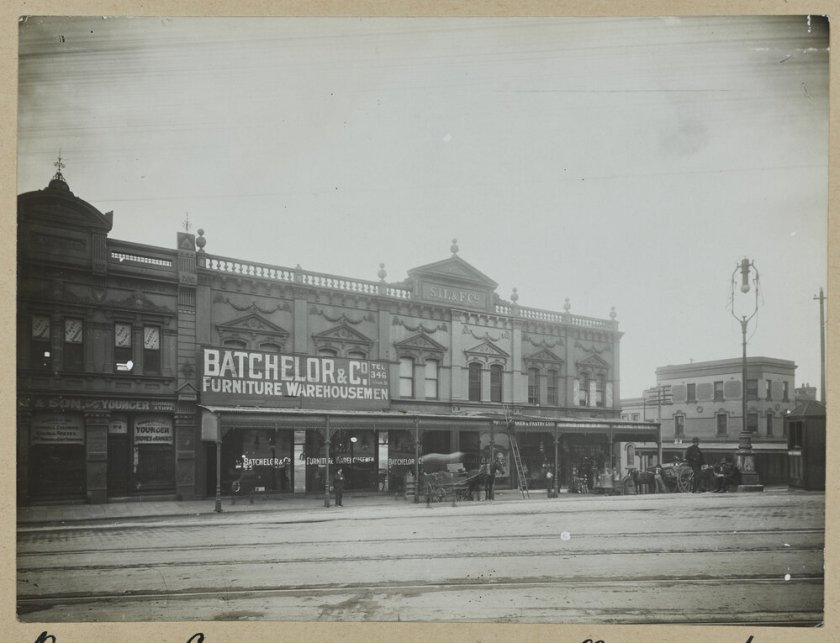
| Above- early phone box in Bega Museum EARLY BOOTH Paddington Methodist Church, Oxford Street Paddington, 1930s Oxford Square Darlinghurst, circa 1910 |
| The first public telephones in Sydney were provided at the Telegraph Receiving Room General Post Office on 5th March 1893. Subsequent public telephones were also provided on departmental premises usually at the telephone exchange or local Post Office. From the turn of century onward it was recognised that the general public, the vast majority of whom did not have access to telephone facilities should be provided with a local service housed in a public telephone ,’box’. To do this efficiently and conveniently it was necessary to provide a telephone instrument in a well designed street cabinet. The changes in these cabinets over the years has been most interesting. Bear in mind the utilitarian function of this type of street furniture which also needs to be an aesthetically acceptable public amenity. Not only is it essential that these facilities be efficient in their use, and aesthetic in appearance, but they must be durable and economic to maintain. This later aspect has always presented engineering problems due to climatic variations throughout the State (wide variation in temperature and humidity) vandalism problems, durability and availability of materials used. Coastal sites may have rust problems, inner western regions may have white ant or rotting hazards. Ventilation was also a prime consideration in cabinet design. Although private telephone density has risen far beyond what could have been envisaged at the beginning of the century, there has remained a need for public telephones at key points throughout our cities and suburbs. 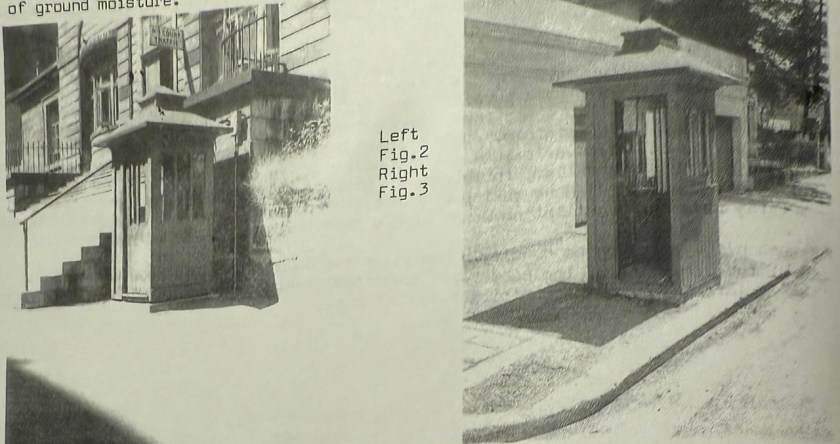 The earliest cabinets were solid in construction and generous in proportions. Figs.2 and 3 below shows N.S.W. No.1 pattern with pagoda type roof and wide eaves. Two sides were provided with three half glass panels and two glass panels in the door. Lighting however was poor so too was ventilation. This type was originally installed with a linoleum covered wood floor mounted on wooden plinths. The cabinet being constructed of timber (with galvanised iron clad roof) suffered joinery rot due to capillary entry of ground moisture. The bulk of the above type precluded its installation from many city streets and in fact a very wide footpath was required in suburban locations before it could be accommodated comfortably. A few of these cabinets are still in use. Inside livery was red dappled with black. An equally old yet ‘scaled down’ variety is depicted in Fig.4 and 5 of a cabinet which stood outside the North Randwick Post Office. 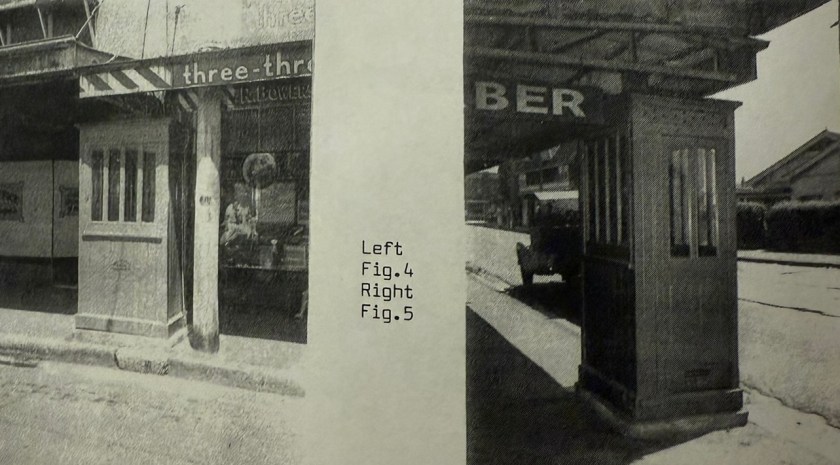 It was quickly found that there were several inherent weaknesses in timber cabinets, which were: a) joinery is a point of weakness ~nd difficult to exclude weathering, b) wood tends to rot around the lower portion, c) ventilation in wood cabinets inadequate, d) they require frequent repainting. For these reasons other materials for cabinets were looked at. Source- (with thanks to) History of the telephone in New South Wales / by Jim Bateman [Croydon, N.S.W.] : J. Bateman, 1980 ISBN: 0959478701 Below- interesting early booths at Central Station, Sydney 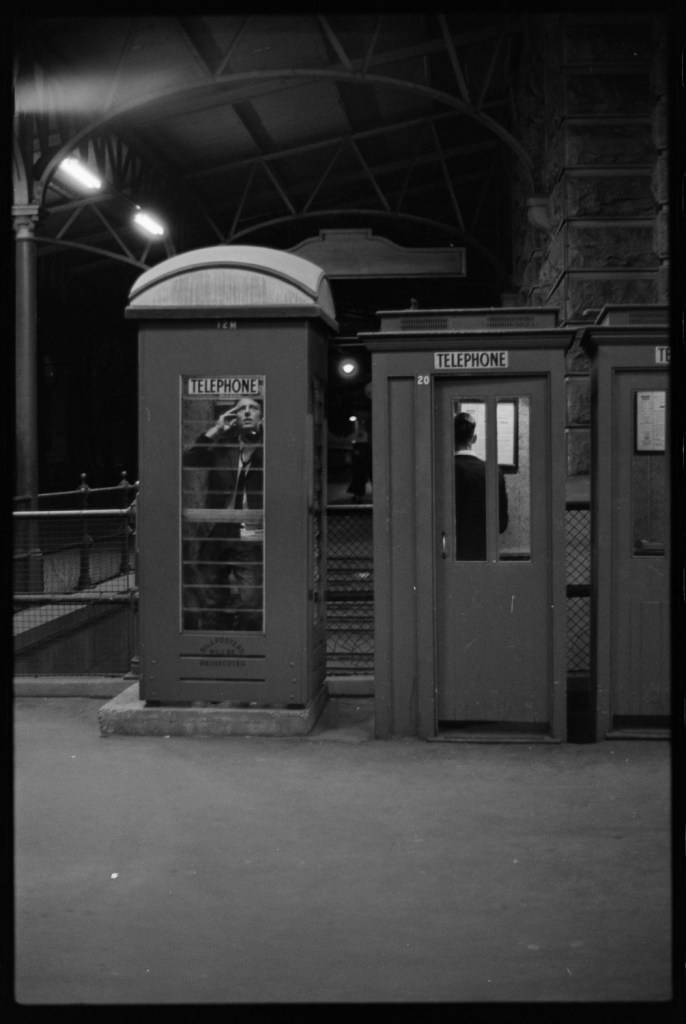 Below- Capitol Theatre, Sydney 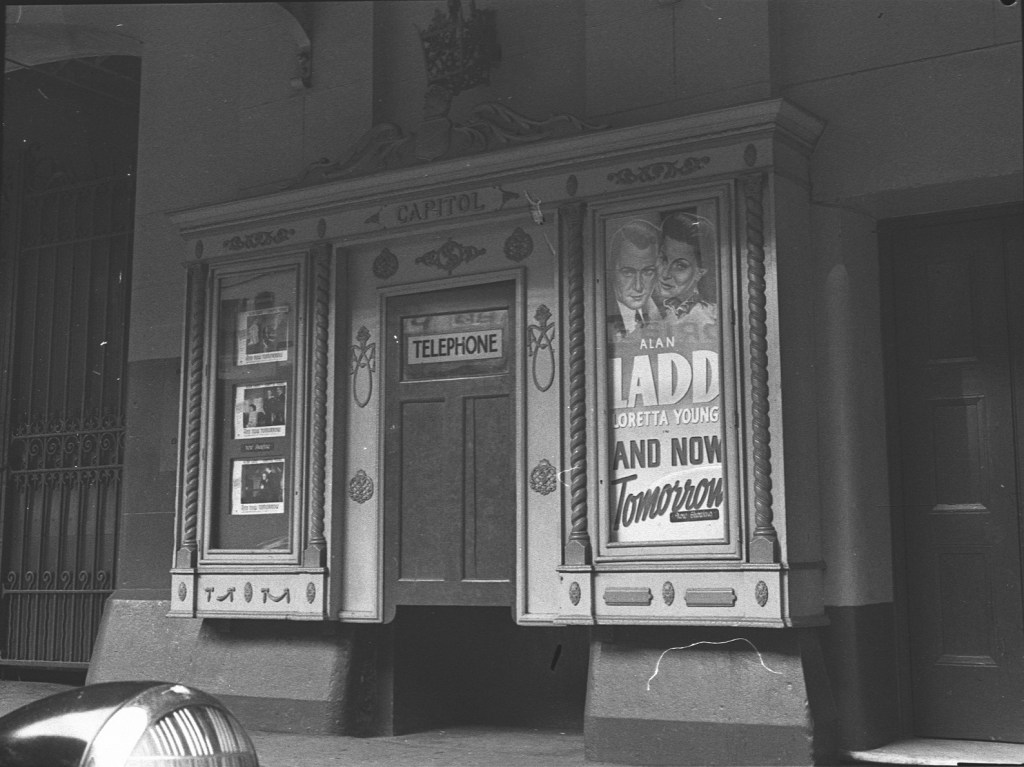 |
 Pay phone Story
Leave a comment