| Name | K3 Kiosk No. 3 (234) |
| Date | Introduced in 1929 |
| Manufacturer | BPO |
| Usage | Public call box |
| Further notes |
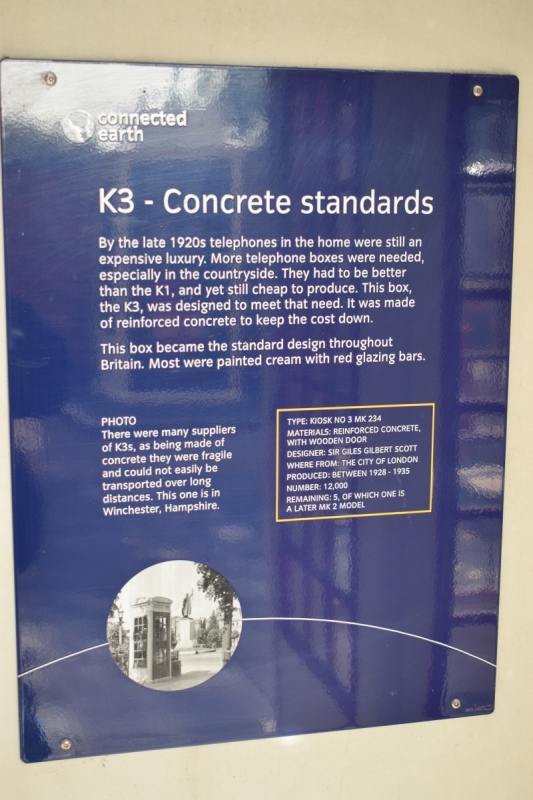
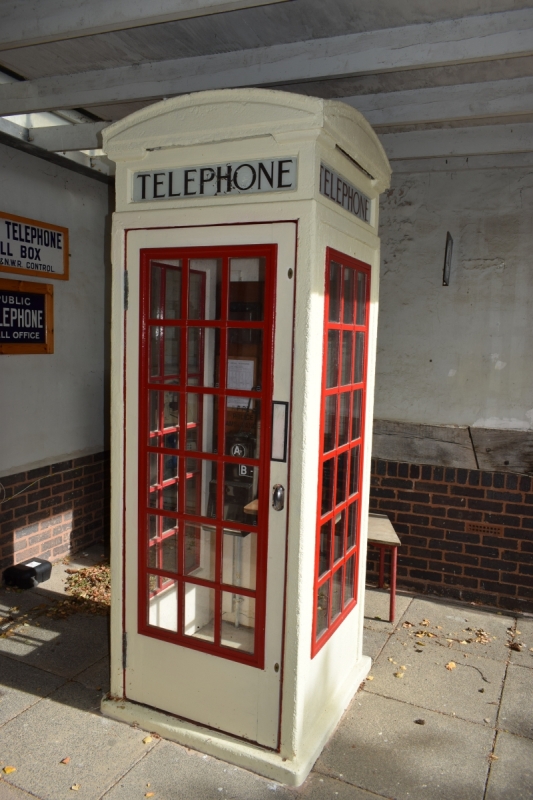
| Kiosk No. 3 (234) [Introduced in 1929] Kiosk No. 3 (K3), also known by its GPO designation 234, was introduced in 1929 as a more affordable and widely distributable alternative to the cast-iron K2. Designed by Sir Giles Gilbert Scott, who had already designed the K2 two years earlier, the K3 retained many of the elegant classical proportions of its predecessor but was constructed in precast concrete to reduce costs and enable wider deployment, particularly outside of London. While the K2 was largely restricted to major cities, the K3 was used throughout provincial towns and rural areas across the UK. Some were also exported to British overseas territories, with a few rare examples found in Gibraltar and South Africa. Although thousands were originally installed, fewer than 20 K3 kiosks are known to survive today. Most have been lost to time due to the deterioration of the concrete and replacement by more durable models. The best-preserved K3 is housed at the Avoncroft Museum of Historic Buildings, where it remains on public display. Other known survivors are in private collections or have been reconstructed from salvaged parts. The K3 was manufactured at several precast concrete facilities across the UK, likely contracted through the GPO’s procurement system. The body was made from reinforced concrete panels, while the door was typically timber, fitted with multiple glass panes to echo the K2’s design. The original colour scheme was usually cream or off-white, with a red door, although variations existed depending on local authority preferences. The TELEPHONE signage appeared on all four sides, inset into rectangular nameboards beneath a slightly flattened domed roof. Interior electric lighting was standard, improving visibility and safety at night. The dimensions were slightly smaller than the K2 but still offered comfortable space for a single user. However, the use of concrete made it prone to damp, cracking, and staining, especially in wet climates. The ventilation was limited to small openings near the roof, which did little to prevent condensation and musty smells. Over time, maintenance of these concrete kiosks proved difficult, leading to many being decommissioned by the mid-20th century. Surviving K3s today are typically restored for heritage display, educational purposes, or converted into community resources such as mini-libraries or defibrillator stations. Originally, K3s housed Button A/B coin-operated telephones, which were later updated in the 1960s and ’70s with push-button or card systems. The placement of K3s was overseen by the General Post Office (GPO), in collaboration with local councils. The intention was to provide a visually appealing, cost-effective solution to expand the telephone network across Britain, aligning with the government’s broader goal of modernising infrastructure while maintaining aesthetic standards. While the K3 is less iconic than the red K2 or K6, it still holds cultural value as a transitional piece in the evolution of Britain’s telephone network. Its muted tones and modest design made it less visually dominant, but it still contributed to the collective memory of British civic architecture. It is rarely seen in media or popular culture and is often overshadowed by the red boxes more familiar to the public. |
 Pay phone Story
Leave a comment