| Name | K6(Grey) Kiosk No. 6 – Grey |
| Date | 1936-68 |
| Manufacturer | BPO |
| Usage | Public call box |
| Further notes |
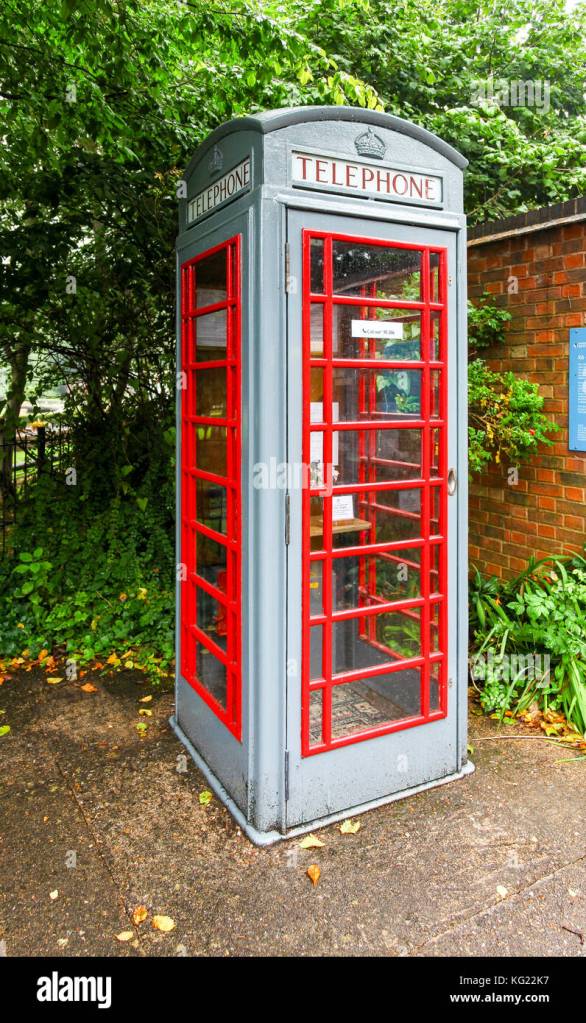
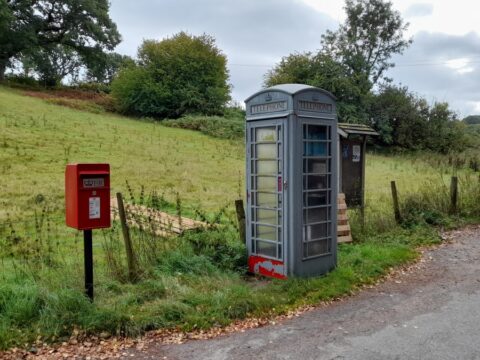
| Kiosk No. 6 – Grey The Grey Kiosk No. 6 is a less common variant of the iconic K6 telephone box introduced primarily during the mid-20th century as part of efforts to better integrate public street furniture with specific urban or conservation environments. While the classic K6 is famously painted in Post Office Red, some local authorities and heritage bodies permitted or requested alternative colour schemes to better suit the visual character of historic or scenic locations. The grey K6 was one such adaptation, designed to be more discreet and harmonise with surroundings such as town centres, conservation areas, and heritage sites where bright red might be considered visually intrusive. The grey K6 kiosks came into service mainly in the 1950s through the 1970s, deployed in parts of the UK where local planning authorities had significant influence over street aesthetics. Although still constructed to the same specifications as the standard K6, these kiosks featured a muted grey paint finish instead of the traditional red. The shade of grey varied between locations, often leaning towards a mid to dark tone. They retained the usual white “TELEPHONE” signage panels with the St Edward’s Crown embossed, and internal electric lighting was included, just as in their red counterparts. The grey K6 was manufactured in the same foundries as the red versions, primarily by the Carron Company in Scotland, using cast iron for the panels, with timber doors fitted with 8×3 glazing. Dimensions, ergonomics, ventilation, and acoustic characteristics were identical to the standard K6. Ventilation was through slits beneath the roof dome, offering limited air circulation. Like all cast-iron kiosks, the grey K6 required regular maintenance to prevent corrosion, particularly in damp or coastal environments where rust was a persistent problem. Surviving grey K6s are relatively rare compared to their red siblings. Exact numbers are difficult to establish, but only a few dozen examples are known to remain, mostly scattered in historic town centres in England, Wales, and Scotland. Some can be found in conservation areas where their subdued colouring helped avoid clashing with the local architecture. A number have been restored and maintained by local councils, heritage trusts, or private collectors. The Avoncroft Museum of Historic Buildings houses examples of many K6 variants, including grey-painted kiosks. Original payphones installed in grey K6s were consistent with the GPO standard of the era, typically Button A/B coin-operated models, later updated to rotary or push-button sets. Location policy for grey kiosks was influenced by the General Post Office (GPO) in coordination with local authorities, particularly planning committees responsible for historic preservation. The political context reflected a mid-century growing awareness of urban conservation and heritage management, balancing functional infrastructure with aesthetic considerations. Culturally, while the grey K6 never achieved the widespread recognition or iconic status of the classic red version, it is nevertheless valued by preservationists and collectors for its rarity and subtlety. It rarely appears in popular media, although it shares the same design lineage and symbolic British identity. Public sentiment toward grey kiosks during removal campaigns has generally been supportive of preservation, especially where they contribute to the character of historic streetscapes. Many grey K6s have been repurposed in recent decades as defibrillator stations, mini-libraries, art installations, or community information points. Restoration efforts often involve careful removal of old paint, corrosion treatment, repainting in historically accurate grey tones, and reproduction of enameled signage and crown motifs. Documentation and archival records for grey K6s are maintained in the GPO and BT archives, as well as by heritage organisations such as Historic England and local councils. |
 Pay phone Story
Leave a comment