| Name | K7 Kiosk No. 7 |
| Date | 1962. A bold Modernist departure from the previous Classical models. |
| Manufacturer | BPO |
| Usage | Public call box |

| Further notes |
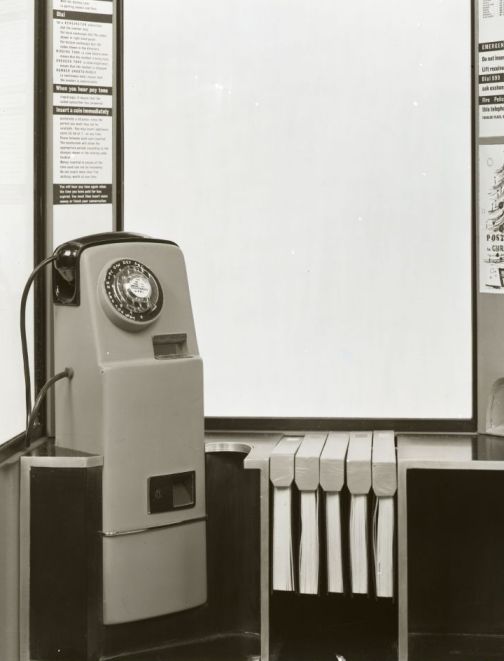
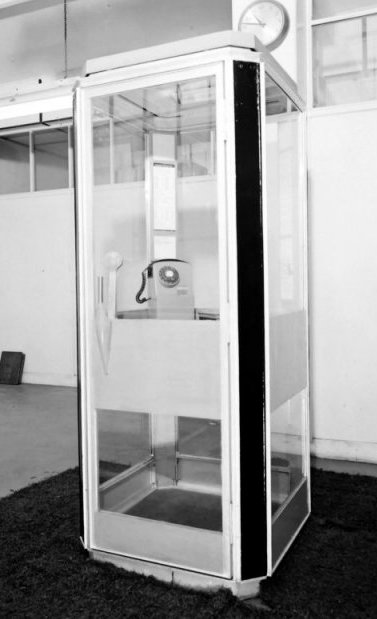
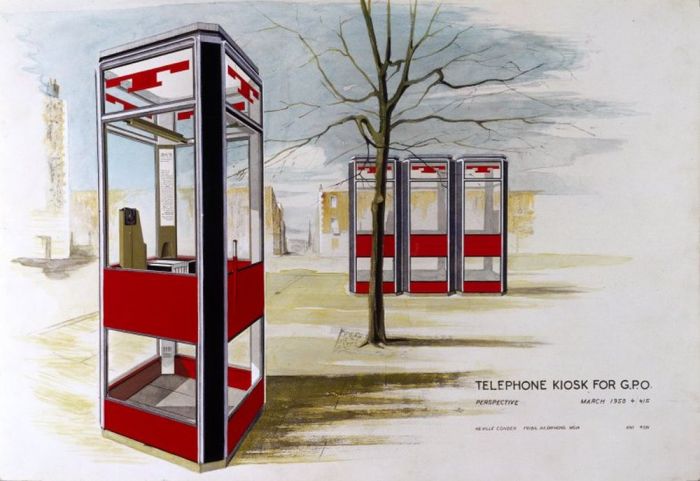
| Kiosk No. 7 [Introduced in 1962] Kiosk No. 7 (K7), introduced in 1962, marked a significant departure from the traditional red cast-iron telephone boxes that had become synonymous with British public telephony. Designed during a period of modernization and rapid technological change, the K7 was the first British telephone kiosk to embrace a modernist, functional aesthetic, reflecting mid-20th-century architectural trends. Its design was utilitarian, prioritizing cost-efficiency, ease of manufacture, and adaptability over the ornamental qualities of earlier models. The K7 was primarily installed in urban areas across the United Kingdom, especially in newly developing suburbs and commercial districts during the 1960s and 1970s. It was also deployed in some larger towns where modernization was prioritized. Unlike previous kiosk models, the K7 was not widely exported and remained almost exclusively a UK phenomenon. Due to the relatively short production span and widespread replacement by later kiosk designs, only a limited number of K7 kiosks survive today, with estimates suggesting fewer than 100 remain. These survivors are generally located in scattered urban locations and are considered of niche interest to telephone kiosk historians and modernist architecture enthusiasts. Several examples have been preserved in museums or as part of heritage street furniture collections, notably at the Avoncroft Museum of Historic Buildings. Manufacture of the K7 was typically carried out by multiple industrial manufacturers contracted by the General Post Office (GPO), employing painted steel and glass panels rather than traditional cast iron. The use of sheet steel and large glass panes gave the kiosk a lighter, more open appearance, though the steel was prone to corrosion without frequent maintenance. The kiosk was finished in grey or metallic silver paint, aligning with the modern industrial aesthetic of the time. Dimensions were modest, providing enough space for one user to stand comfortably inside. The door was typically a single-glass panel mounted in a steel frame, with some models featuring automatic or sliding doors to facilitate ease of access. Ventilation was improved compared to earlier models, with larger openings and better airflow, although acoustics inside the kiosk remained challenging due to the hard materials. The K7 housed standard push-button payphones, reflecting the shift from rotary dial telephony. As technology advanced, some units were upgraded to accept phonecards or digital payments. Placement strategy was governed by the GPO in conjunction with local authorities, aiming to install kiosks where modern design and functionality were more desirable than traditional appearances. Politically, the K7 emerged in an era emphasizing modernization, utility, and post-war rebuilding, often viewed as part of a broader push to replace outdated infrastructure with streamlined, contemporary solutions. It reflected the changing tastes and functional priorities of the 1960s. Culturally, the K7 did not achieve iconic status and is less well-remembered compared to earlier kiosks like the K6. It rarely appeared in popular media or films and was not embraced as a symbol of British identity. However, it holds interest among enthusiasts of mid-century modern design. Restoration efforts are complicated by the relative scarcity of original parts and susceptibility of steel to corrosion, requiring specialist treatment. Documentation is available in GPO archives and local council records. The K7 was not widely exported, and few, if any, examples exist outside the UK. There are no known replicas internationally. Funding for restoration is limited, typically provided by niche heritage grants or private initiatives focusing on post-war industrial design. Despite its fleeting presence, the K7 remains a notable experiment in the evolution of British public telephone kiosks, representing a bold shift toward modernity during a transformative era. |
 Pay phone Story
Leave a comment