| Name | Kiosk No. KX410 |
| Date | 2000-present |
| Manufacturer | BT |
| Usage | Public call box |
| Further notes |
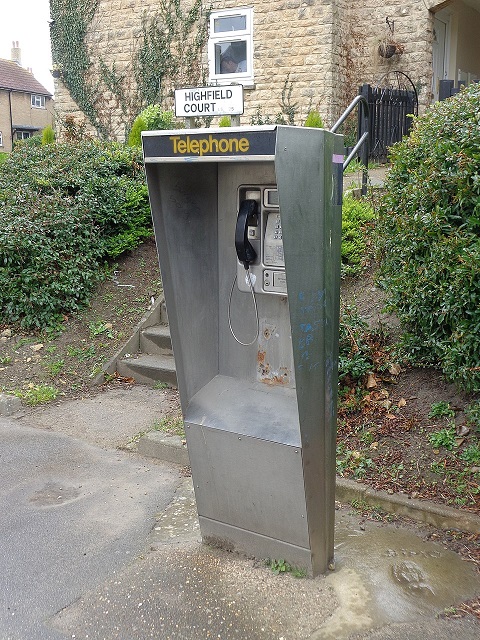
| Kiosk No. KX410 The KX410 telephone unit, introduced in the early 2000s, was a highly specialized public payphone enclosure developed by British Telecom for use in unsupervised and high-risk public environments, such as railway stations, subways, and certain urban open-air settings. Rather than being a kiosk in the traditional enclosed sense, the KX410 represented a minimalist, ultra-durable communications point, specifically designed to resist vandalism and weather, while maintaining accessibility and ease of maintenance. The KX410 was installed primarily in UK transport networks, including railway platforms, underground stations, and near high-volume pedestrian corridors. It was not deployed widely outside the United Kingdom, and due to its functional nature, it was rarely exported to British Overseas Territories or Commonwealth countries. Today, only a small number of KX410 units survive, and they are most commonly found in rail stations still equipped with payphones or in transport hubs that maintain legacy infrastructure. These units were manufactured in the UK, typically by British Telecom’s contracted fabricators with experience in high-durability infrastructure for transport and civic installations. The KX410 was constructed entirely of brushed stainless steel, which offered superior resistance to corrosion, graffiti, and vandalism. It had no sides or enclosure—just a sturdy backplate, a small sloped stainless-steel shelf, and a head-box to house signage, lighting, and the telecommunications unit. The lighting was integrated within the signage panel and designed for high visibility in poorly lit areas. Aesthetically and ergonomically, the KX410 was stripped back to essentials: no doors, walls, or roof, just a sleek vertical panel with a sloping shelf for phone operation. This design allowed wheelchair users full access and prevented entrapment or obstruction. Ventilation was not required, as it was completely open, though this also made it susceptible to noise, poor privacy, and exposure to weather. Maintenance was minimal, as there were no moving parts and the structure could be cleaned with basic tools. The payphones installed were BT’s wall-mounted vandal-resistant digital handsets, usually with metal keypads, coin slots, and sometimes phonecard compatibility. In some later versions, the phones supported chip-and-pin or contactless payment, reflecting BT’s adaptation to modern technology before the collapse of demand. Culturally, the KX410 is not iconic and has never achieved symbolic status. It did not appear in literature, television, or art and was rarely noticed by the public beyond its utilitarian function. Public sentiment during removal campaigns was negligible, and few considered the KX410 worthy of preservation. In terms of repurposing, the KX410’s ultra-functional design has limited reuse potential. A few examples have been retained for use as emergency call points or public information mounts, but unlike earlier kiosks, they lack visual or nostalgic appeal. Some have been converted into stripped-down defibrillator points in transport environments. Archival material related to the KX410 is held primarily in BT engineering records, local transport authority infrastructure files, and technical procurement documents. It is rarely mentioned in national heritage databases due to its utilitarian nature and recency. The KX410 had virtually no international presence, with few, if any, exported units. It is also not reproduced or celebrated abroad, and unlike the red telephone boxes, it holds no souvenir or tourist value. Preservation efforts are rare and typically only undertaken for documentation purposes. As the unit features no enamel or decorative parts, restoration involves cleaning, signage replacement, and phone unit maintenance. The KX410 is arguably the logical endpoint of British public telephony design: stripped of ornament, purely functional, and engineered for a world increasingly dominated by personal mobile communications. |
 Pay phone Story
Leave a comment