| Name | Payphone 2000 |
| Date | 1995-2010 |
| Manufacturer | BT contracted manufacturers (e.g., GN Rathdown Ltd for models like “Solitaire 2000C”) |
| Usage | Accept multiple payment methods (coins, card types), multi-language display, voice assistance, volume control |
| Further notes |
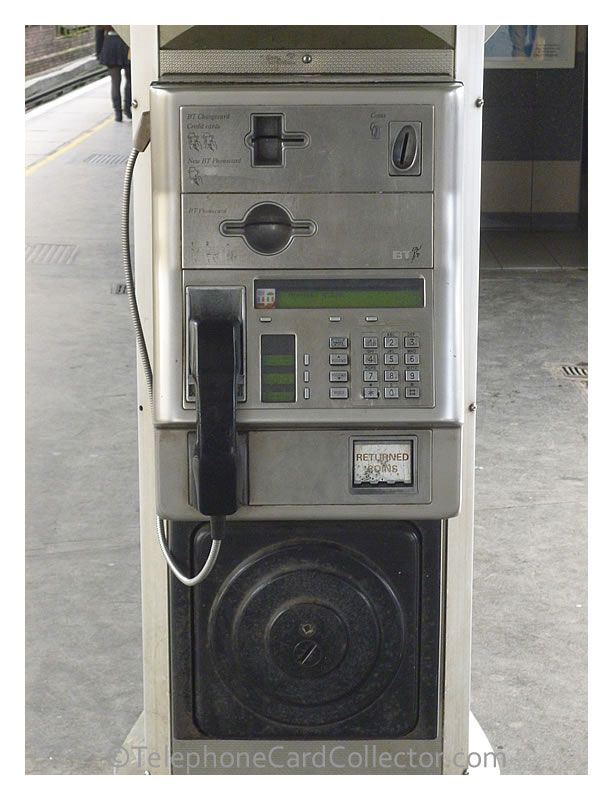
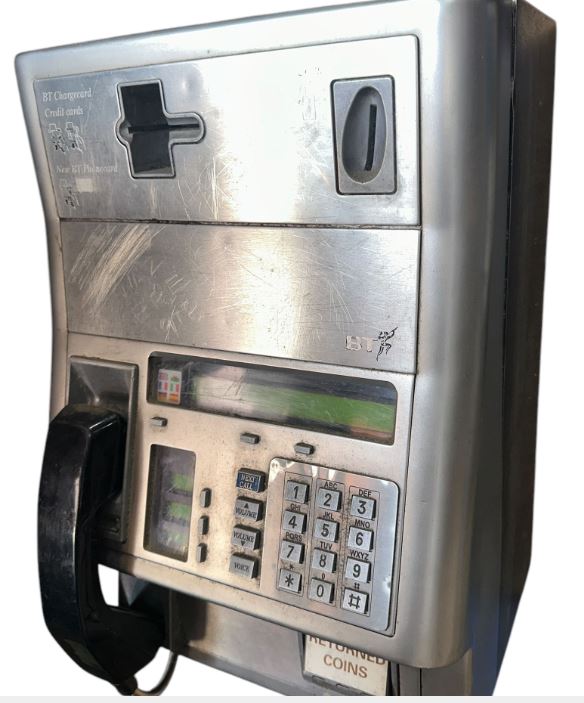
| The Payphone 2000 was a modern public telephone introduced by British Telecom (BT) in the late 1990s to replace older coin-operated models. It marked a transition toward digital technology and multifunctional payment systems. Manufactured by companies including GEC, Siemens, and STC (Standard Telephones and Cables), the Payphone 2000 featured a vandal-resistant stainless steel keypad, an alphanumeric LCD display, and supported coins, BT phonecards, and later credit and debit cards. Its modular design allowed for efficient maintenance, with swappable components like handsets, card readers, and display units. The units were typically installed in BT’s modern kiosks—such as the KX100, KX300, and KX410—or wall-mounted in public buildings. Widely deployed across the UK in train stations, airports, hospitals, and high-footfall urban areas, the Payphone 2000 was built for durability and accessibility, with features like adjustable audio volume. The manufacturers designed the units to meet BT’s strict performance and reliability criteria, including resistance to weather and vandalism. Despite its technical advancements, the Payphone 2000 quickly became outdated as mobile phone use soared. By the 2010s, most had been decommissioned, although a few survive in rural and heritage settings. |
 Pay phone Story
Leave a comment