| Name | BN150 Pacific A |
| Date | c. 1950 |
| Manufacturer | Benner Nawman |
| Usage | US Phone Aluminum Booth |


| Further notes |
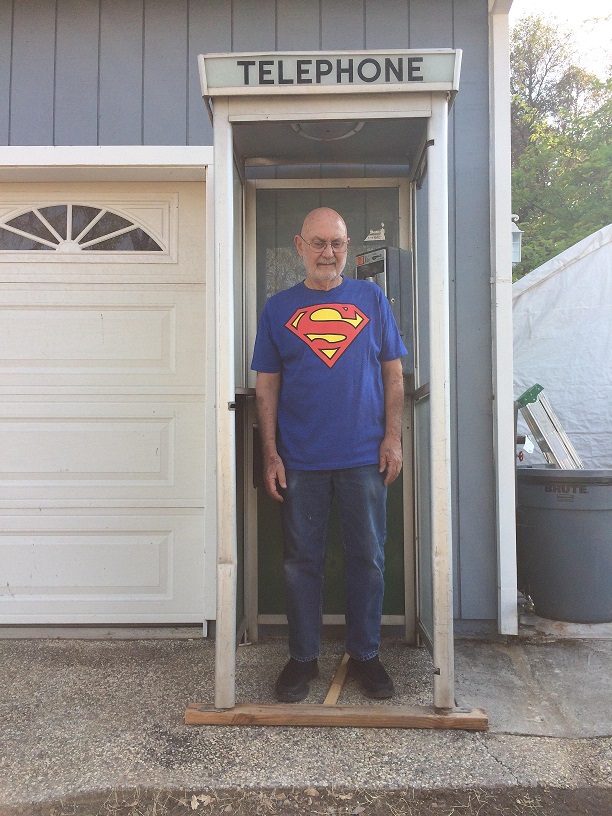
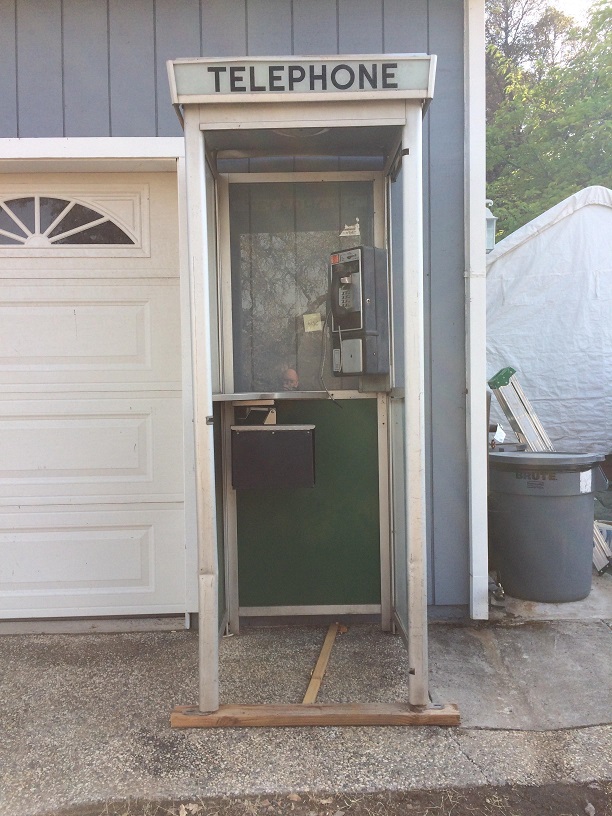
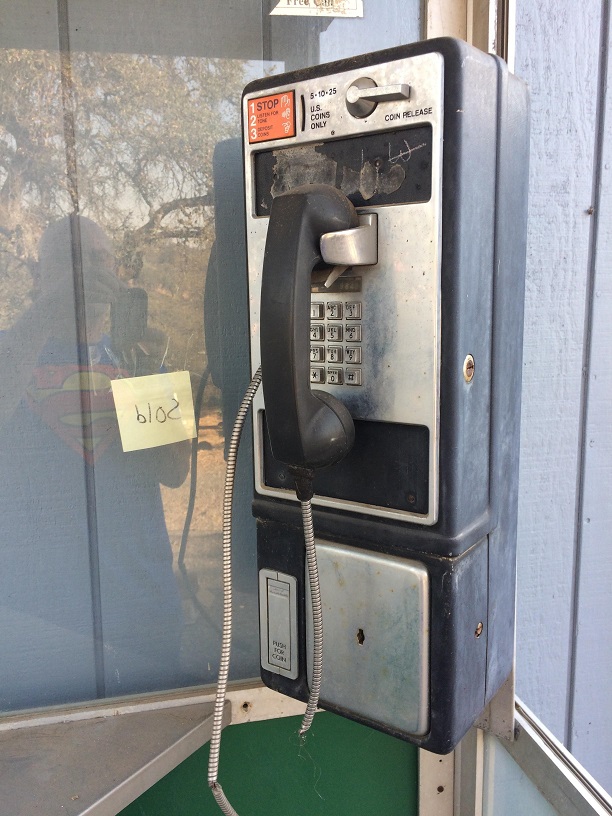
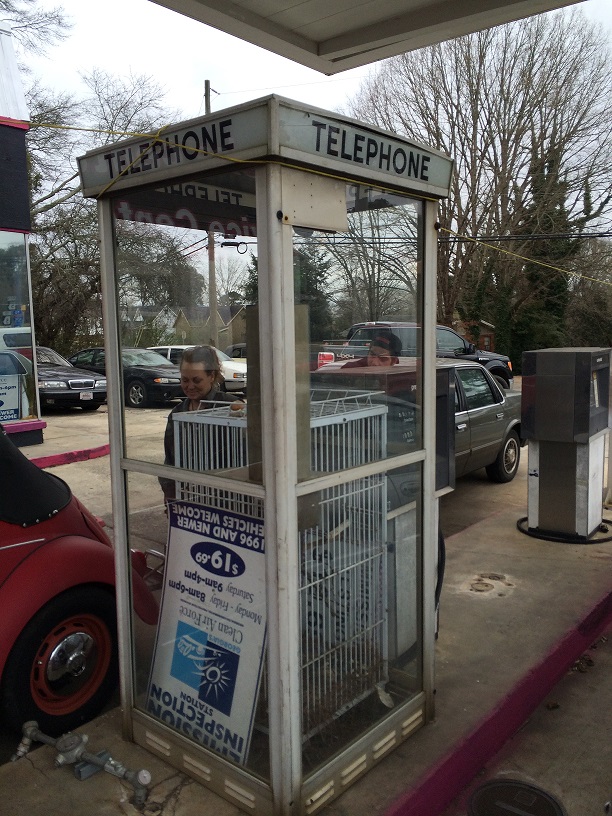
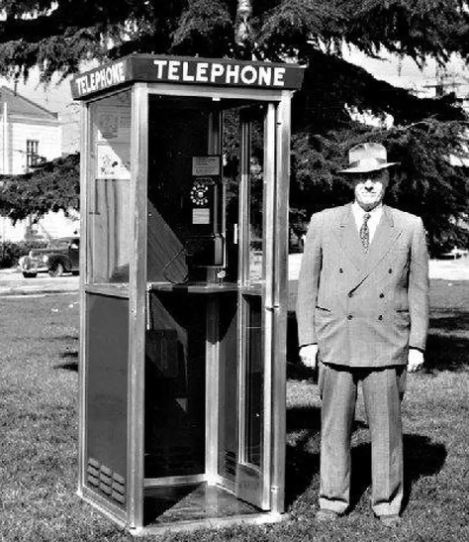
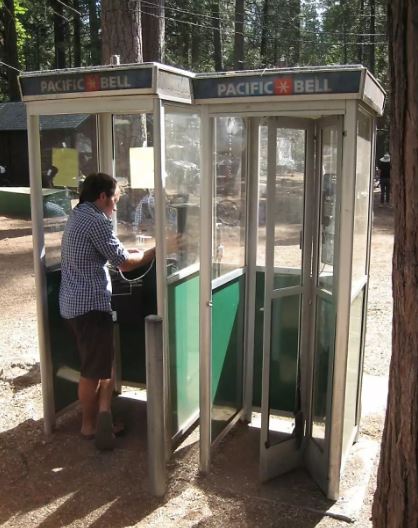
| Gus Benner and Rollie Nawman formed a partnership and founded the company in 1925 as a sheet metal fabricator in Oakland, California. Benner-Nawman became a corporation in 1946. In 1950, the Pacific Bell Telephone and Telegraph Company of San Francisco, California asked Benner-Nawman to design and fabricate a phone booth made from aluminum, glass and steel. From 1950 to 1999, the company’s primary business was the fabrication and assembly of public telephone booths and accessories, selling hundreds of thousands of units in the United States and into over 40 countries worldwide. When we hear the long-standing motto, Quality Products Engineered with Intelligence and Imagination, used for decades by Benner-Nawman companies, it’s easy to envision complex, high-tech gadgets. In the 1940s, however, a telephone booth hardly resembled the classic glass-and-sheet-metal payphone housing that many of us, over a certain age, recall using to call home – or remember as Superman’s modern dressing room, or the inspiration for Bill and Ted’s time machine. Early public telephones date back as far as 1888, and for many years were designed to be ornate, hinted at luxury, and were made of wood. By 1948, Pacific Telephone and Telegraph had determined that wooden enclosures were difficult to install, and lacked weatherproofing demanded by outdoor public pay telephones. The company approached Benner-Nawman co-founder Rollie Nawman that year, with the challenge to design a durable and low-maintenance replacement. Rollie Nawman imagined a new kind of coin-operated pay telephone, constructed with aluminum, safety glass, and ceramic porcelain-steel panels that would withstand variable weather in the San Francisco Bay area and extremes seen outside of the region. The B-N telephone booths were manufactured with different color panels that could be interchangeable and replaceable. The Pacific A booth was born, which became the first production model (BN150). The new units were more expensive than their wooden predecessors, but proved to be durable; some of the first-generation models were still in use into the 1990s. Benner-Nawman quickly became the largest booth manufacturer in North America, eventually producing phone booths from facilities in Arizona, Illinois, and Alberta, Canada. Public telephones dotted the landscape of mid-century America and beyond, throughout the 1950s and 1960s. By the late 1980s, Benner-Nawman telephone booths could be found in every US state, and in over 30 countries throughout the world. Custom designs and specialty products expanded Benner-Nawman’s product line from the original Pacific A and its related BN150 and BN400 models. New models included numerous indoor and outdoor booths, semi-enclosed shelters, and even public telephone trailers. The futuristic porcelain egg BN800 Vanguard was popular in public areas such as airports and arenas. On September 30, 2005, Benner-Nawman assembled the last of more than 600,000 telephone booths manufactured by the company. Rollie Nawman’s innovative revisioning of the public telephone would have a presence throughout the globe, as far away as Hong Kong, the United Arab Emirates, and even the tiny Indian Ocean island nation, The Maldives. The end of production in 2005 represented the end of a defining era for B-N. Although telecommunication was only one of numerous industries served by the company, it remains a vital and proud part of the Benner-Nawman legacy. |
 Pay phone Story
Leave a comment