| Name | Titan phones NY |
| Date | c. 1980-2025 |
| Manufacturer | Titan, various |
| Usage | US Phone Booth |
| Further notes |
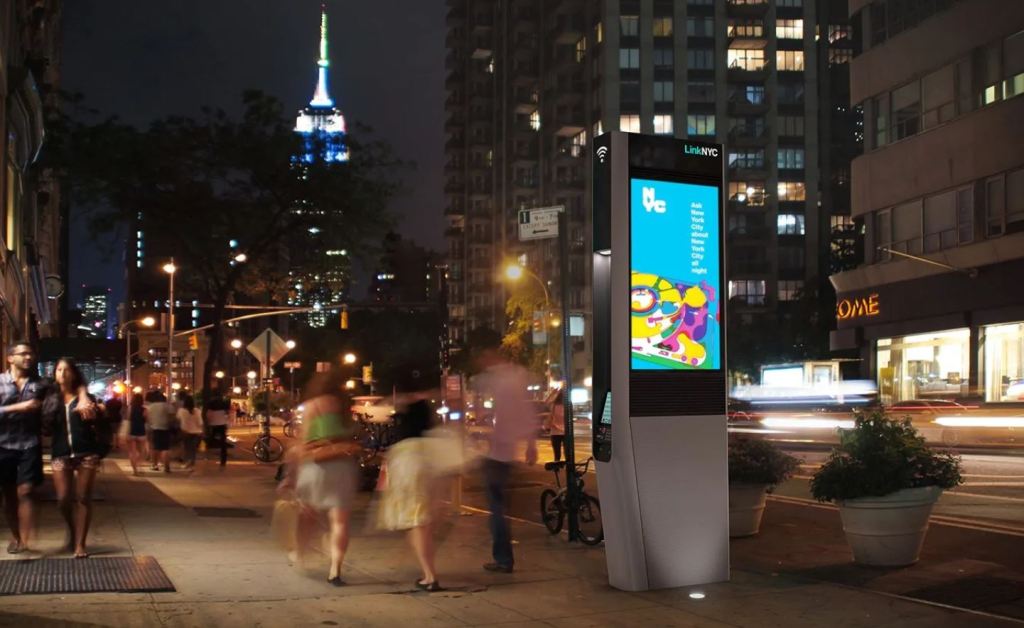
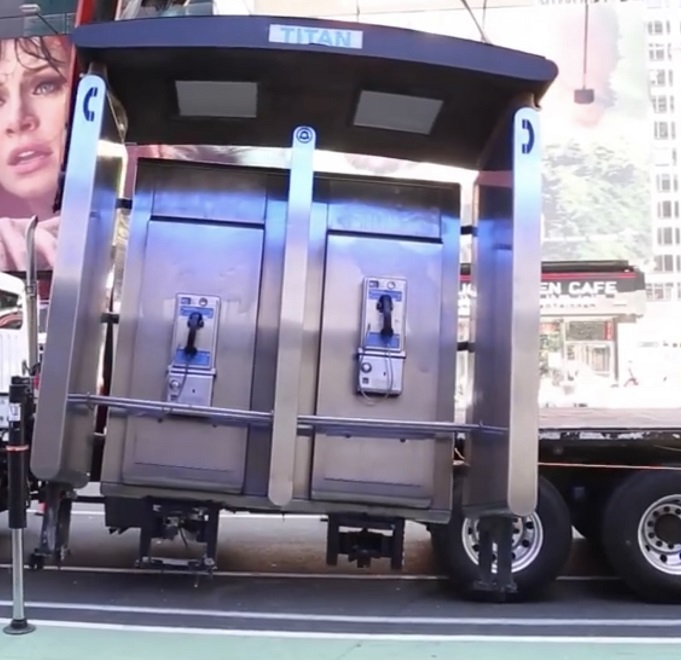
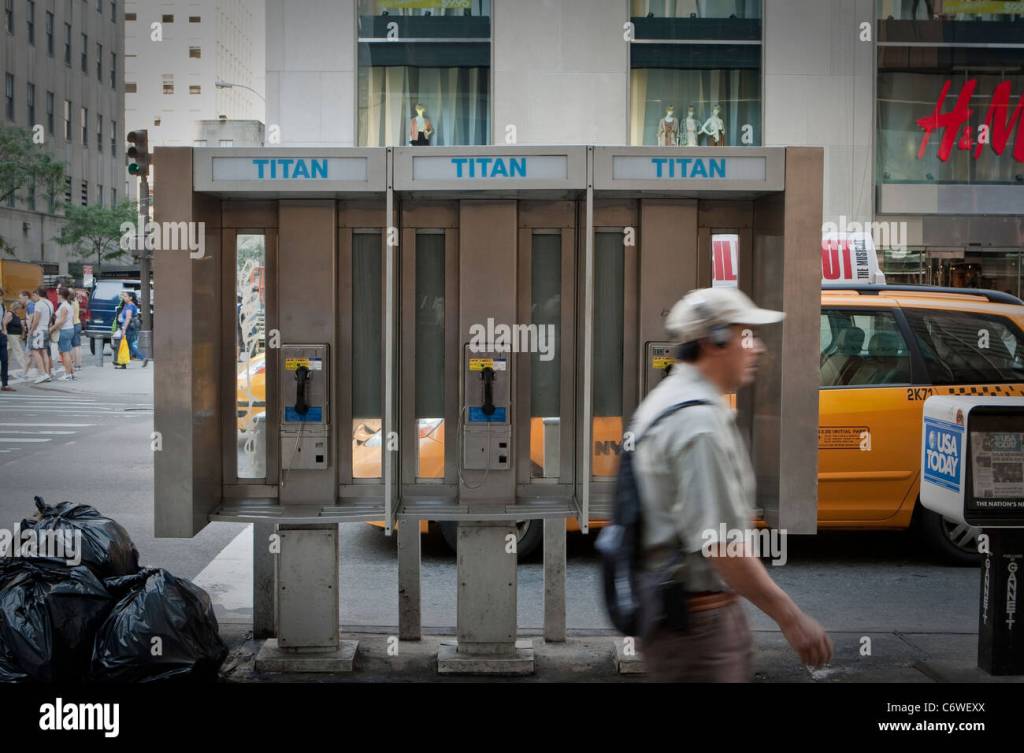
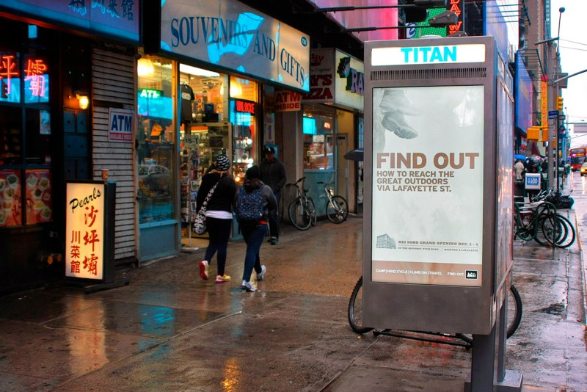
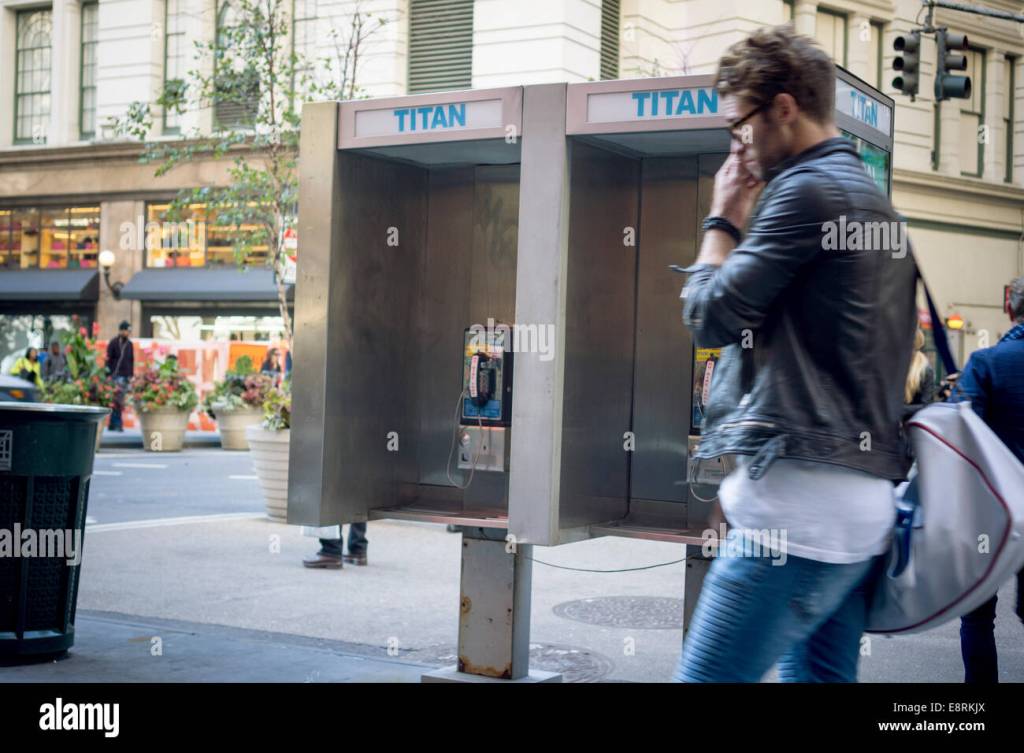
| Titan was a New York–based transit advertising company that grew into the city’s largest operator of payphones in the 2000s, after acquiring thousands of booths from Verizon in 2010. At its height Titan managed more than 2,500 payphones across nearly 1,800 kiosk locations, providing over 5,000 advertising “faces” on the street. The company’s kiosks, instantly recognizable for their tall structures and large display panels, were as much about selling ad space as they were about making calls, and they became a familiar part of the city’s streetscape. By the early 2010s, however, the role of payphones was rapidly diminishing as mobile phones became nearly universal. Recognizing that the city needed to modernize, New York launched the “Reinvent Payphones” design challenge in 2013–2014, looking for ways to replace an outdated but valuable piece of urban infrastructure. Titan was a central participant, and soon became part of the winning consortium called CityBridge, alongside Control Group, Qualcomm, and Comark. In 2014 this team secured a 12-year franchise to remove the old booths and replace them with a new generation of kiosks called LinkNYC, which offered free gigabit Wi-Fi, nationwide calling, phone charging, and touchscreens providing maps and city services, all funded by digital advertising. In 2015 Titan merged with Control Group to form a new company, Intersection, which became the operating arm of CityBridge and the public face of LinkNYC. In that sense Titan did not literally “become” Link, but its corporate evolution and its existing network of payphone sites made it central to the creation and rollout of the new system. The old Titan payphone kiosks were gradually phased out beginning in 2015, and by May 2022 New York City ceremonially removed its final public payphone, placing it in the Museum of the City of New York as a piece of history. This marked the end of the Titan payphone era, but also cemented its place in the story of New York’s transition from coin-operated telephones to digital communication hubs. The change was not without controversy. Many New Yorkers worried that the new kiosks would become oversized billboards cluttering sidewalks, or that the advertising revenue model gave too much power to private companies over public space. Privacy advocates also raised concerns that the kiosks could collect user data, track behavior, or display intrusive targeted ads, effectively turning streets into spaces of surveillance as much as communication. In addition, early in the rollout some kiosks’ tablet screens were criticized for being misused by people watching explicit content or loitering for long periods, prompting restrictions on how the terminals could be used. These debates highlighted the tension between providing free, modern connectivity for all residents and balancing the social costs of commercialization, surveillance, and control over public space. In the end, Titan’s story is one of transformation. From dominating the payphone market as an advertising company, it transitioned into a key player in creating LinkNYC, which today represents the city’s effort to provide free digital connectivity to millions of residents and visitors. Titan’s legacy survives in the infrastructure it left behind, the corporate path that led to Intersection, and the ongoing discussion over how technology reshapes public life in New York City. |
 Pay phone Story
Leave a comment