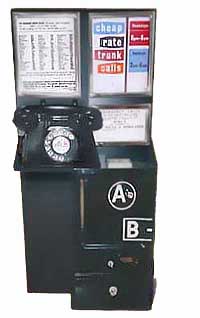
| Name | A.B. Button Box Multicoin |
| Date | 1935-1980 |
| Manufacturer | Hall Telephone Accessories Ltd (later known as Associated Automation and then Elliot Automation) |
| Usage | Booths See also the British AB Box |
| Notes | See below |

Associated Automation/Elliot Automation, Australia, British Payphone, Early, Telephone Box, United Kingdom, Usage, Wall Mounted
THE DEVELOPMENT OF THE AB BUTTON BOX PAYPHONE IN AUSTRALIA
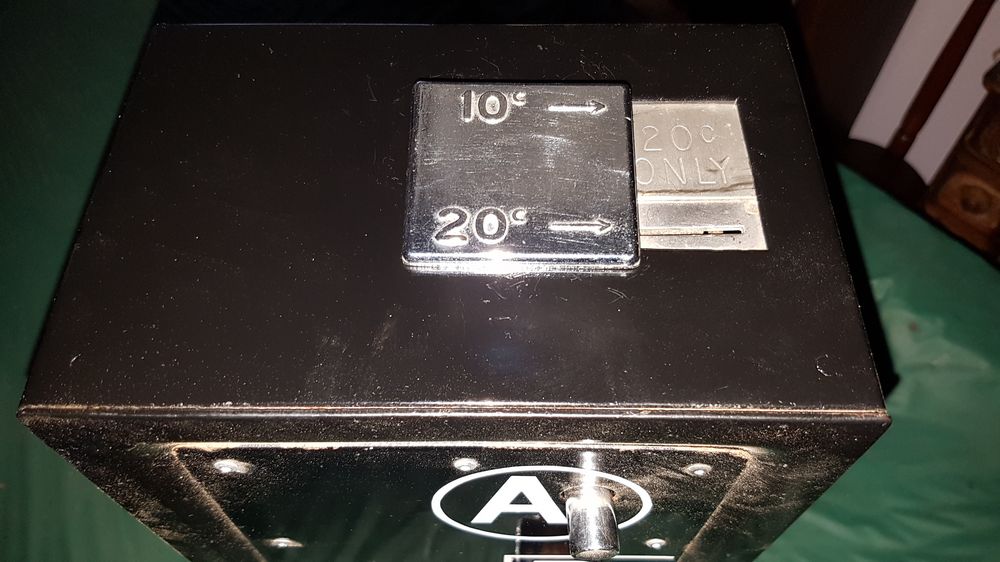
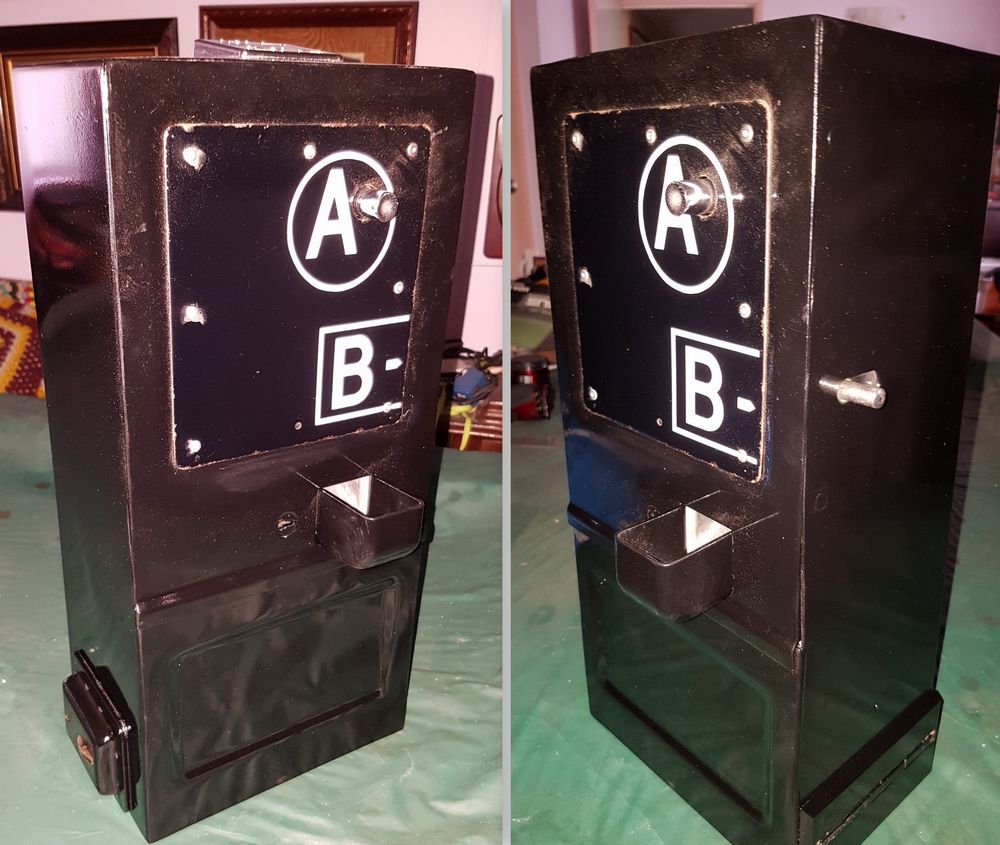
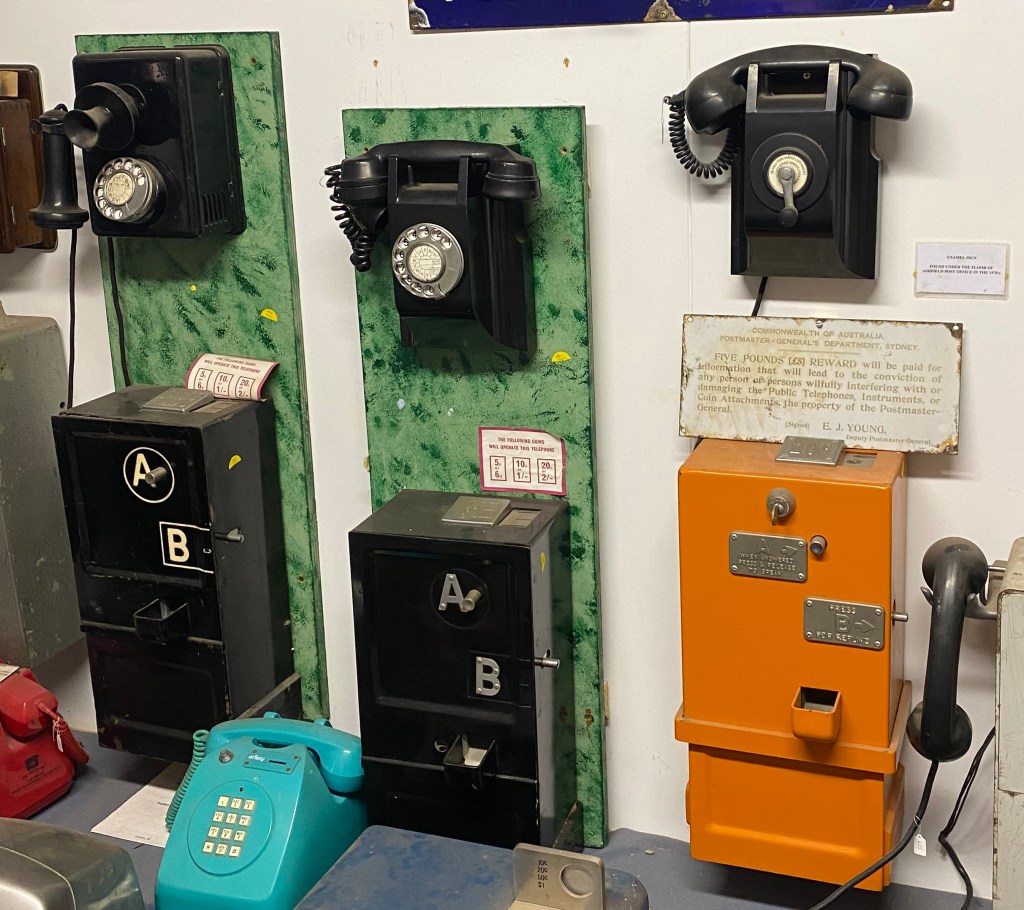
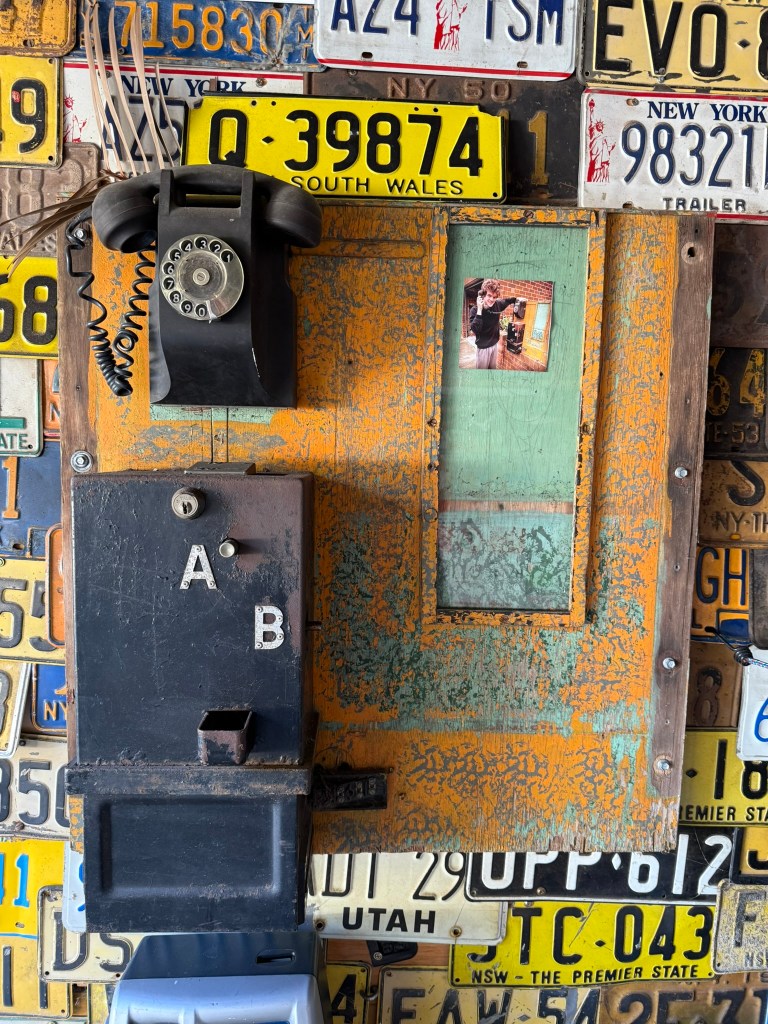
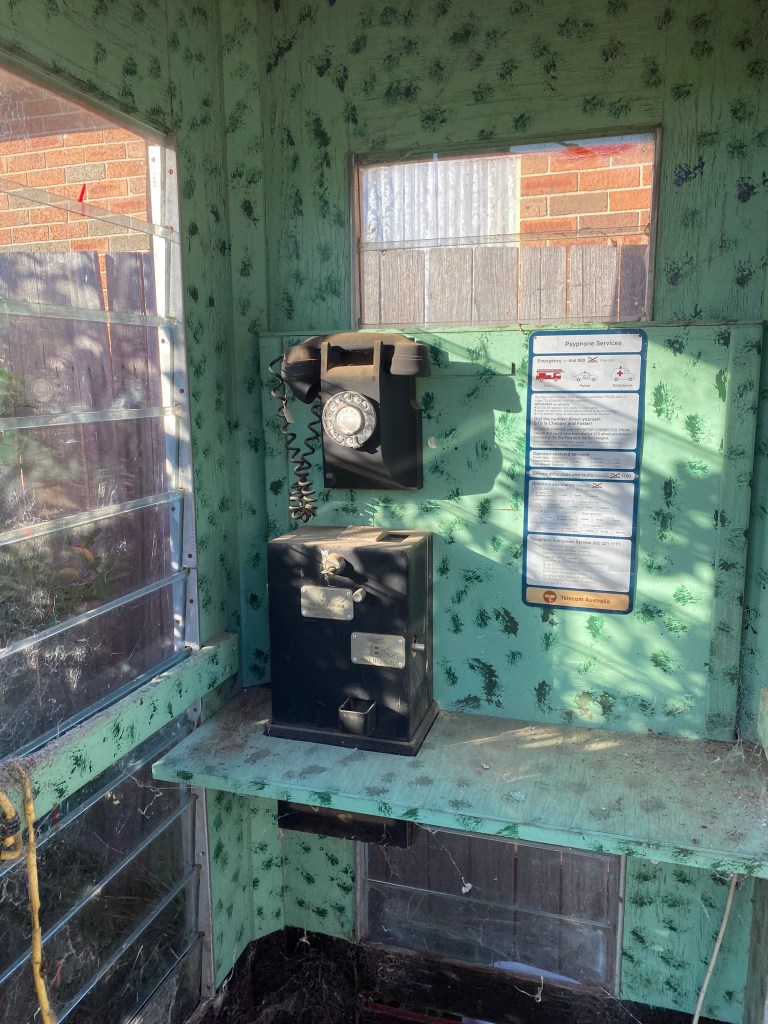
| Introduced in 1935, the A.B. Multicoin public telephone marked a significant development in Australia’s public telecommunications. Manufactured by Hall Telephone Accessories Ltd in the UK, it retained its British design heritage but incorporated several practical upgrades suited to local needs. This robustly constructed unit featured a standard wall-mounted telephone to reduce maintenance costs. Its most notable advancement was the multicoin mechanism, which allowed it to accept a variety of coins. This was a crucial feature as long-distance (trunk) calls became increasingly common—and costly—making it impractical to rely solely on low-denomination coins such as pennies. Although the AB units demanded regular servicing, they proved to be dependable and durable. Many remained in operation well into the 1970s and even 1980s, before eventually being phased out in favour of newer models like the CT3. 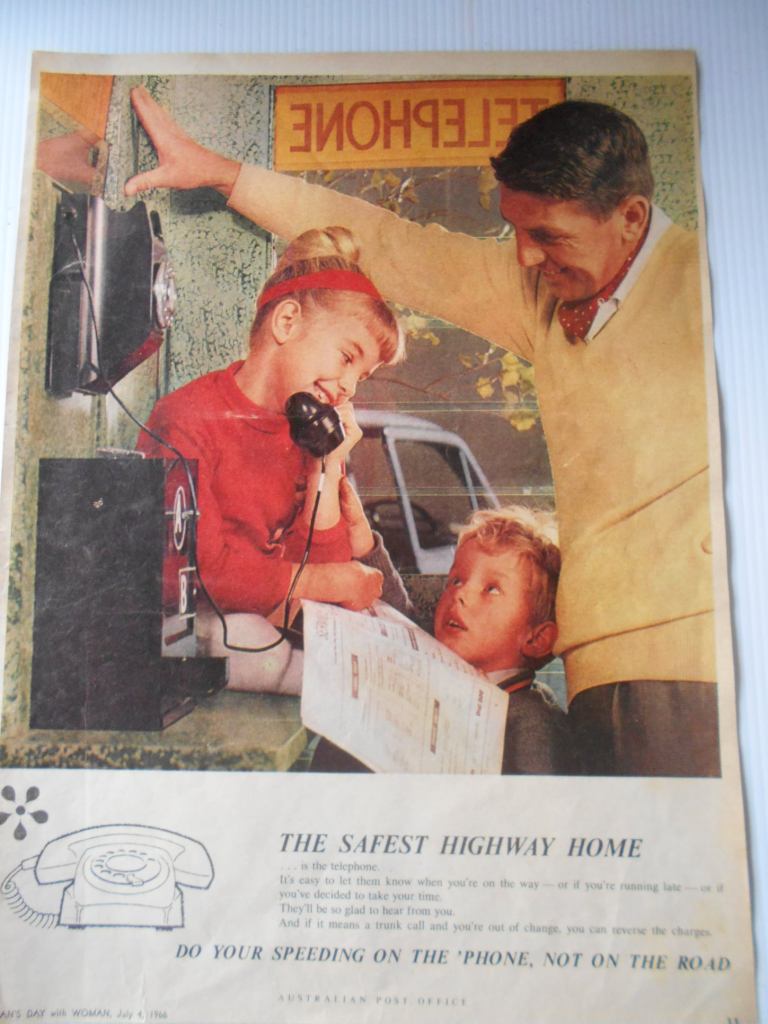 In 1966, a transitional upgrade was applied to some AB phones, enabling them to accept 20-cent coins and facilitate short STD (Subscriber Trunk Dialling) calls. This modification was relatively simple—requiring only minor alterations to the coin mechanism and the addition of a relay at the exchange to generate a warning tone before call time expired. These upgraded units were installed alongside standard operator-assisted multicoin phones, typically in high-traffic areas or popular holiday destinations where STD usage was expected to be high. To distinguish them from regular units, they were painted bright orange. Within a few years, these interim models were replaced by the CT1, and later by the more advanced CT3. |
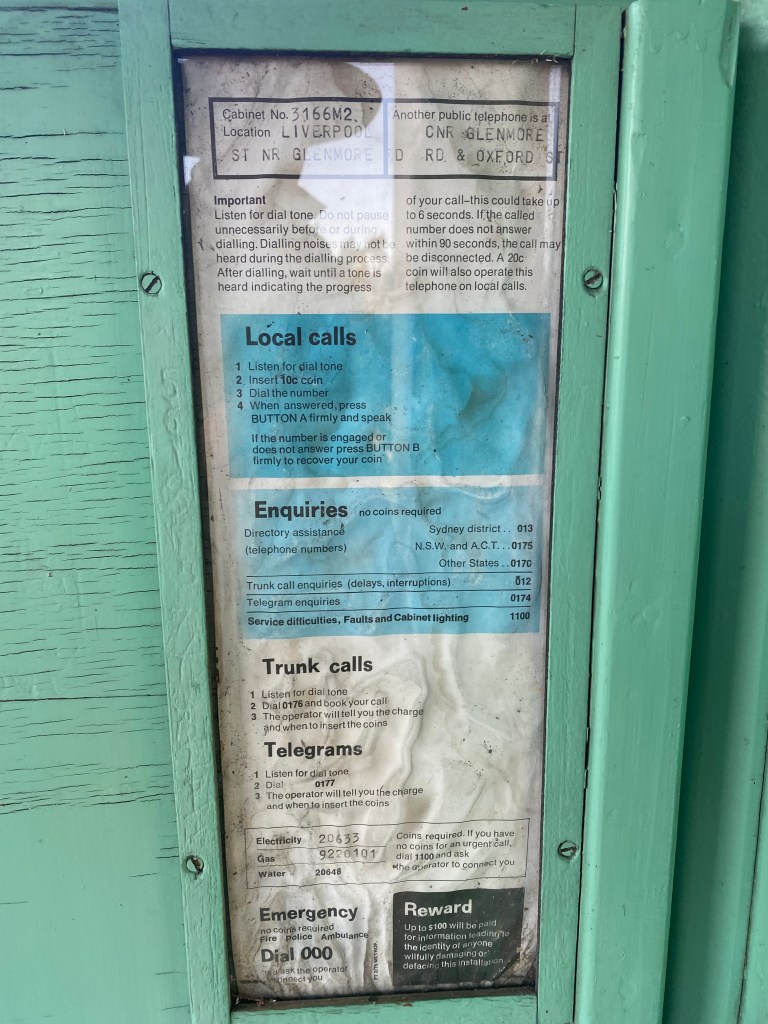
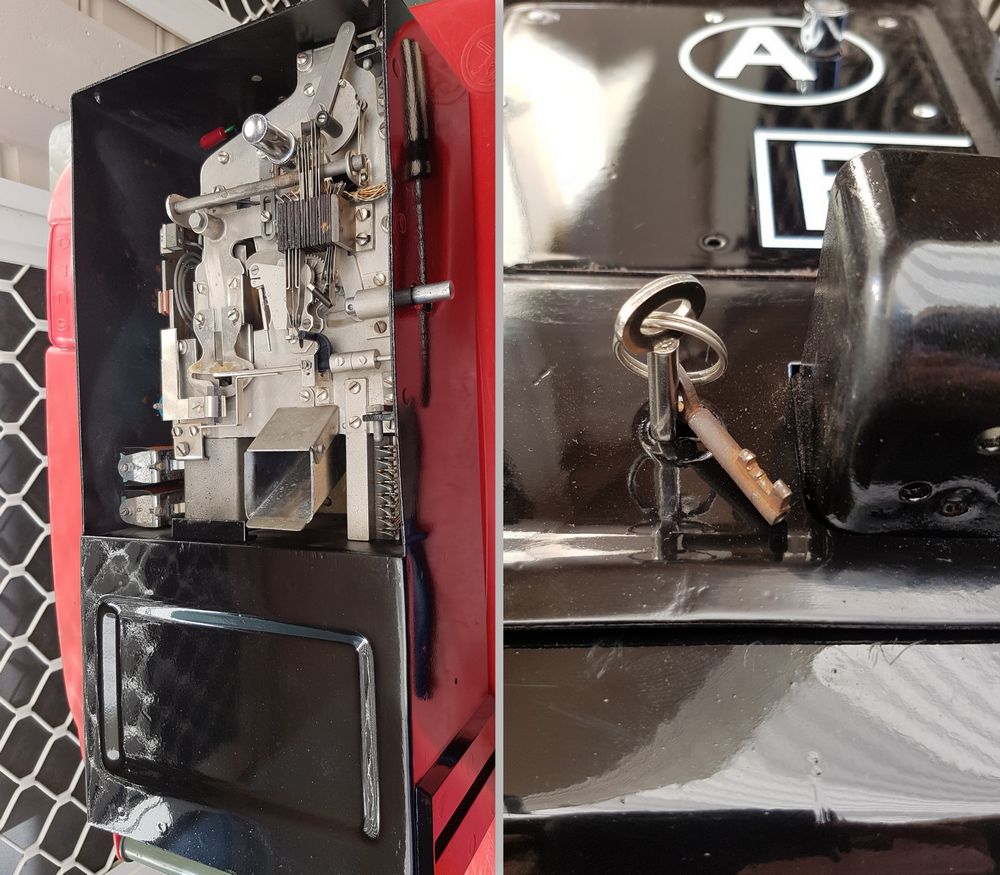
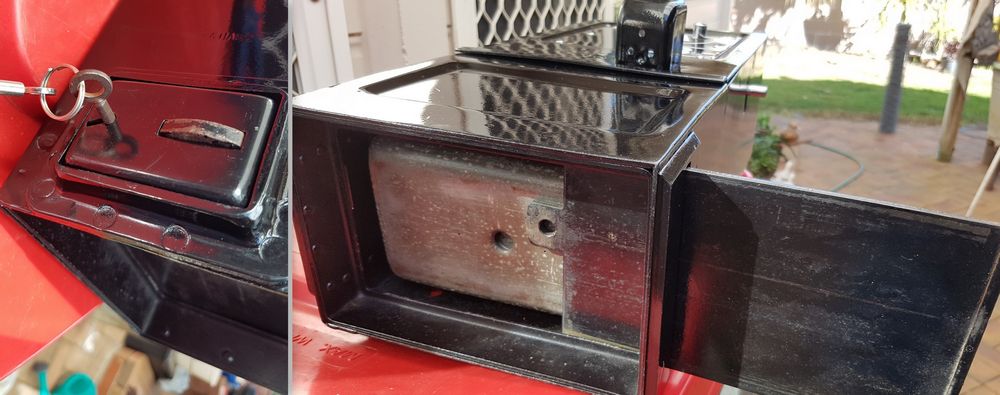
| Operation During trunk calls audible identifying signals were forwarded to the operator; a tone from a spiral gong when one penny was inserted, tone from a bell being struck once J when a sixpence was inserted and tones from the bell being struck twice when a shilling was inserted. When the operator was satisfied with correct coin insertion, the I user was asked to press button 1 A1 to allow deposit of the coins and allow conversation to proceed. 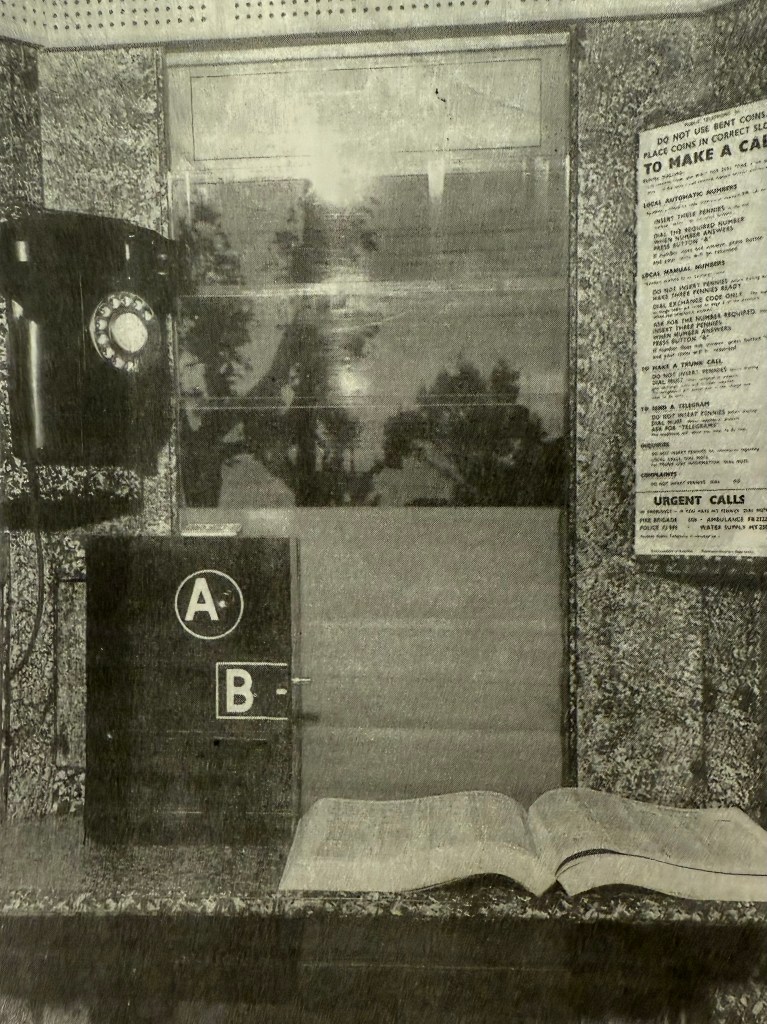 Prior to 1964, the unit fee change from 2d to 3d and then to 4d was accommodated by moving the weight of the balance arm to a position where it would latch with the required number of coins. During the 4d era, an additional latch was fitted to the back of the mechanism to allow the use of a sixpence for local calls for any user who was not carrying four pennies. When the change of unit fee to 6d took place in 1964, it was not possible to adjust the arm to operate with six pennies and the mechanism was redes1wned to operate with a sixpence for local calls. The penny runway was redesigned to accept a two shilling piece in lieu of pennies and the one shilling runway was retained. To ensure correct operation with the lightweight sixpence, the balance arm was redesigned to latch with a magnet and restoration was achieved by a special arc fitted to the coin quadrant which was activated during ‘A’ button operation. 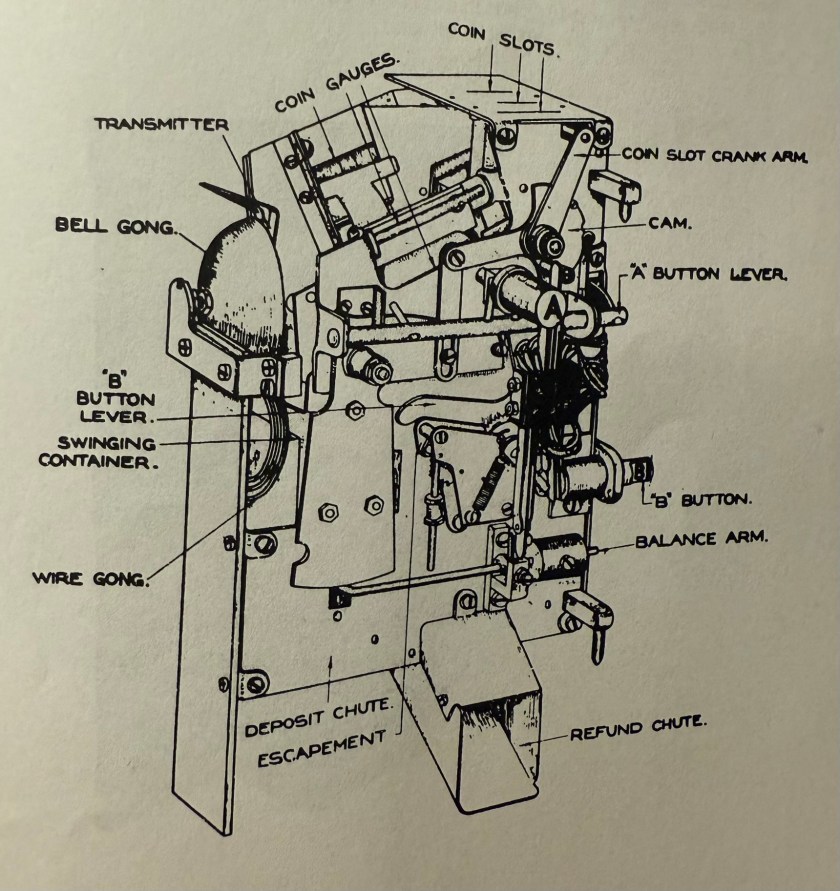 COIN HEAD CHANGES: The coin head underwent a change from accepting one penny, sixpence and one shilling, to sixpence, one shilling and two shillings, thence to decimalisation, five cents, ten cents and twenty cents. The instruments used in association with the multi coin attachments were those used for normal subscriber use and were small wall sets such as Stromberg Carlson (Fig.27), Automatic Electric, and the standard PMG 127 of whatever make (Fig.1). ONE BUTTON ATTACHMENT: This type was imported for use in magneto areas and was also known as the ‘post payment’ type as opposed to the ‘pre payment’ two button standard type. Only a few were ever used in N.S.W. and these were quickly abandoned in favour of modified two button types. 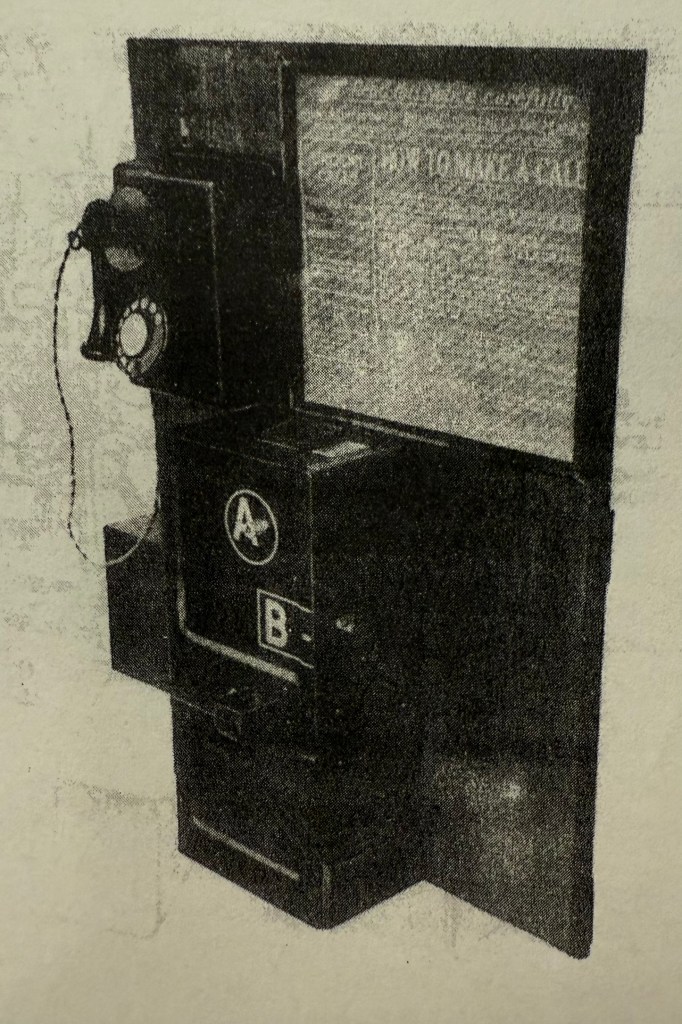 In this type the ‘A’ button was replaced by an ac relay ‘operated by ringing current from the exchange. The depositing of the coins is under the control of the telephonist who operates a special ringing key. A Cailho circuit is required for the operation of the depositing relay. This requirement led to the abandonment of the .one button type of attachment as it was necessary, in order to provide continuous service, to night switch the public telephone to a distant continuously staffed exchange via a minor trunk line. In many cases where the installation of a multi coin attachment was justified it was found that a Cailho circuit could not be made available and the proposals had to be abandoned or deferred. STD ATTACHMENT: With the introduction of subscriber trunk dialing which enabled direct dialing of trunk calls without operator assistance, some two button multi coin attachments were modified to accept only 20c coins. These attachments were enameled orange to distinguish them from conventional black attachments. Of ·course the coin heads were modified to accept 20c coins only. In N.S.W. the use of these public telephones was confined to the popular northern coastal resorts. NUMBERS: At the peak of its usage the multi coin attachments in use exceeded 20,000 Australia wide, and of these only 400 were STD versions. The two button attachment was the standard trunk line instrument until the introduction of the Coin Telephone No.1 in 1966, and with several modifications to accept changing denominations, to 10c at present, is only being phased out of use. Source- (with thanks to) History of the telephone in New South Wales / by Jim Bateman [Croydon, N.S.W.] : J. Bateman, 1980 ISBN: 0959478701 |
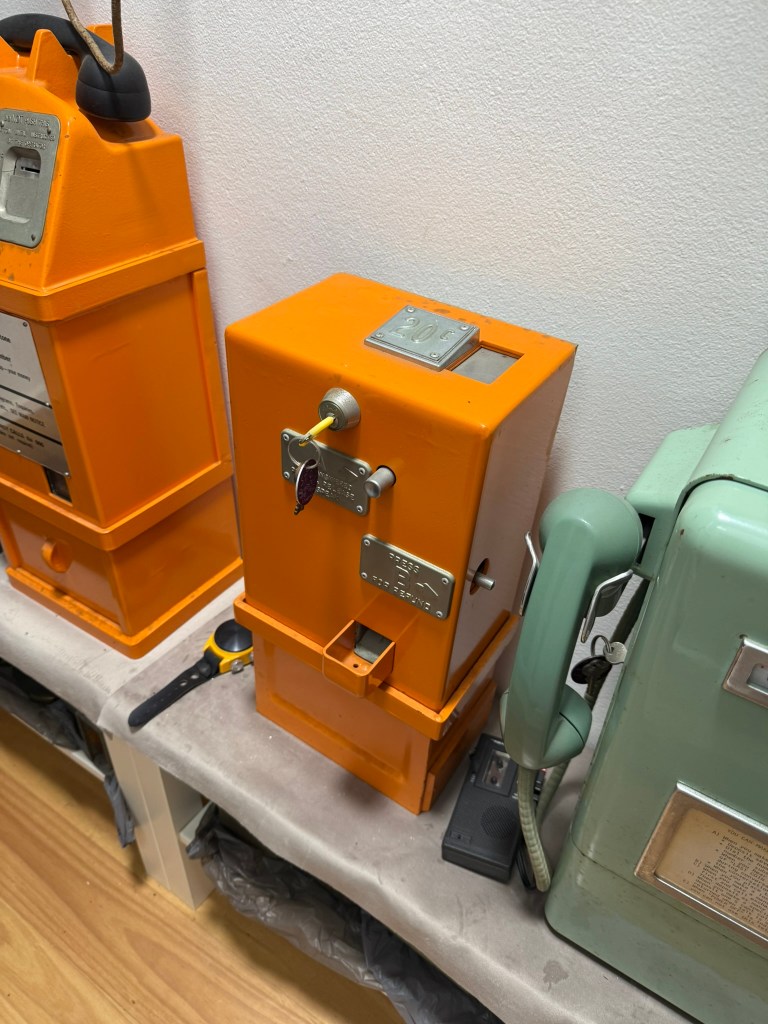 Above- AB box modified for use as a trunk line (installed at the snow, etc). Painted orange and modified to take 20c coins only (the CT1 was also modified in a similar way). |
| Operation note- PMG seemed to have set up Australian Button A and B phones (where used) differently from the way they were set up in UK and NZ. With the UK version you could not dial a digit (except 0 or 1) unless the requisite coins had been inserted (when the aggregate weight of the coins was reached) the dial could be used but the mouthpiece was shorted out and a 100 ohm resistor was shunted across the earpiece to stop it being used as a makeshift mouthpiece. When the call was answered you press button A to un-short the mouthpiece and earpiece. This deposited the money in the till at the bottom of the box. If the call was unsuccessful you pushed Button B break the circuit to return your coins. There was a clockwork timer to ensure the circuit was broken for several seconds to ensure the exchange equipment was released. You dialled 0 for a long distance call. The operator would ask you to insert shillings (ding ding), sixpences (ding), and pennies (bong) as required, then tell you to press Button A (clunk) to deposit the coins and you could start your call. A ‘mouthpiece’ in the coinbox let the operator hear the dings and bongs. As far as I could see the PMG configured the Button A and B coin boxes differently. You could dial the number any time and speak with an operator any time. However once you dialled your call, when the called person answered the line pair were swapped which operated a polarised relay which shunted the mouthpiece and put a resistor across the earpiece. Inserting the requisite coins and pressing Button A allowed the call to proceed. |

 Pay phone Story
Leave a comment