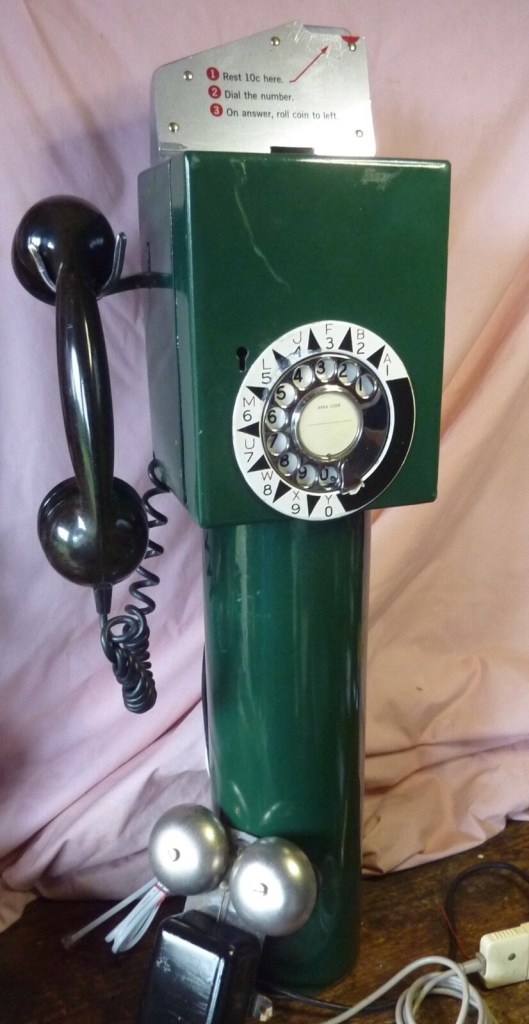
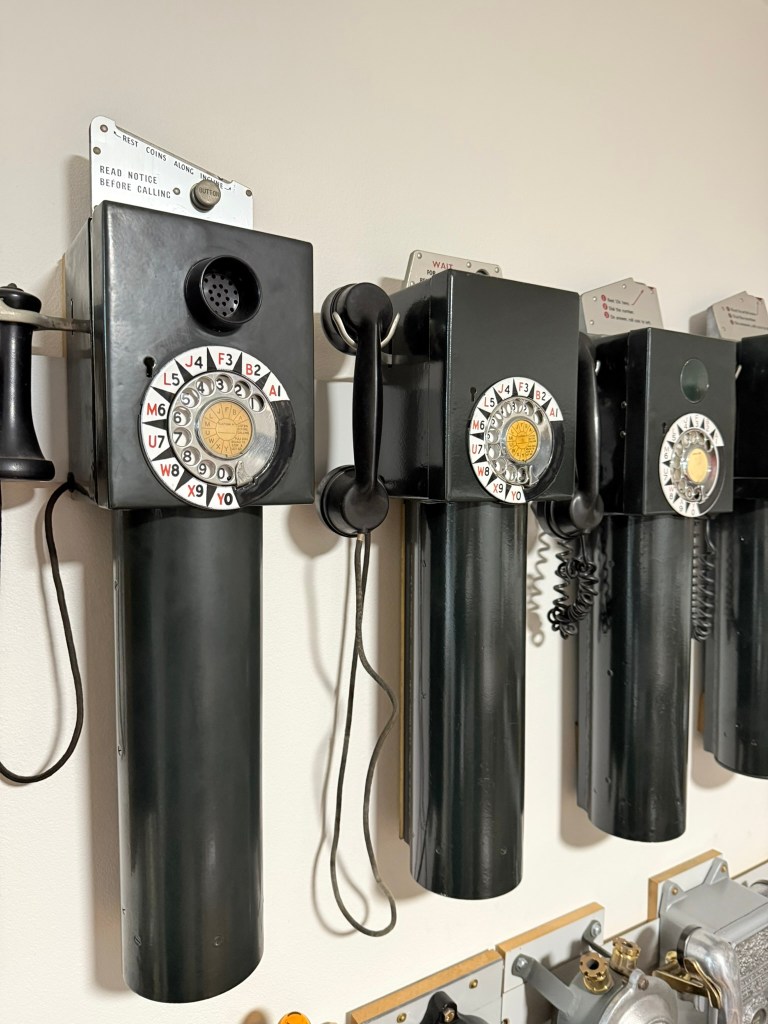
| Name | Variable Tarif Long Barrell Green |
| Date | 1930-1970 |
| Manufacturer | PMG Sydney Workshop |
| Usage | Boothes |
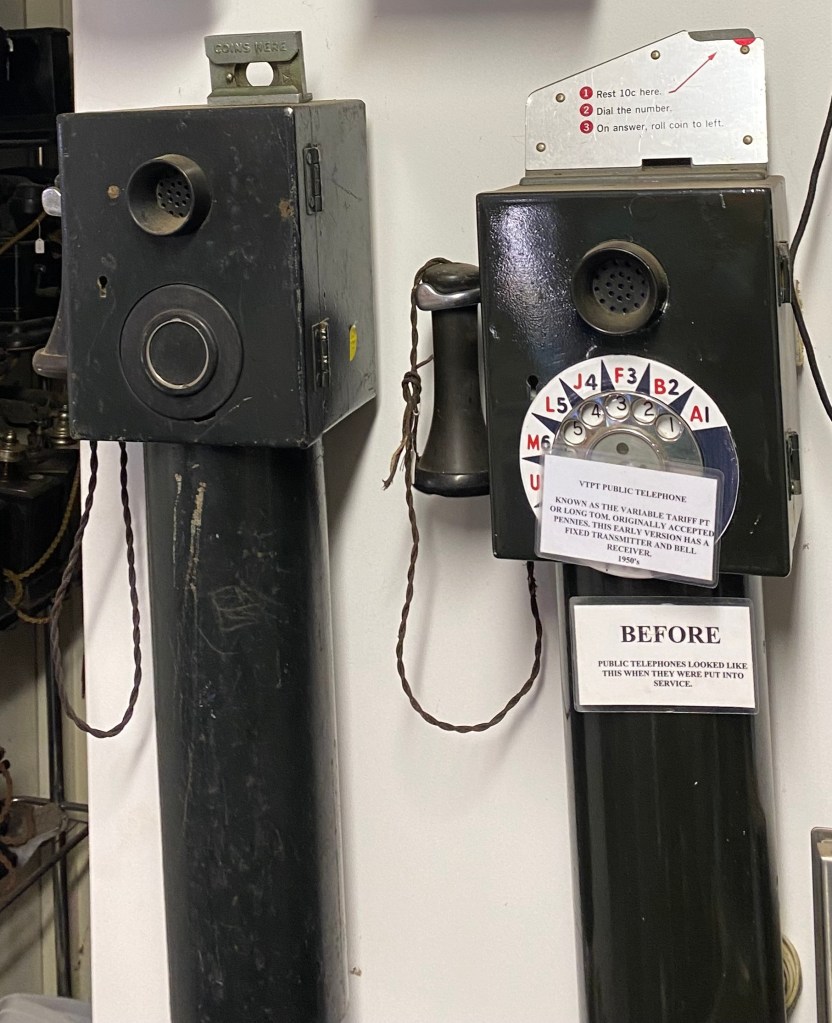
| Notes | Known as the Long Tom |
| PTVT-04 | See more notes below. |
| Further notes |
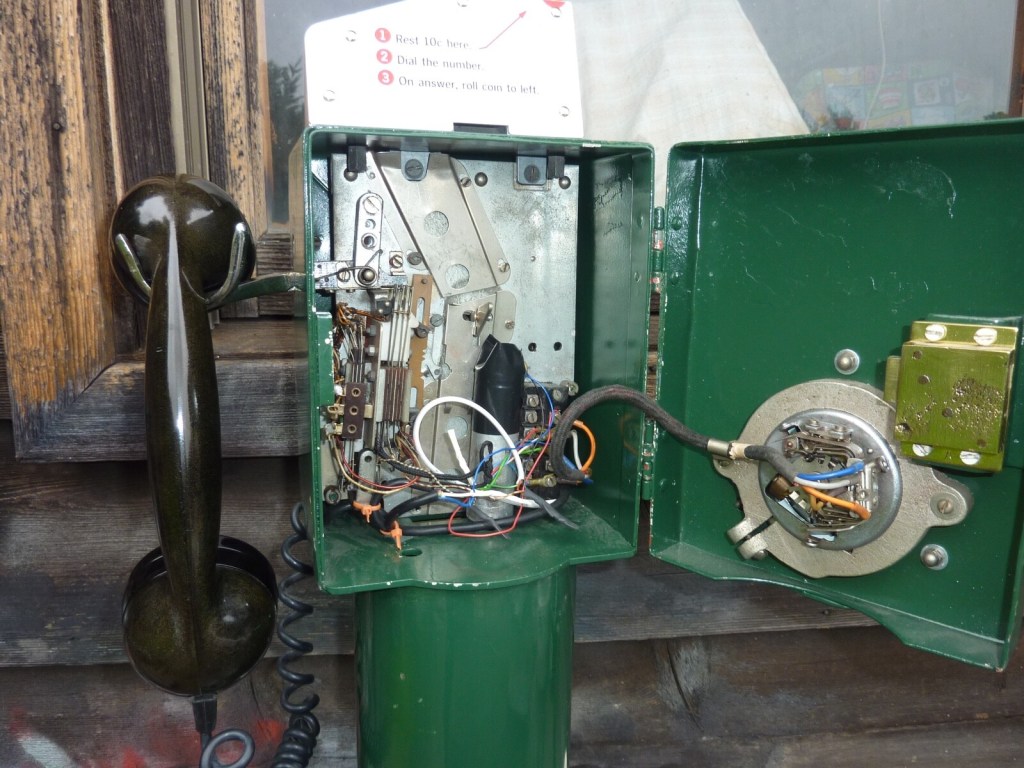
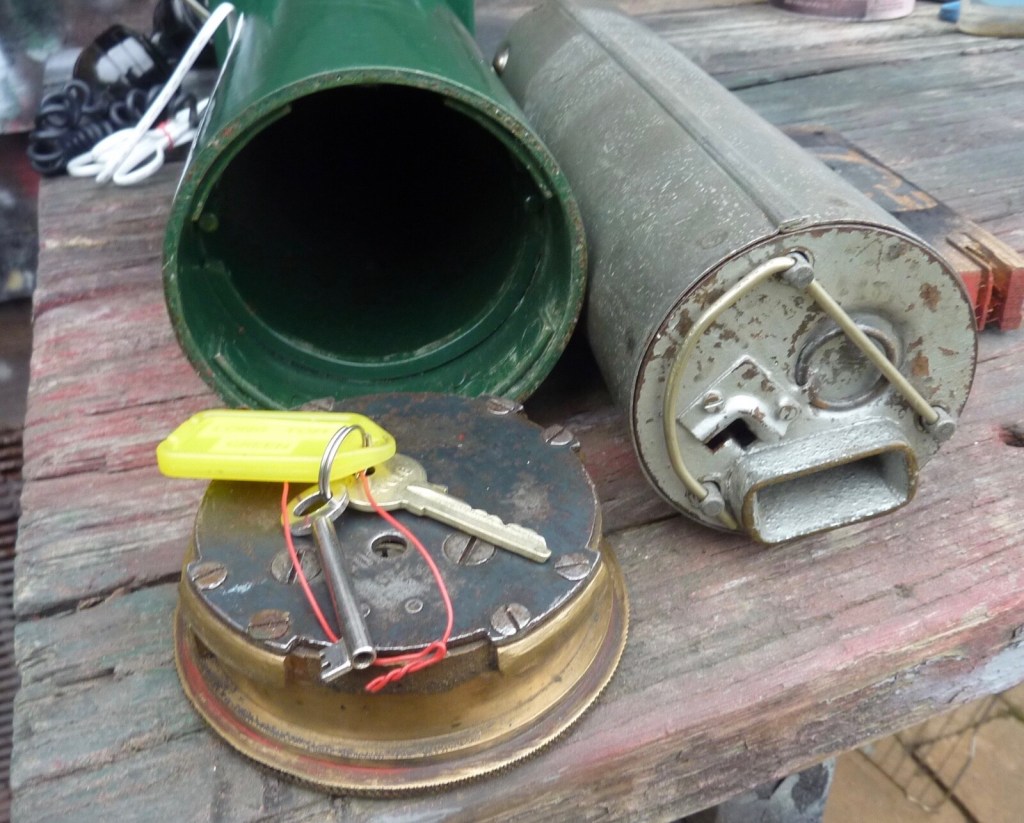
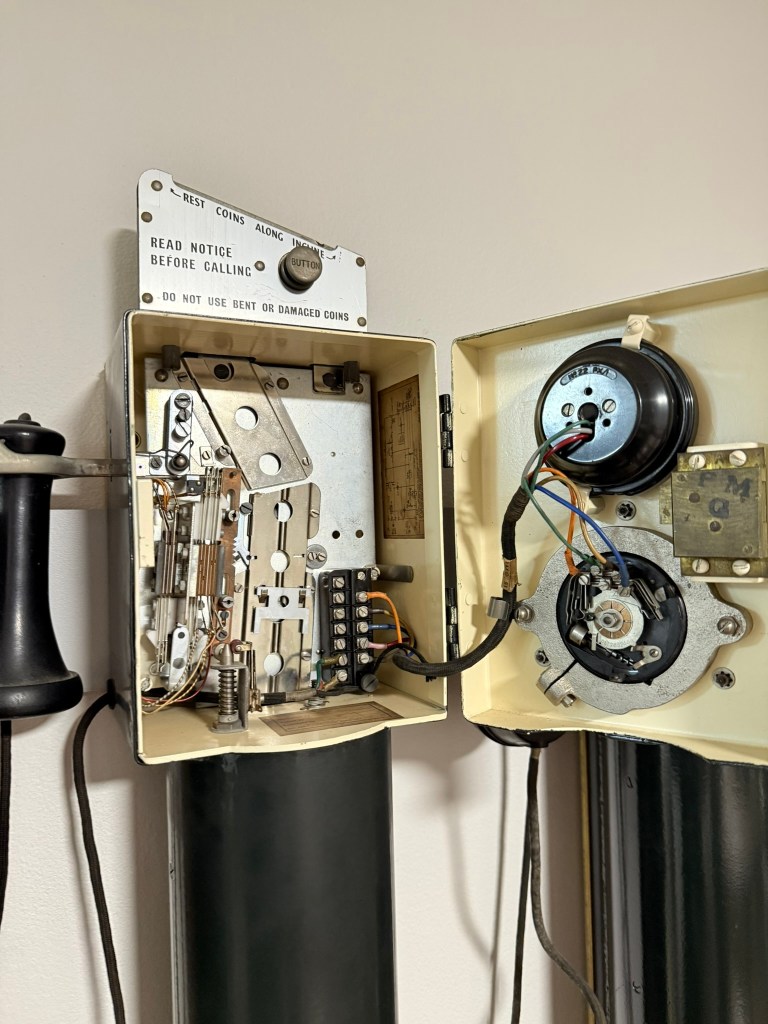
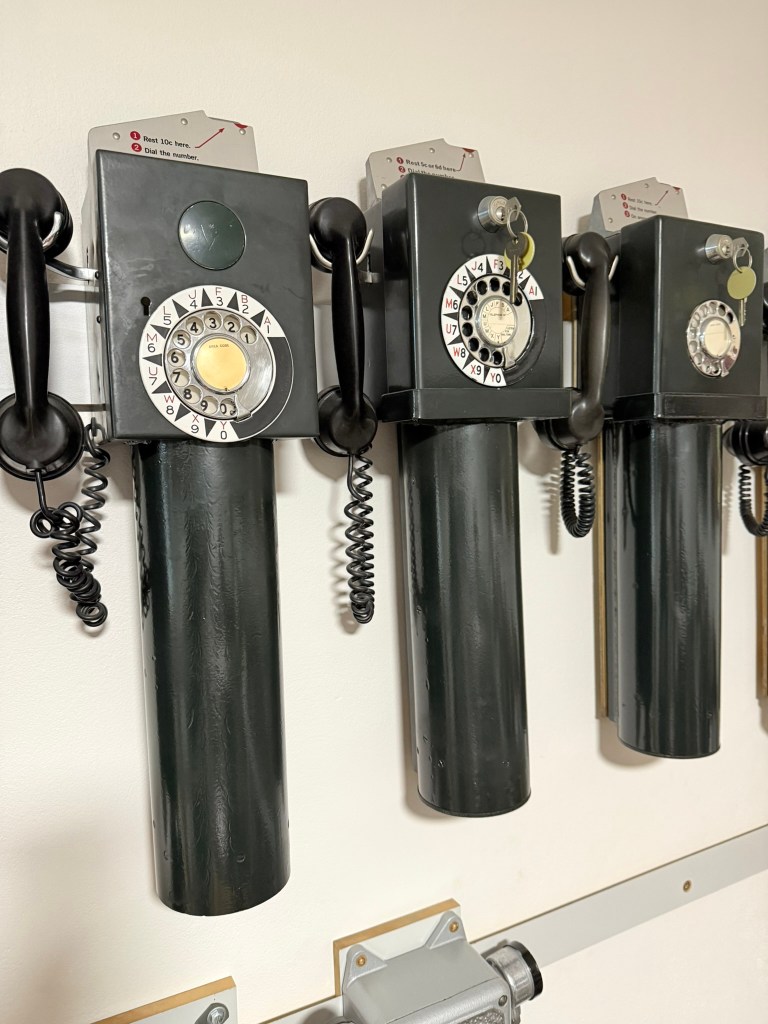
| 1955 VARIABLE TARIFF LOCAL CALL INSTRUMENT: In 1955 a new mechanism was introduced and fitted to all existing Automatic Fixed Unit Fee instruments. The mechanism was designed so that it all attached to a backing plate which could be completely removed for maintenance, unlike the earlier two penny type which had parts strapped to various areas of the interior. The new redesigned coin head had provision for up to four pennies to allow for tariff changes (Fig.14). The coin head was slotted to hold two, three or four pennies and a button at the end of this slot, when pressed, allowed the coins to run down in sequence. 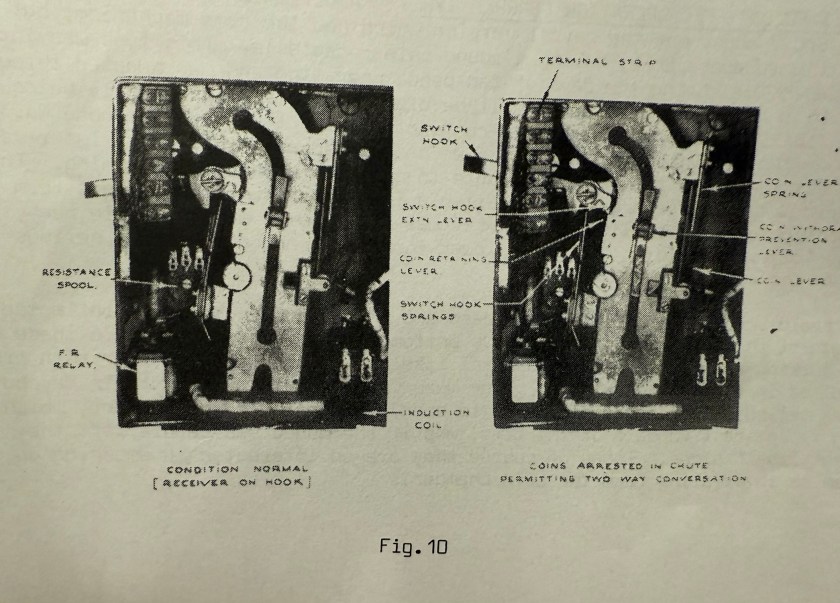 HOW THE VARIABLE TARIFF MECHANISM WORKED: The coins passed straight through the coinway into the tin, but in so doing each successive coin triggered a pawl which acted on a toothed escapement. As each coin passed the pawl, the escapement dropped one tooth. The correct number of coins caused the escapement to operate springs which changed the circuitry to allow conversation to proceed. In the fixed transmitter type, the escapement was reset in readiness for the next call, by a lever on the switchhook which operated when the receiver was hung up. the pay station type, the escapement was reset by a magnet in the ‘mechanism, which operated when the handset was replaced on the table telephone. 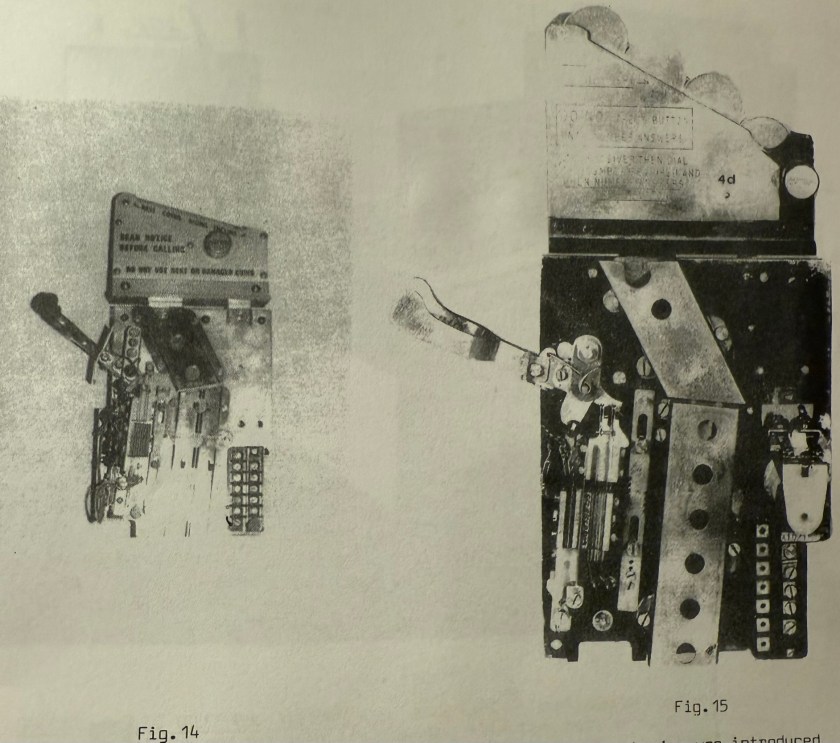 1964 AUTOMATIC FIXED UNIT FEE INSTRUMENT REVISION: The existing Variable Tariff instruments were modified again in 1964 to a1low for a six penny local call rate. A new coin head of the fixed insert type was provided and the penny chute was replaced by a narrower chute track, and the number of teech on the escapement reduced to one. 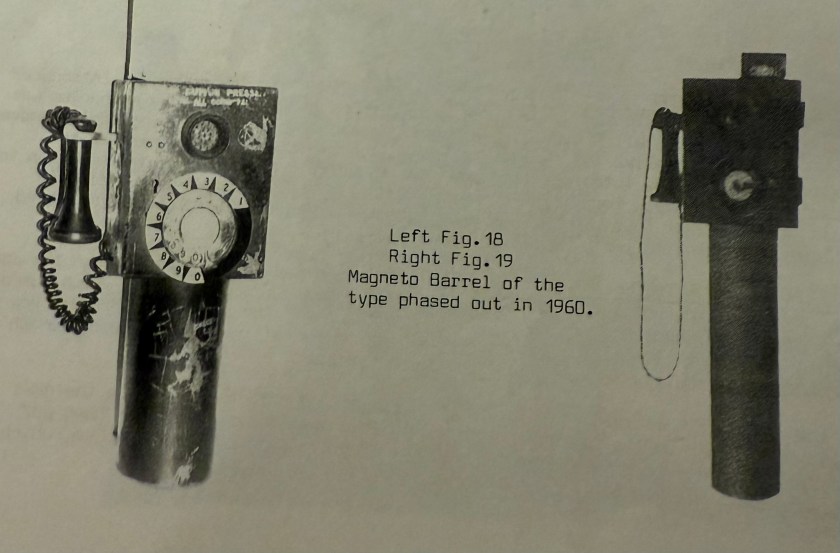 LOCAL CALL BARREL MAGNETO VERSION: As the unit fee tariff increased in country manual areas the fixed transmitter type barrel changed in the same ways described for auto areas; the change of coin head and mechanism was the same. Basically the barrel type had a magneto where the dial is situated on conventional instruments. Even CT1 instruments were designed at a much later date for manual areas. 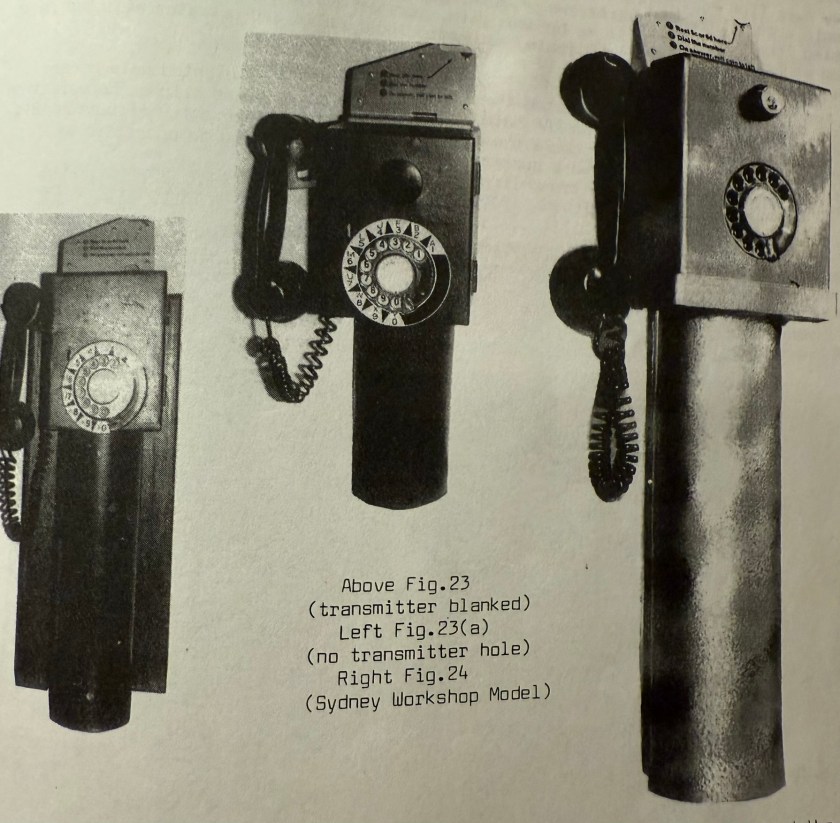 1966 LOCAL CALL BARREL REVISION: Decimalisation in 1966 meant that the existing coin head had to be changed to five cents. Both five cents and six pence are the same size so there was no change to the mechanism, but because both currencies were circulating a redesigned coin head was provided. A five cents or six pence coin head of the roll coin design was provided on all existing barrel instruments. Source- (with thanks to) History of the telephone in New South Wales / by Jim Bateman [Croydon, N.S.W.] : J. Bateman, 1980 ISBN: 0959478701 Below- British racing car driver Stirling Moss uses a public phone on arrival at Mascot (SLNSW)  |
 Pay phone Story
Leave a comment