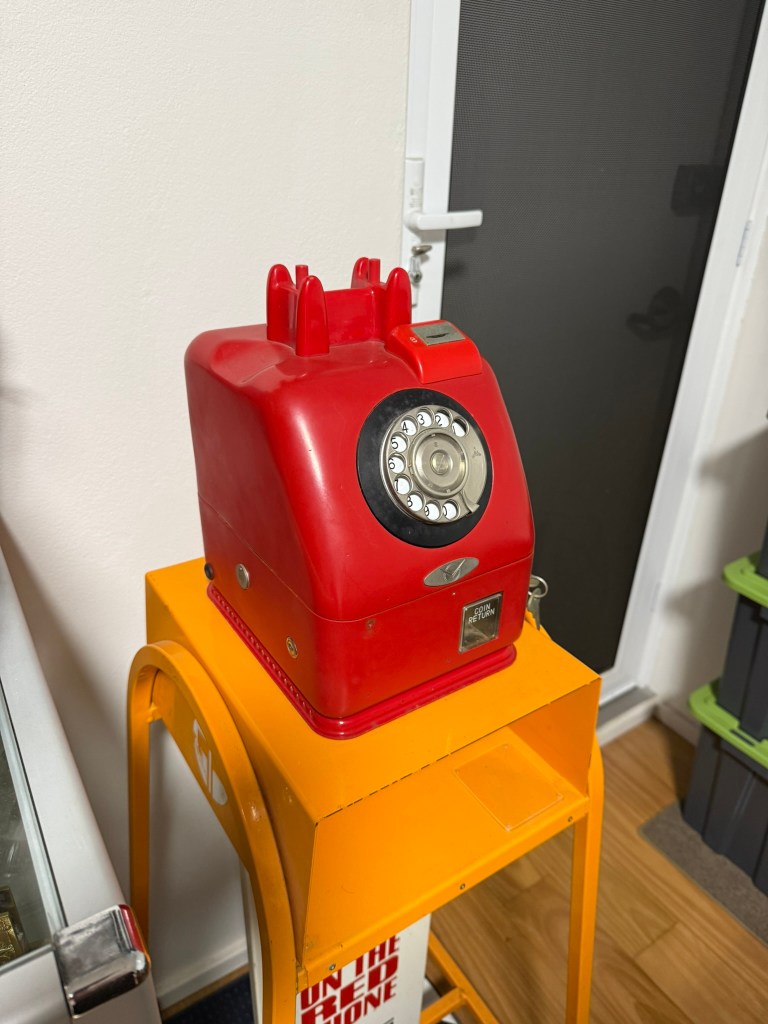
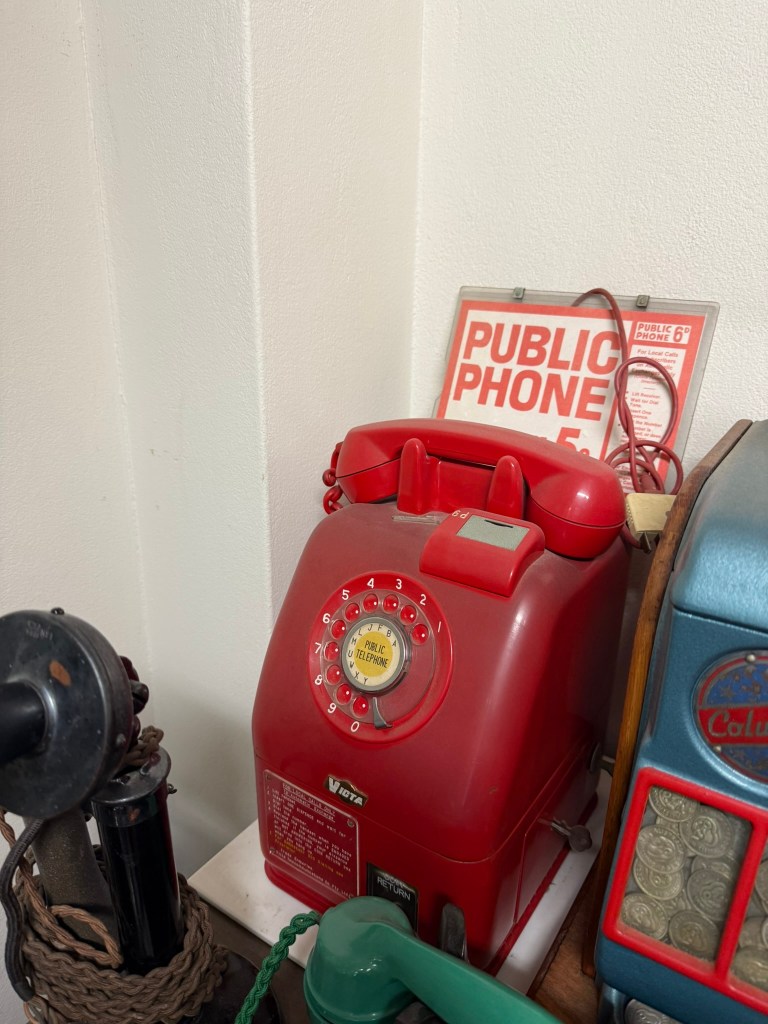
| Name | Victa RedPhone |
| Date | 1963 |
| Manufacturer | Marketed by Victa Telecommunications, manufactured by Tamura Company in Japan. |
| Usage | Private |
| Notes | See more notes below- |
| Further notes |
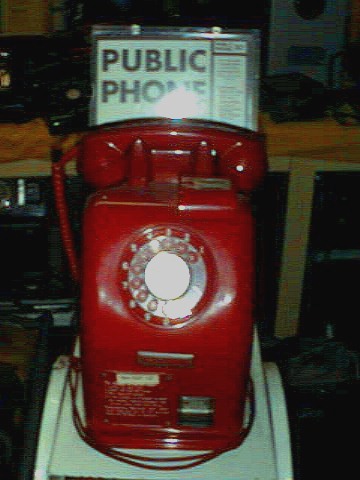
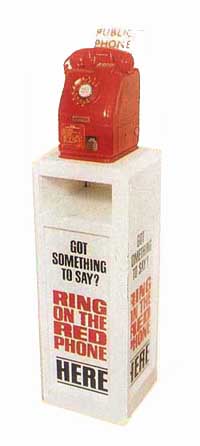
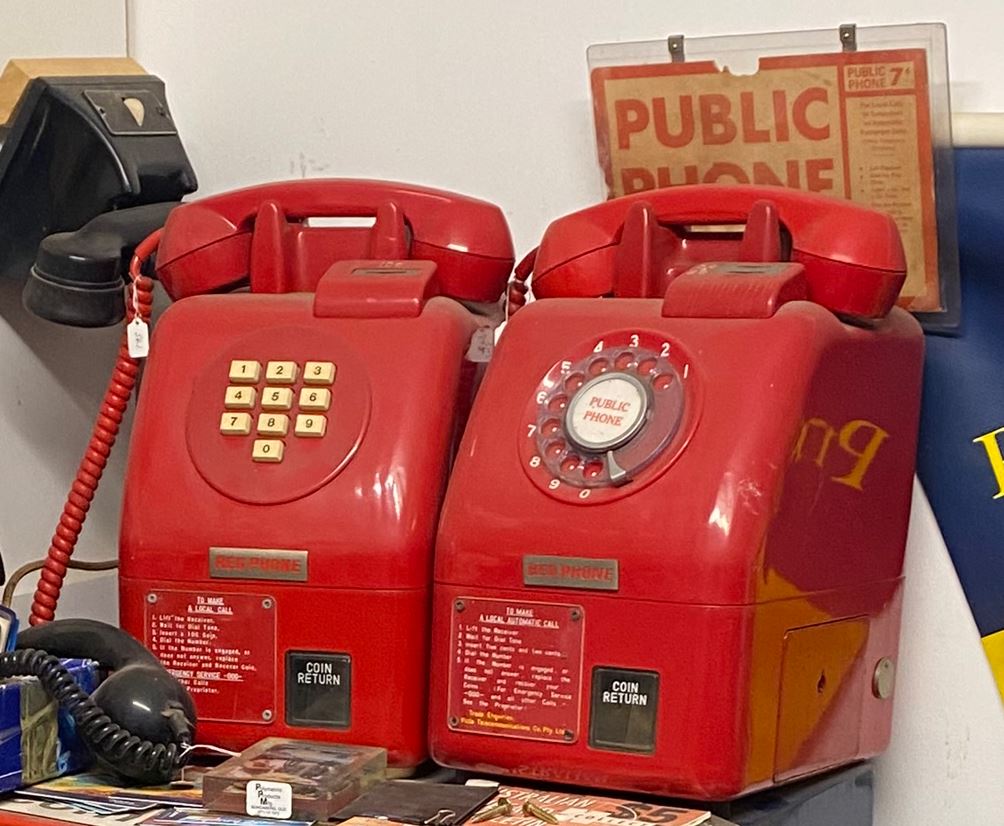
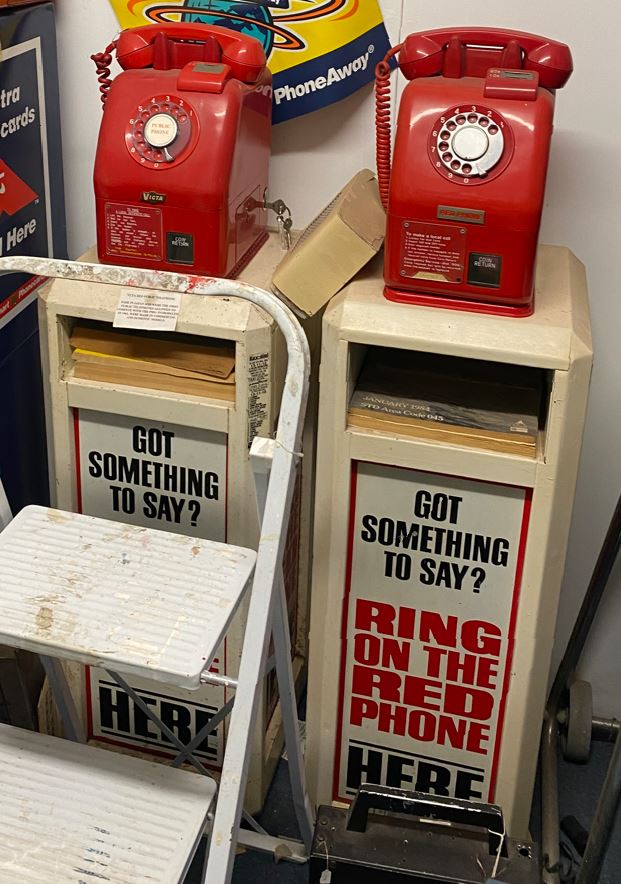
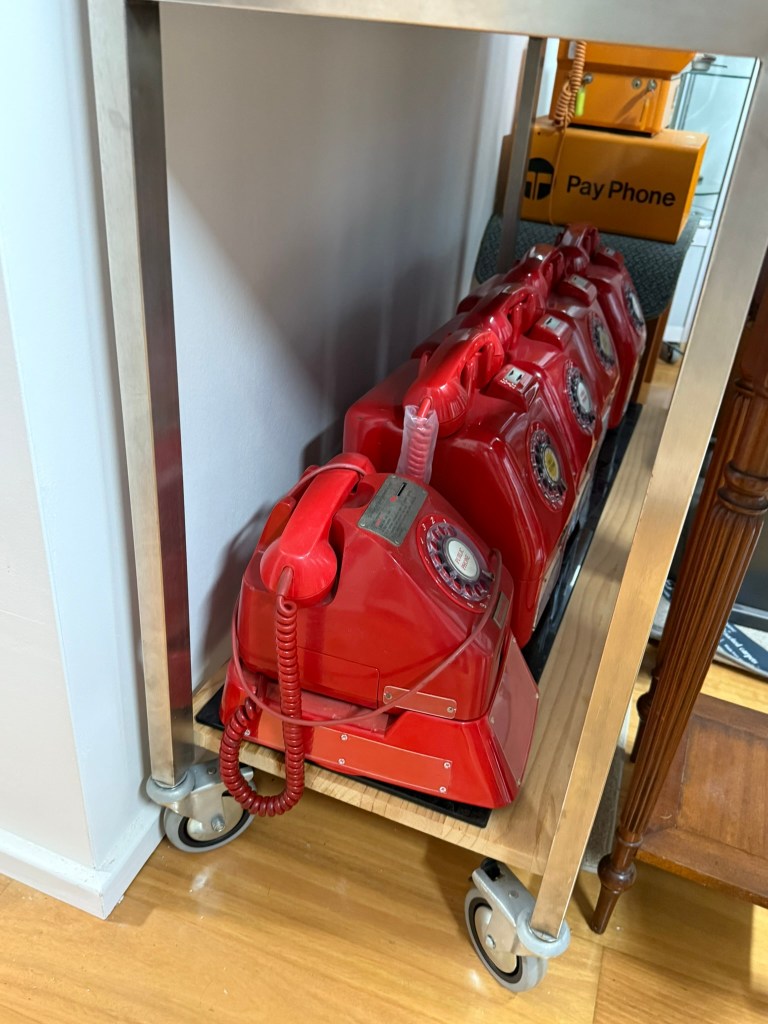
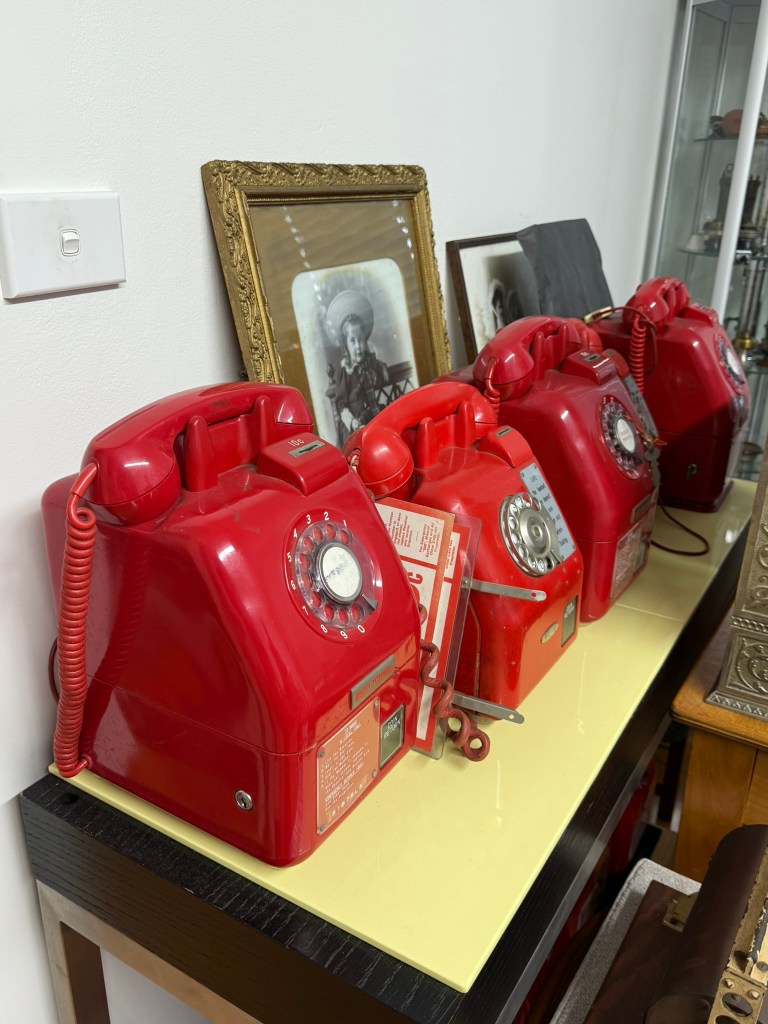
| The early 196Os saw an opportunity to bridge the widening gap between the constraints on provision of public telephones by the PMG, and the demand for privately leased public telephones. The PMG could not provide PT’s in shops, factories or flats where expected revenue was insufficient to meet the costs of installation and maintenance. Furthermore the demand in these locations, especially shops and institutions became exceptionally high, and any attempt to meet it would have been frustrated. Two private companies were permitted to market and install instruments of their own, and these proved an overnight success in N.S.W. and the rest of Australia. In some shopping centres leased services may be seen in almost every second shop, the number being far beyond that which the PMG could have reasonably provided. VICTA RED TELEPHONE: In 1963 Victa Telecommunications began marketing a commercial (for shops and factories etc.) model and a domestic model (for guest houses and homes) an a lease arrangement with subscribers who paid the PMG rent for the exchange line used. The instruments, distinctively red, were manufactured by Tamura Company in Japan. 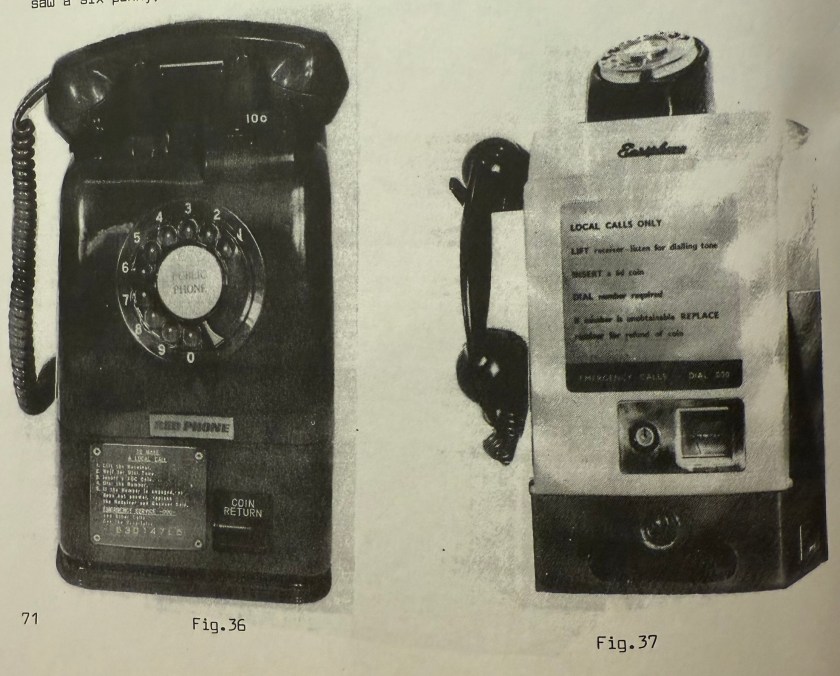 COMPANY PUBLIC TELEPHONE TAKEOVER: In December 1974 Telecom absorbed all the private company instruments and customers and these instruments then became the responsibility of Telecom who began their own active marketing programme which has continued to the present. Easiphone instruments are being phased out of operation and a revised Red Phone is being successfully promoted for this sector of the market. Coin head changes saw a six penny, so seven cents and in 1975 to ten cents (later to thirty cents) They were withdrawn in about 2000 and replaced with the Goldphone and Bluephone. 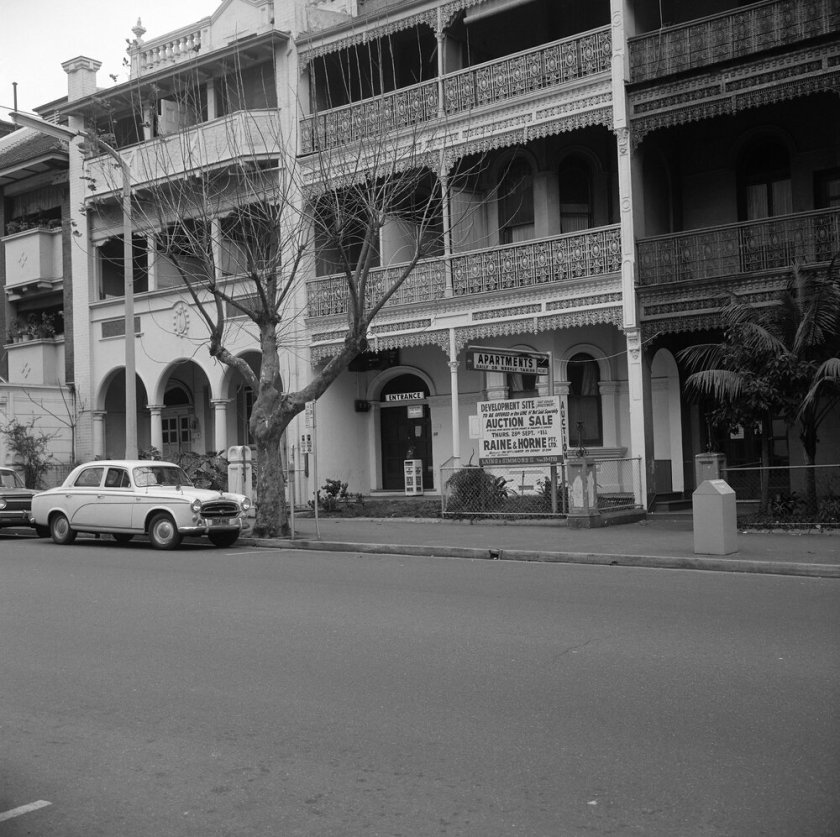 Above- RED PHONE Victoria Street Potts Point, 1967 Source- (with thanks to) History of the telephone in New South Wales / by Jim Bateman [Croydon, N.S.W.] : J. Bateman, 1980 ISBN: 0959478701 Commercial Unit – a tall, full-sized version Domestic Unit – a squat model for low-use environments such as boarding houses 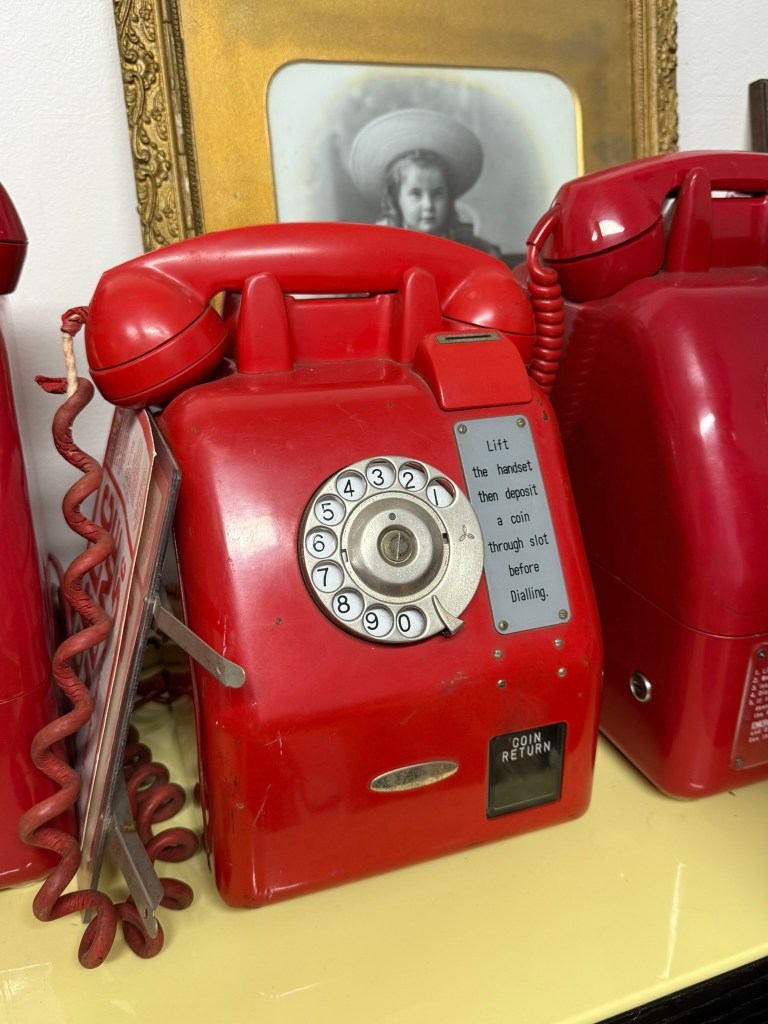 Above- early prototype from Japan. Design and Operation Red Phones required coins to be inserted before any call could be placed—including emergency numbers like 000 and directory assistance (013). In such cases, the coin was refunded after the call. Built with heavy-duty construction, the Red Phone weighed over 10 kilograms, even when empty. It featured: -Three locks: one for the owner (uncharged calls), one for the coin safe, and one to access the internal dial mechanisms -A conventional electromechanical bell -A delay built into the hookswitch to prevent misuse via rapid hook flashes -A printed circuit board key system to configure compatibility with SxS or ARK exchanges -A circuit diagram often pasted inside the unit for technicians Below- In 1960 the Tamura table payphone was marketed by ITT Kellogg in the USA. Described as- 3 slot desktop rotary dial Payphone Code on back 51PS JUN 1960 MEASURES APPROX. 11″ TALL X 7″ WIDE X 9 1/2″ DEEP (FRONT TO BACK). WEIGHS APPROX. 22 LBS. These can still be found on Ebay but are rare and expensive. |
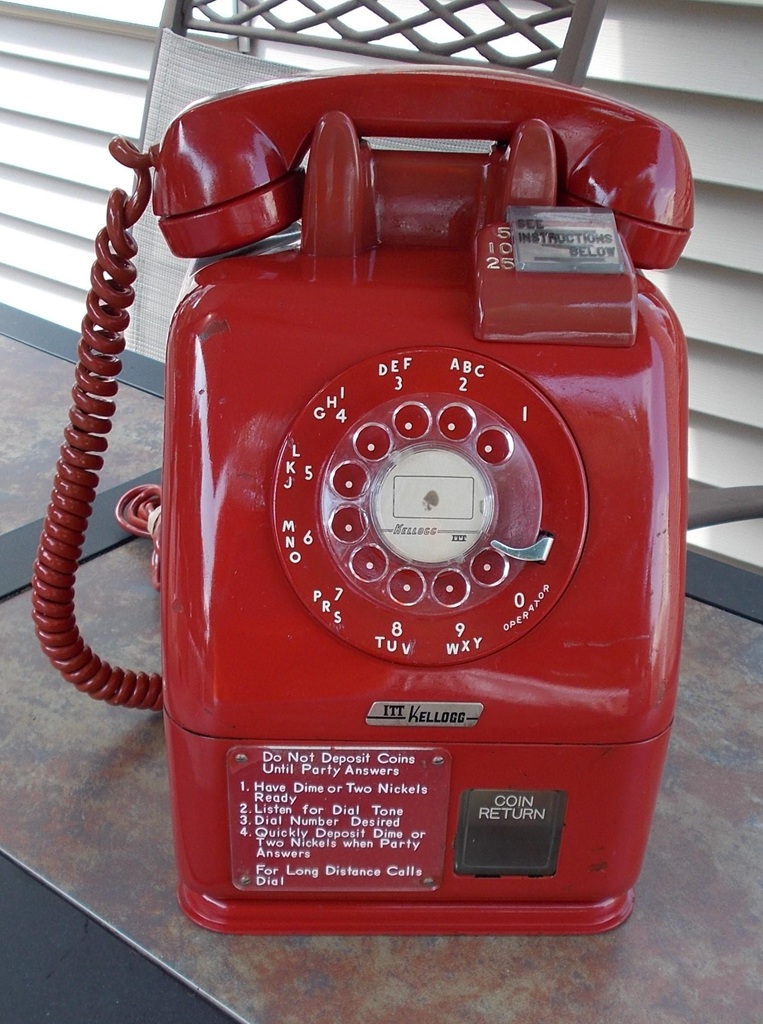
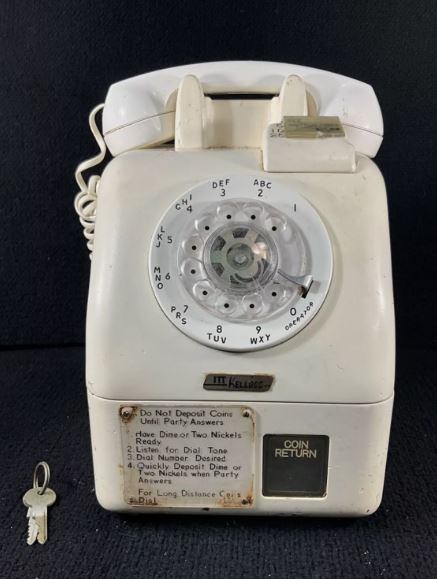
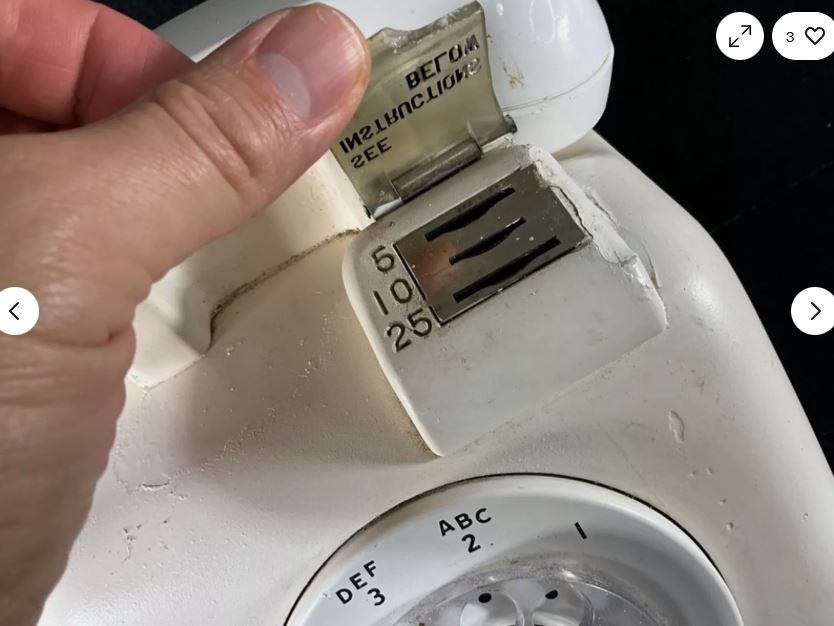

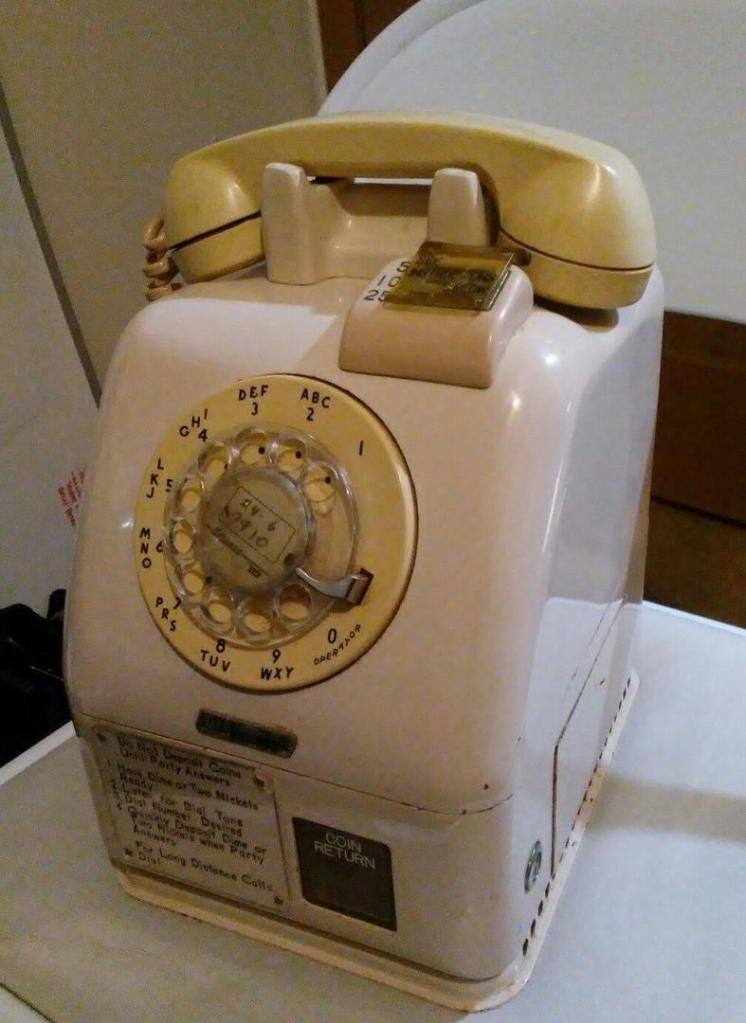
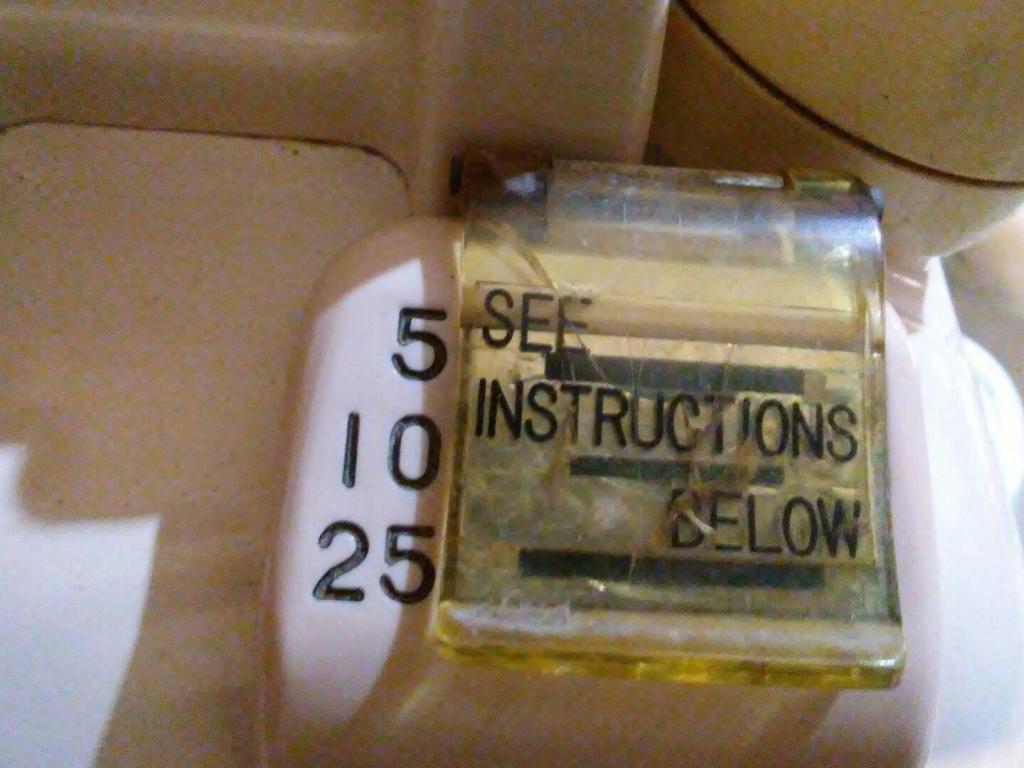
Above- KELLOGG K-581 as used in the USA. The KELLOGG K-581 payphone (or ITT Kellogg K-581) is a vintage, heavy-duty table-top pay station manufactured in the early 1960s, notably around 1962, often in collaboration with Tamura Electric Works Ltd. in Japan. These phones are now primarily sought after as collectibles or for restoration due to their classic, robust design.
Key Features
Manufacturer: The phone was produced under the ITT Kellogg brand. The original Kellogg Switchboard and Supply Company was a pioneer in mass production of telecommunications equipment, holding numerous patents after Alexander Graham Bell’s patent expired.
Design and Build: The phone is very heavy, typically around 22 lbs (10 kg), reflecting a solid construction. It is a table-top unit, measuring approximately 11 inches tall, 7 inches wide, and 9 1/2 inches deep.
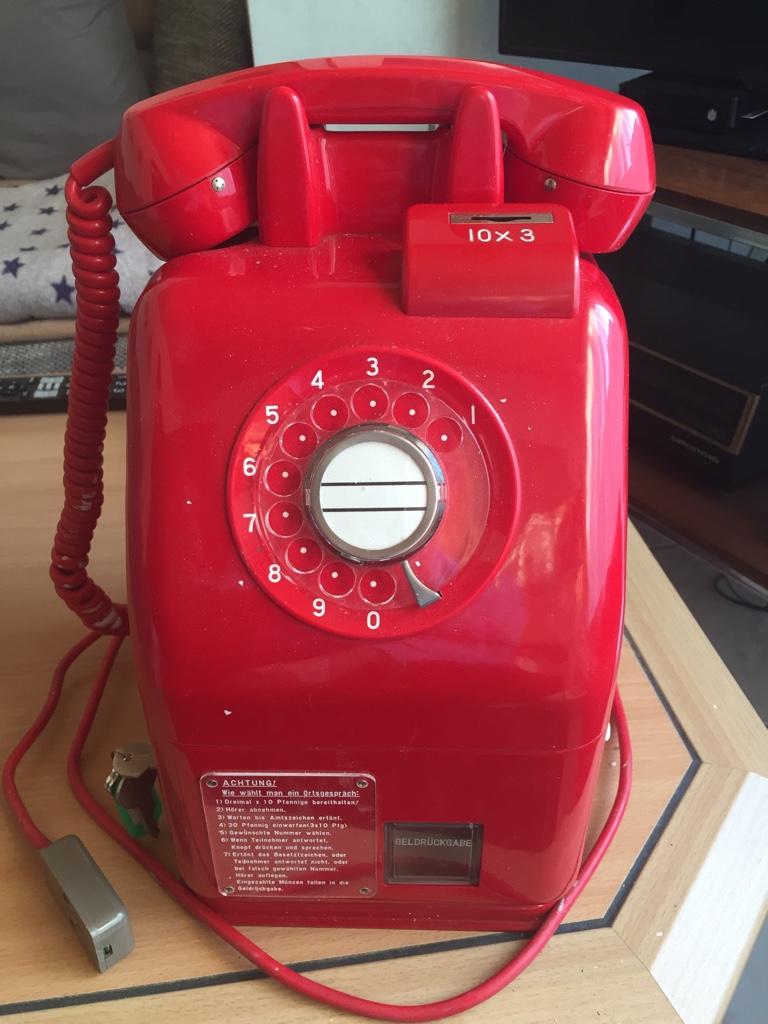
| Below-Tamura-payphone similar to the Australian Redphones produced in Japan, made for use in Germany. The coins are used was 10.- Pfennig. The phone need 3 coins to make a local-call. During the call there was no time limit. The lock is similar to the Australian type. |

 Pay phone Story
Leave a comment