| Name | Payphone 600- Blue Payphone 2 |
| Date | 1983 – present |
| Manufacturer | Landis & Gyr |
| Usage | Booths |
| Further notes |
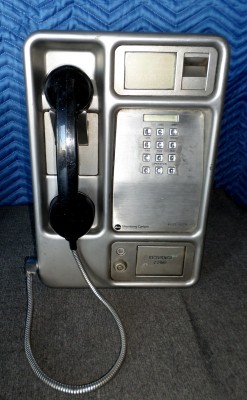
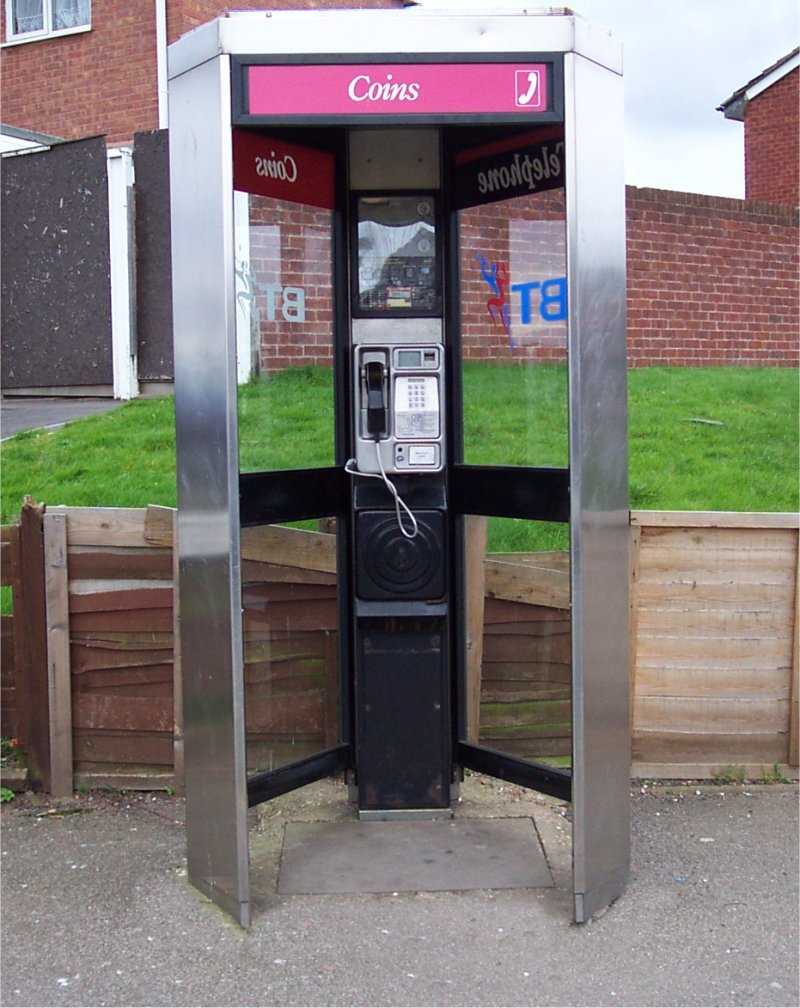
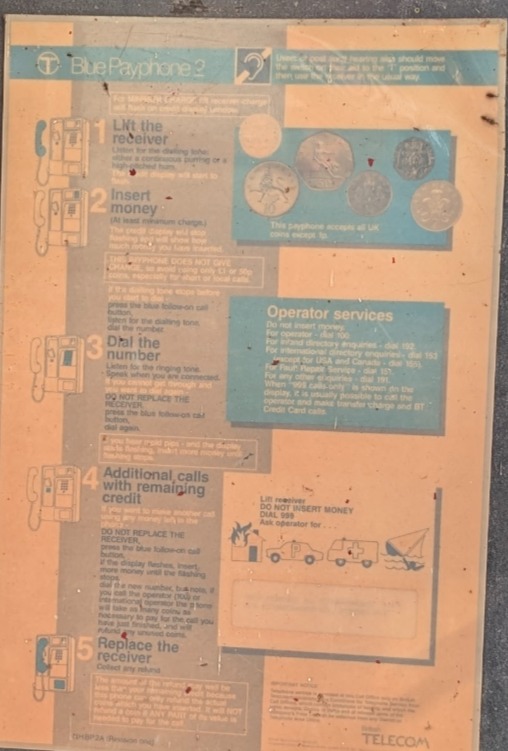
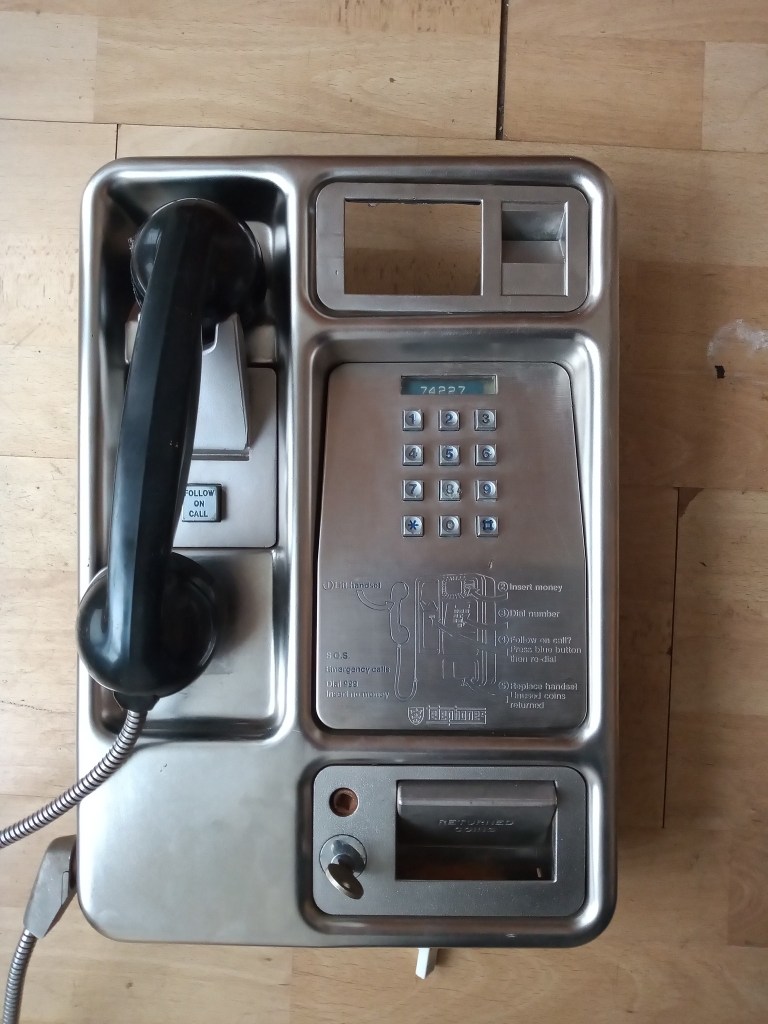
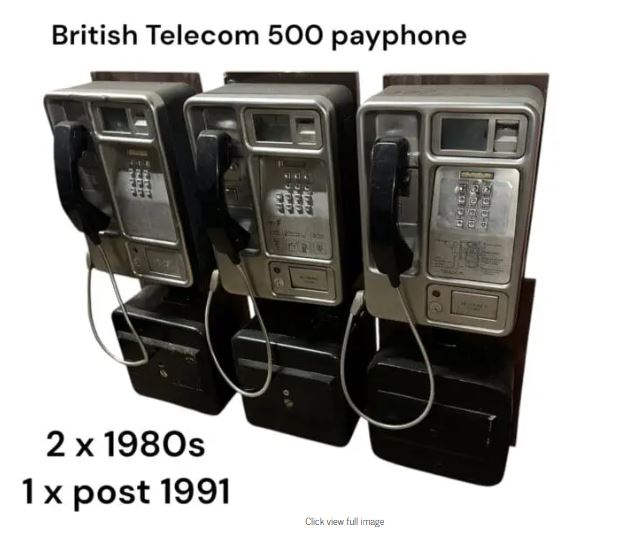
| CT24- Payphone 600 – Blue Payphone 2 The Payphone 600, officially designated as CT No. 24A (Type: CT24), was introduced by British Telecom in 1983 as a robust, self-contained, microprocessor-controlled payphone. Manufactured by Landis & Gyr, it was developed to replace earlier mechanical coin-operated models, bringing in more advanced technology suitable for high-use public locations. It accepted a range of coins—2p, 5p, 10p, 20p, 50p, and £1—with capacity for up to 15 coins to be inserted in advance, and a total cashbox capacity of around £150. The unit featured a digital display showing the minimum charge, remaining credit, and refund due, with unused coins returned automatically when the handset was replaced. Constructed from stainless or mild steel with a large lockable cash compartment, it required a Subscriber Meter Pulsing (SMP) service and a reliable earth connection. Programming and tariff adjustments were carried out using a handheld Tester 297A. It supported local, national, international, emergency, and operator-assisted calls. The Payphone 600 remained widely used throughout the 1980s and 1990s, particularly in unsupervised public environments. BLUE PAYPHONE 2 This payphone incorporates all the features of Blue Payphone 1, such as:- Easy local STD and international dialing. Pressure-free coin slot with no interruptions to speech if coins are inserted during a call. Follow on calls with remaining credit. Up to fifteen-coin insertion advance. Full visual display of minimum fee and Credit Remaining. “Cash Box Full’ sensor to help prevent coin jamming. Full operator service, including free 999 calls. Identification tone on incoming and operator connected calls. It will also take most denominations of coins: 2p, 5p, l0p, 20p, 50p and £1 coins. |
 Pay phone Story
Leave a comment