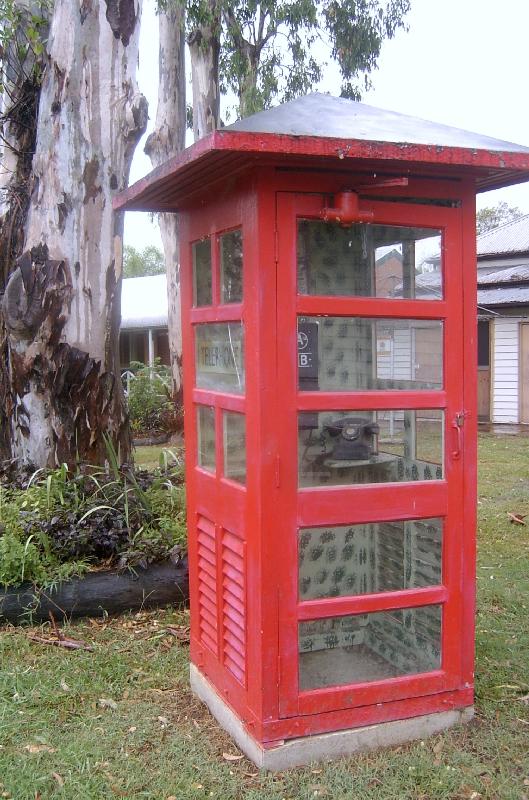
| Name | Tropical Type Queensland |
| Date | 1950s-80s |
| Manufacturer | PMG |
| Usage | Public call box |
| Notes | Similar booths were used in Queensland, WA and the NT. Similar to the Flag type but lighter construction for the tropics. Variety of pagoda or flat roofs. Simpler glazing and integrated wall louvres. |


Development of the PMG Tropical Type Queensland Phone Booth
| The PMG Tropical Type Queensland Phone Booth was a distinctive Australian public telephone booth developed for hot, humid, and cyclone-prone conditions, primarily in Queensland and northern Australia, from the 1930s through to the 1950s. Purpose and climatic response Designed by the Postmaster-General’s Department Brisbane workshop , the Tropical Type booth addressed conditions that standard British-influenced booths could not: -Extreme heat and humidity -Heavy rainfall and seasonal flooding -Termites and timber decay -Poor ventilation in enclosed metal booths Design characteristics Timber construction, usually hardwood, rather than cast iron or steel Raised floor in some examples to cope with wet ground and flooding Steeply pitched hipped roof (simpler than the Flag type), often corrugated iron, for rapid water shedding Lightweight structure, easier to transport and erect in remote areas Visual and architectural qualities The booth had a verandah-like, almost pavilion character, closer to Queensland domestic architecture than to the iconic red British K6. Its open, breathable form reflected local building traditions rather than imperial standardisation. Social and historical significance Represents one of the clearest examples of region-specific industrial design in Australian telecommunications Demonstrates the PMG’s willingness to depart from British norms when climate demanded it Served rural towns, cane fields, ports, rail sidings, and remote settlements, often as the only public link to the wider world Rarity today Very few survive. Timber construction and harsh climates meant most were: Destroyed by cyclones or termites Removed during post-war modernisation Replaced by metal booths in the 1980s |


Leave a Reply