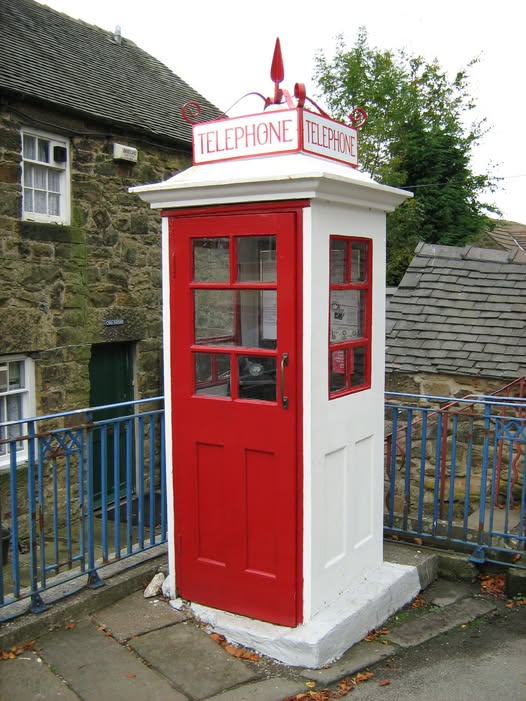
| Name | K1(235) Kiosk No. 1 |
| Date | Introduced in 1921 |
| Manufacturer | BPO |
| Usage | Public call box. Glazed upper portion. Copied by the Australian concrete model. |


Development of the BPO K1 (235) Kiosk No. 1
| Kiosk No. 1 (235) [Introduced in 1921] Kiosk No. 1 (K1) was the first standardised British telephone kiosk, introduced in 1921 by the General Post Office (GPO). It marked the beginning of a national strategy to unify and standardise public telephone facilities. The K1 was primarily installed in urban areas across the UK but was also trialed in British colonies and overseas outposts, such as Malta and Gibraltar. Although several thousand were made, very few original examples survive today. Only a handful—around 6 to 10—are still extant, mostly preserved in museums or on public display. Some are located at the Avoncroft Museum of Historic Buildings and the National Telephone Kiosk Collection. The K1 kiosks were manufactured at various sites across Britain by regional foundries and contractors commissioned by the GPO. Unlike later cast iron models, the K1 was made largely of concrete, which made production cheaper but also created long-term durability issues. The design was not the work of a prominent architect like later kiosks but was a functional solution developed internally by the Post Office Engineering Department. The initial K1 design was simple and boxy, with limited ornamentation. The K1’s colour scheme was originally white with red window frames and door framing, though local authorities could vary this. Some were painted grey or green in rural areas to reduce visual impact. The signage included simple “TELEPHONE” labels above the door and, in some cases, incorporated municipal crests. The interior was lit by a small ceiling lamp powered by the mains, though lighting was not universally fitted in early examples. Dimensions were modest—tall enough to stand inside but without the generous internal space of later models. Ergonomically, the kiosk was narrow, had poor sound insulation, and was uncomfortably hot in summer and cold in winter. Ventilation was minimal, relying on small vents under the eaves, which led to condensation and unpleasant odours. Concrete panels degraded over time, and maintenance was a major challenge. By the 1930s, the K1 was considered obsolete and was replaced by the cast-iron K2. Today, surviving examples are often used as static displays or incorporated into heritage-themed locations. A few have been converted into defibrillator stations or community book exchanges. Originally, GPO-installed payphones such as the Button A/B system were fitted in K1 kiosks. These coin-operated mechanisms required users to press “Button A” to connect or “Button B” to retrieve coins if the call failed. Placement was handled by local authorities in conjunction with the GPO, with a preference for public squares, post offices, and transport hubs. The kiosks were part of a wider institutional effort to modernise Britain’s communications infrastructure after World War I. Culturally, the K1 laid the groundwork for Britain’s red kiosk iconography, though it lacked the design elegance of later models. It rarely appeared in popular media due to its early phase-out but is still valued today by enthusiasts. Surviving units attract attention as nostalgic artefacts, often restored by private collectors or heritage organisations. These restored kiosks use enamel sign replicas, concrete repairs, and repainted colour schemes to match historic records. Below- An original K1 phone box (with working phone) at the Nevill Ground, Tunbridge Wells Cricket Club. 2025. |


Leave a Reply