| Name | A.B. Button Box Multicoin |
| Date | 1925-1990 |
| Manufacturer | BPO- Automatic Telephone Manufacturing Co. Ltd. (ATM), Siemens Brothers, and General Electric Company (GEC) |
| Usage | In phone booths See also the Australian AB Box |
| Further notes |
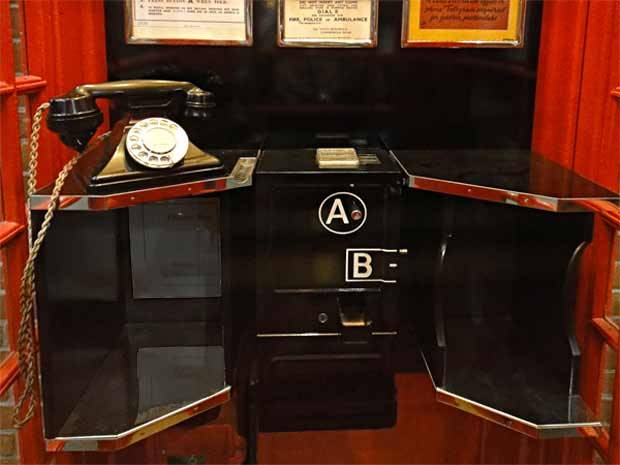
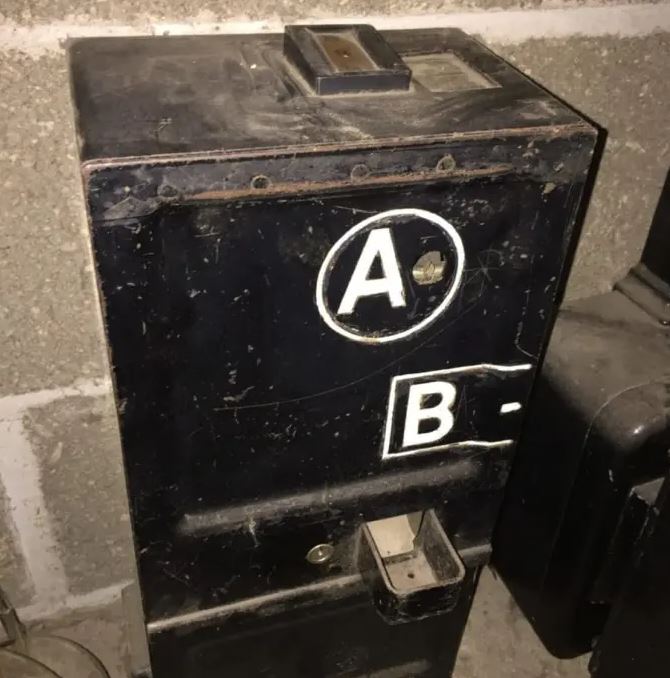
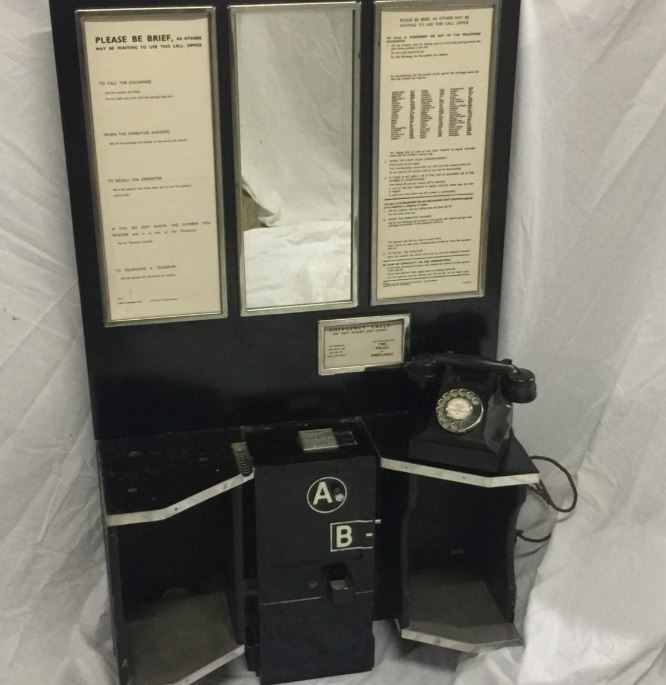
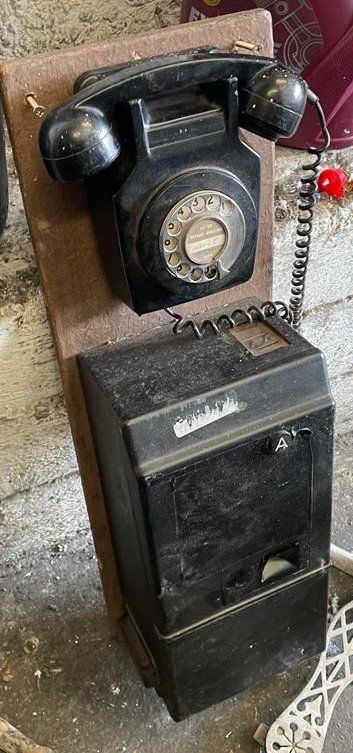
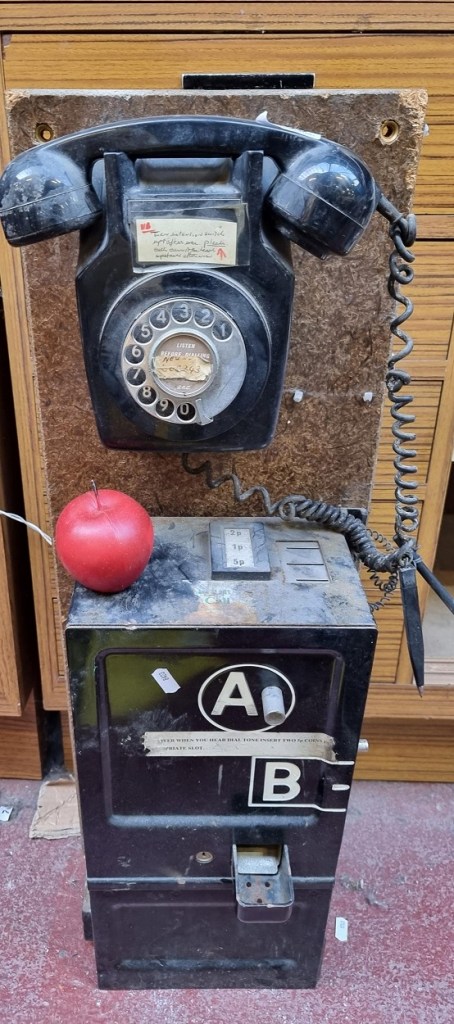
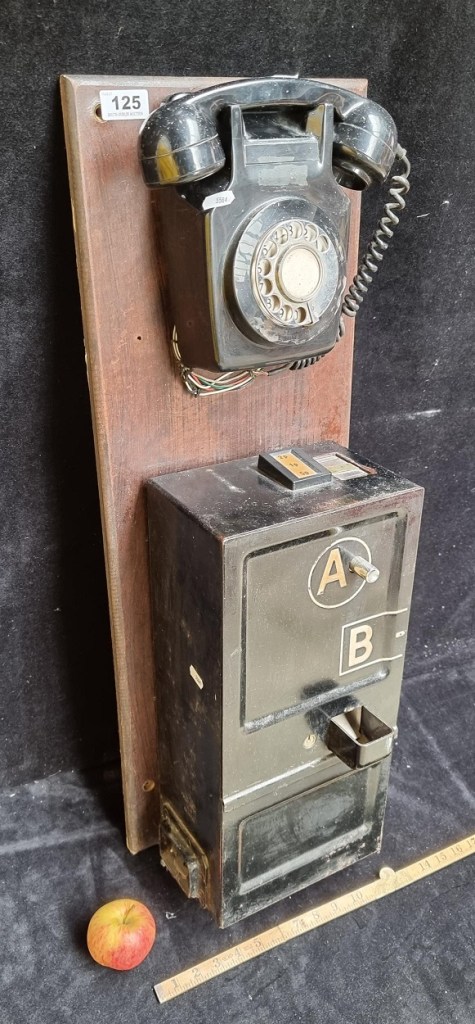
| AB Button Box The BPO AB Button Box was a defining feature of British public telephony throughout much of the 20th century, and its robust manufacture reflected the engineering priorities of the era—durability, standardisation, and mechanical reliability. These coin boxes were produced under the control of the British Post Office (BPO), which oversaw national telecommunications before the establishment of British Telecom. The coin mechanisms were manufactured primarily by three companies: Automatic Telephone Manufacturing Co. Ltd. (ATM), Siemens Brothers, and General Electric Company (GEC). These firms built the boxes to precise Post Office specifications, ensuring uniform operation across the national telephone network. Each AB coin box was built from heavy-duty cast iron or sheet steel, often with internal brass components in the coin sorting and return mechanisms. The cases were painted in black enamel and designed to withstand both vandalism and the harsh British climate, especially in unheated outdoor kiosks. The mechanical parts were carefully machined and tested to ensure they could reliably accept and differentiate between coin types, primarily the pre-decimal penny (1d), threepence (3d), and sixpence (6d). Internally, the mechanism operated entirely mechanically, relying on coin weight and size to route the coin either to the internal vault or back to the user depending on whether Button A or B was pressed. Manufacturing tolerances were strict, with the Post Office testing each unit before installation. Assembly was usually carried out in dedicated workshops, with components cast, machined, and finished in-house or by subcontracted precision metalworkers. Some variations in internal layout and materials occurred between manufacturers and over time, particularly as decimalisation approached in 1971. However, the outward form and operation remained consistent. As production continued into the post-war period, most units bore serial numbers, GPO stamps, and sometimes the manufacturer’s insignia cast or stamped into the metal for traceability and maintenance records. |
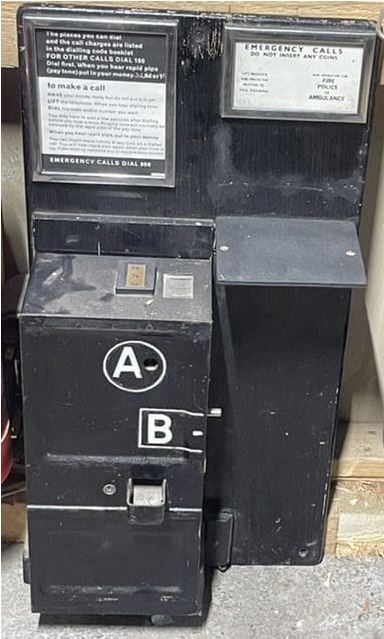
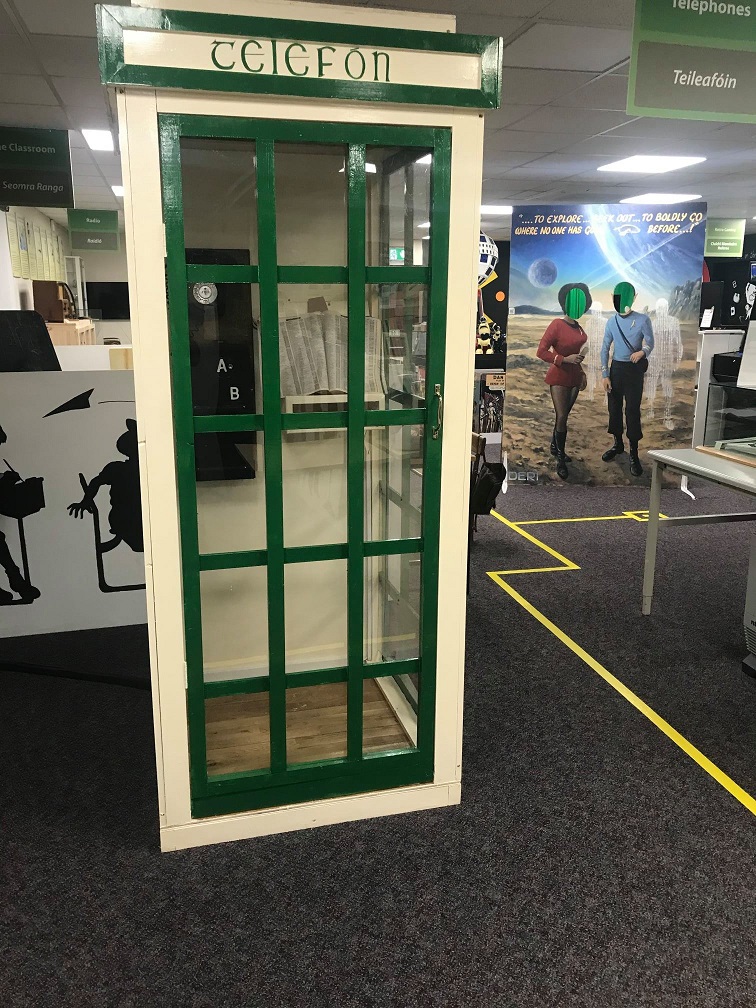
| Below- some interesting AB payphones used in Dublin, in the Republic of Ireland. These were in use in pubs, etc, up until the early 90s. |

 Pay phone Story
Leave a reply to AB-01 A.B. Multicoin – Australian Payphone History Cancel reply