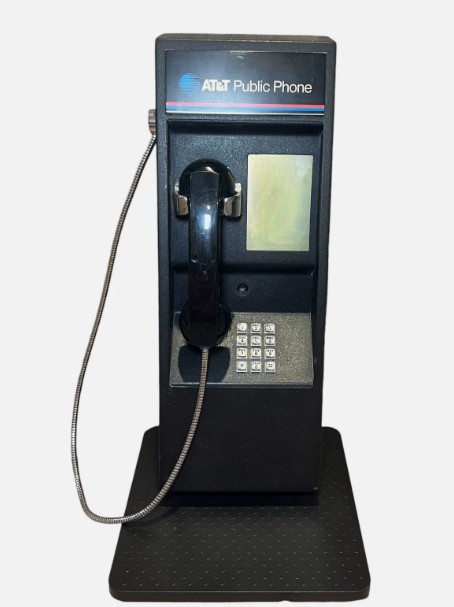
| Name | AT&T Charge-A-Call |
| Date | 1990 |
| Manufacturer | AT&T |


Development of the AT&T Charge-A-Call
| AT&T Charge-A-Call was a calling-card service introduced in the mid-20th century that allowed long-distance telephone charges to be billed to a customer account rather than paid with coins. It emerged during the mature Bell System era, when long-distance calling was expensive, tightly regulated, and closely monitored by operators and central offices. Originally, Charge-A-Call relied on operator assistance: callers provided a card number (and often personal verification) to an operator, who manually validated the account and connected the call. By the 1960s and 1970s, the service evolved into a semi-automated system using magnetic-stripe or embossed cards and increasingly sophisticated switching equipment. These later systems allowed callers to dial access numbers and enter credentials directly, reducing operator involvement while maintaining centralised control over billing. Charge-A-Call was particularly important for travellers and business users, enabling long-distance calls from hotels, offices, and payphones without carrying coins or charging calls to the destination number. It also foreshadowed later developments in card-based public telephony by separating the act of calling from immediate payment at the instrument. Following the 1984 breakup of the Bell System, Charge-A-Call branding and technology fed directly into AT&T’s post-divestiture calling card services. These systems became increasingly database-driven, incorporating real-time validation and fraud control. Although eventually eclipsed by mobile phones and flat-rate calling plans, Charge-A-Call represents a key transitional step between operator-controlled long-distance service and the fully automated, account-based communications systems that followed. |
Leave a Reply