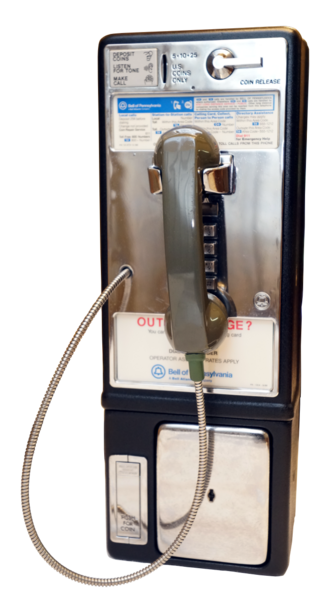
| Name | 1C2 Payphone |
| Date | |
| Manufacturer | Western Electric |


Western Electric 1C2 Single-Slot Pay Telephone – Technical Summary
| The subject instrument is a Western Electric 1C2, identified by the presence of two 11-pin circular connectors at the lower interface between the upper housing/Totalizer assembly and the coin chassis. A 1D-series instrument differs electrically and mechanically, utilising one 11-pin circular connector and one trapezoidal D-sub connector (approximately 15 contacts), making connector configuration the primary field identification criterion. Model Coding System Western Electric single-slot designation follows this structure: First character (mounting style): 1 = Surface-mounted 2 = Flush-mounted (panel type) Second character (fundamental model): A = Coin First (CF) only C = Configurable CF / Dial Tone First (DTF) D = DTF only E = Postpay Third character (dial type): 1 = Rotary 2 = Touch-Tone (DTMF) 3 = Manual Thus, 1C2 denotes a surface-mounted, CF/DTF-configurable, Touch-Tone instrument. Operational Characteristics The 1C series supports both Coin First (prepay) and Dial Tone First operation via configuration. It employs an electro-mechanical Totalizer, visible beneath a clear plastic cover, for coin validation and rate stepping. By contrast, 1D instruments are DTF-only and utilise an electronic Totalizer, incorporating adjustable switches for initial rate programming. Related Variants 1E (postpay) units were produced only in rotary (1E1) and manual (1E3) forms; Touch-Tone versions were not manufactured, as most Centralized Dial Offices (CDOs) using postpay service were not converted to DTMF. The 1E3 manual type is extremely rare. No verified production references exist for a “B” series in this classification. Dial Assembly Considerations The 1C2 typically used a Western Electric 61C Touch-Tone dial unit. Some units were later refurbished and may contain: Original WECo 70-type DTMF assemblies, or Aftermarket third-party replacement dials (notably produced in the 1990s by firms such as Teleservices and other commercial suppliers). Certain third-party replacements were reportedly susceptible to voltage surge damage, representing a known reliability issue. Inspection of the dial face and internal marking requires removal of the 61C assembly from the housing. Refurbishment Indicators Presence of refurbishment-company stickers suggests post-Bell System lifecycle reconditioning. Observable condition of handset cord and plated components may indicate limited or no field reinstallation following refurbishment. In summary, the 1C2 is a dual-mode, electro-mechanical totalizer, surface-mounted Touch-Tone Fortress-type pay telephone distinguished by its dual 11-pin connector architecture. |
Leave a Reply