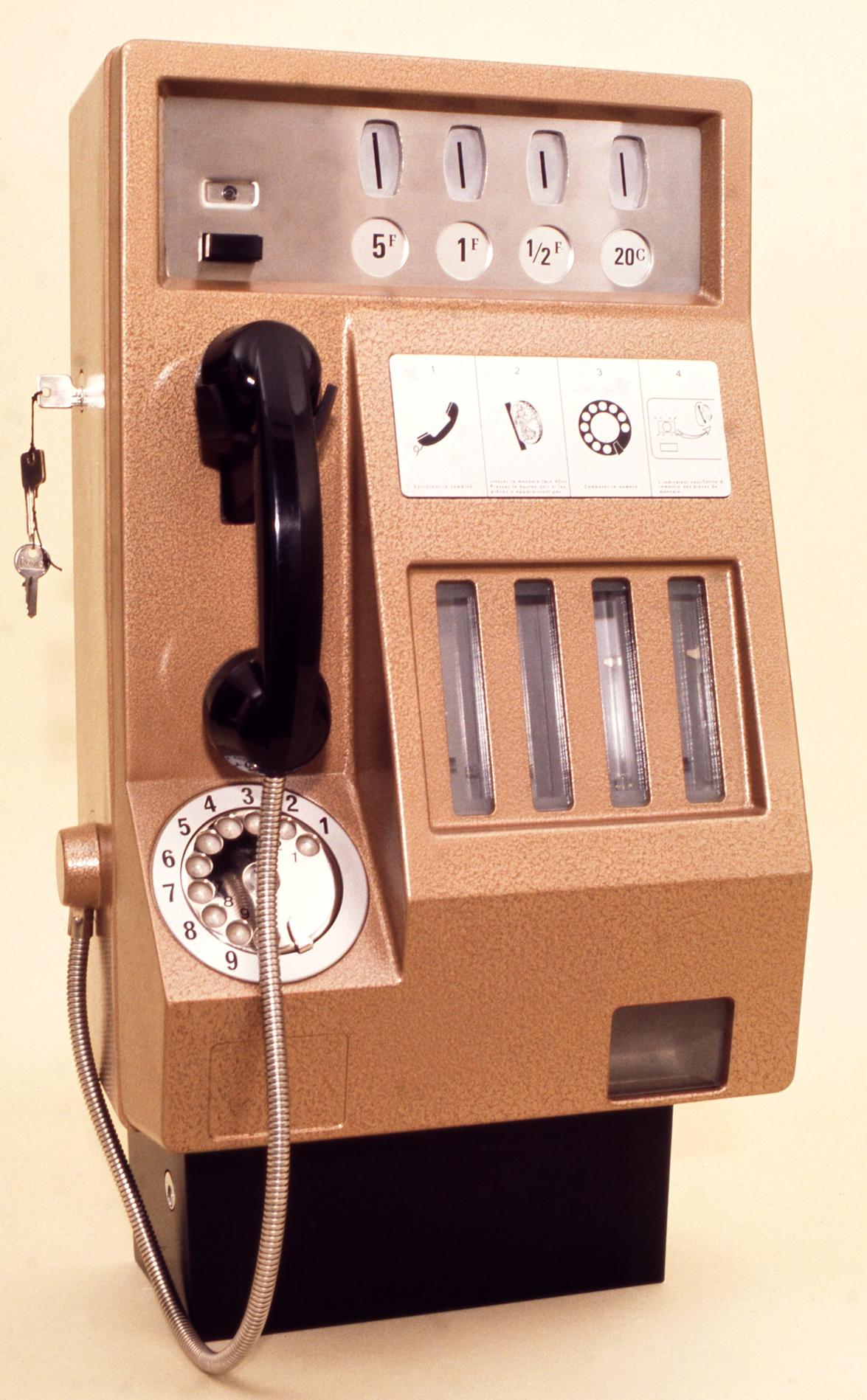
| Name | Type T800 |
| Date | The Type T800 interurbain was: Introduced: 1974 (following the French PTT tender awarded in August 1974) Withdrawn / superseded: around 1977, when it was replaced in production by the improved Type T820 In practice, many T800 units likely remained in service for years after 1977, but new installations shifted to the T820, which refined maintenance access and reliability while keeping the same external form. |
| Manufacturer | The Type T800 was not produced by a single, dedicated manufacturer in one location. Instead, it was the result of a distributed industrial arrangement typical of French PTT procurement in the 1970s: Design authority: The T800 was conceived by Société des Machines Havas Electronics: Subcontracted to TELIC-Alcatel Assembly: Carried out by SATMAN Casing (carrosserie): The external housing design was standardised to a form developed by Landis & Gyr So in practical terms, the T800 was manufactured in France, but as a multi-company, modular product, rather than a single-factory output. This reflects the broader PTT strategy at the time: combining specialist firms to accelerate production and modernisation of the public telephone network. |


Development of the Type 800
| The Type 800 interurbain (1974) represents a major step forward in French public payphone design, marking the transition from purely electromechanical systems to modular, electronically assisted publiphones. Developed following a 1974 PTT tender and largely associated with the Société des Machines Havas (SMH), it formed part of a new generation alongside later models such as the T820 and T900. Designed for long-distance and international calls, the Type 800 accepted multiple coin denominations—20c, ½F, 1F, and 5F—via four separate selectors. This flexibility reflected increasing demand for higher-value calls and more sophisticated tariffing. The unit retained S63-type telephone circuitry, ensuring compatibility with the broader French network while introducing more advanced control systems. A key innovation was the inclusion of coin accumulation channels, allowing users to insert multiple coins in advance. This improved usability and enabled automatic refund of unused credit upon call termination, a significant improvement over earlier systems. The call process was also rationalised: lift handset, insert coins, receive dial tone, then dial—bringing a more intuitive user experience. Physically, the Type 800 was large and highly robust (around 35 kg), designed to withstand increasing vandalism in urban environments. It featured reinforced plastic viewing windows, allowing users to observe the passage of coins through the mechanism, maintaining transparency and trust. Internally, the device used a fully modular electronic architecture, with seven separate plug-in circuit boards to simplify maintenance and upgrades. It could operate with either 50 Hz or 12 kHz tariff signals, depending on the exchange. Introduced in 1974 and deployed until 1977, the Type 800 set the foundation for the more refined and widely adopted Type 820 |
| The T800, T820 and T900 publiphones represent a unified generation of French long-distance payphones produced by Landis & Gyr, SMH and Crouzet. Despite differences in internal architecture, they shared a common external design, with a robust housing cast in 4.5 mm thick aluminium, contributing to a substantial weight of around 35 kg. This heavy-duty construction reflects the increasing need for vandal resistance in public installations. A distinctive feature across all three models is the black reset button, used to clear jammed coins from the selectors—an essential maintenance function in high-use environments. Operationally, the phones incorporated a grace period of approximately 10 seconds when credit ran out, allowing users to insert additional coins before the call was automatically terminated. Changes in usage patterns also influenced their configuration. From June 1979, the 20 centime channel was deliberately disabled, as low-value coins rapidly filled the cash boxes, creating logistical issues for collection and servicing. Originally fitted with rotary dials, these publiphones were progressively upgraded from the late 1980s into the 1990s with anti-vandal keypads, improving durability and aligning with modern dialling methods. Together, these features illustrate a balance between mechanical resilience, operational practicality, and evolving user expectations in late 20th-century public telephony. |
| The Société des Machines Havas (SMH) was a French engineering and manufacturing firm active in the mid–late 20th century, playing a significant role in the modernisation of France’s public telephone network. Although not as widely known as major telecommunications companies, SMH became an important industrial partner to the French PTT, particularly during the rapid expansion of public payphone infrastructure in the 1970s. SMH’s expertise lay in systems integration and mechanical–electronic design, rather than handset manufacture alone. The company was instrumental in the development of key publiphone models, notably the T800 and T820 interurban payphones, which formed part of a new generation of robust, modular, coin-operated systems. These devices incorporated emerging electronic control technologies, often in collaboration with other firms such as TELIC-Alcatel (electronics) and SATMAN (assembly). A defining feature of SMH’s work was its contribution to modular architecture, with plug-in circuit boards designed for easier maintenance and rapid servicing—an essential requirement for large-scale public deployment. Their designs also responded to growing challenges of vandalism and fraud, integrating stronger housings and improved coin mechanisms. Operating within a multi-contractor ecosystem, SMH exemplifies the collaborative industrial model used by the French telecommunications administration, helping bridge the transition from electromechanical payphones to electronically controlled public communication systems. |
| More info- https://www.publiphonie.fr/ |
Leave a Reply