| Name | PMG Experimental Phone Booths |
| Date | c. 1928-1990 |
| Manufacturer | PMG/Telecom |
Development of the PMG Experimental Phone Booths
| There were a number of experimental cabinets from the 1920s to the 1950s. These were initially based on British designs and had durability in mind. However, the choice of materials (concrete and steel) were not suitable for the hot humid conditions and were not easily transported, installed and maintained. |
 |
| Above- Interesting local model (c. 1930) based on the British K1 of 1925. Note that the K1 was concrete and a similar look (less Moderne style), although the British cabinet was not cast in situ. This would have been very difficult to form up and pour on site. Very few were made and none survive today. Note that the glazing pattern was further used in the later Flag type. |
 |
 |
| Above- Another steel cabinet was tried in 1951 (Figs. 8 and 9) after development work by PMG Sydney Workshops. The chief feature was the adoption of louvres for cross ventilation, which was incorporated in the later Temperate design. The body was cast steel with a cement base. Although the concept of louvre glazing gave much improved ventilation the ‘heating’ aspects and maintenance of steel cabinets was considered unsatisfactory and the type abandoned. Source- (with thanks to) History of the telephone in New South Wales / by Jim Bateman [Croydon, N.S.W.] : J. Bateman, 1980 ISBN: 0959478701 |
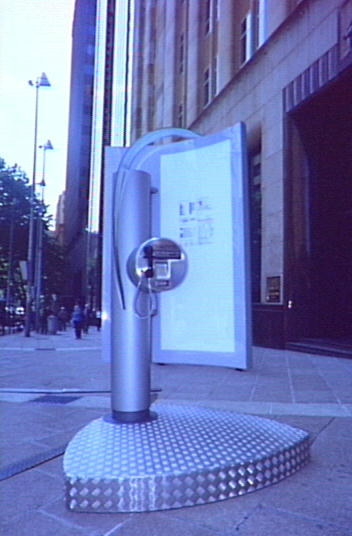
| Further notes There were a number of minor prototypes, and some elements of these were adopted.  Above- 1955 Experimental Louvre-Glazed Steel Cabinet  Above- particularly funky New street furniture, public telephone proposal, Sydney, 1999. This appears to house something similar to the stainless steel German Telekom payphone. Note- no roof. Interesting move towards future advertising cabinets. |
Leave a Reply