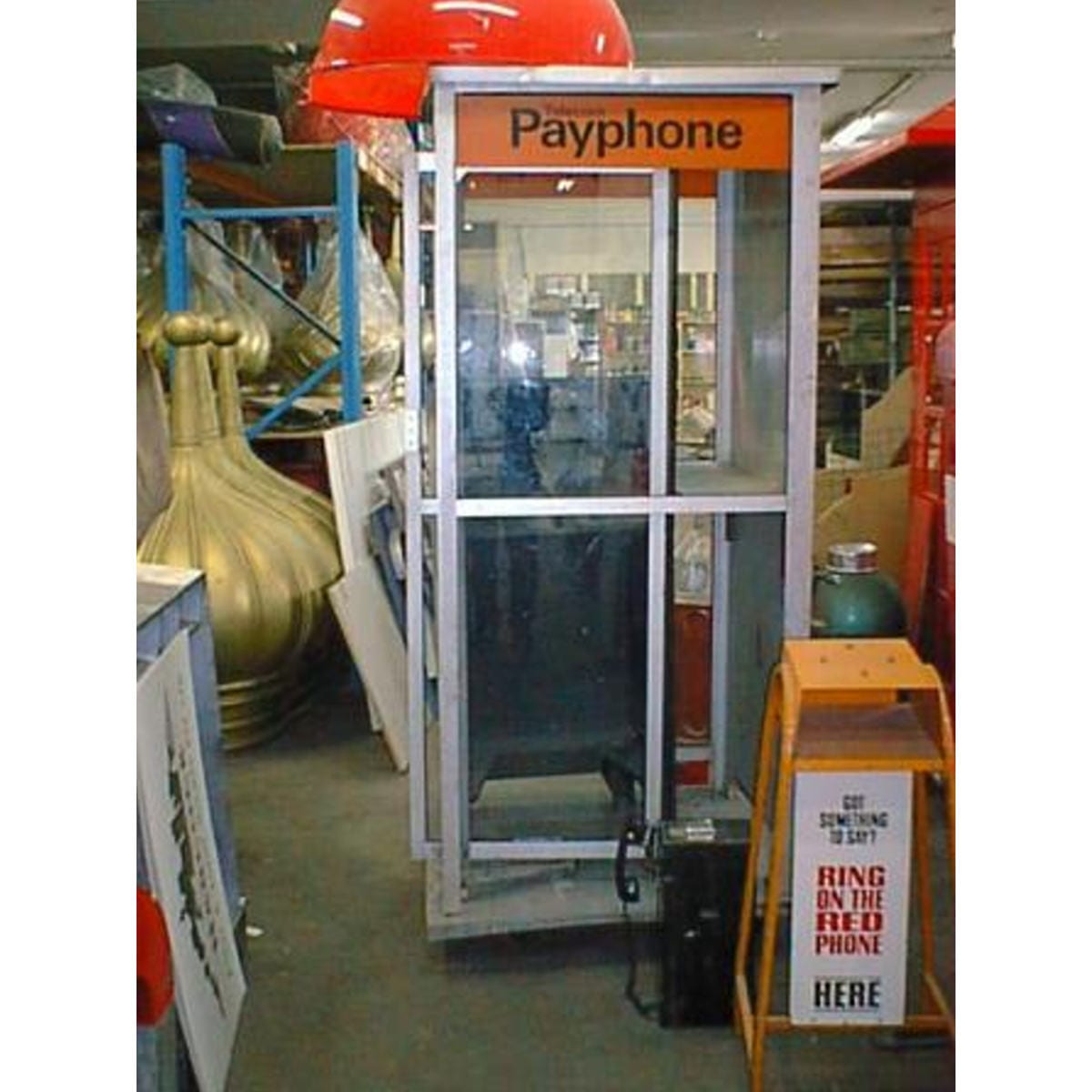
| Name | TELECOM CT3 PROGRAMME ALUMINIUM Booth Standard Al. Flat Roof with door (two panel design) Produced to house the CT3 Payphone |
| Date | 1978- introduced 1990- expanded mesh lower glazing panel replacement 1992 flat aluminium roofs replaced with orange domed roof 2000 doors removed |
| Manufacturer | Telecom Influenced by: US Universal II Booth British KX100 kiosk |


Historical images of the TELECOM CT3 PROGRAMME ALUMINIUM Booth
Original CT3 booth with door


| From the newspaper 1987- (below picture) 1987. Vandalised public phone booths cost Telecom $36 million and about $5 million in metropolitan Melbourne A visit to the Telecom “graveyard” in Port Melbourne reveals row after row of phone boxes, standing forlornly to attention like war veterans wounded in the course of “Public telephones are the repository for some really disgusting behavior,” said T Urszula Kolecki. “We try to make things vandal-resistant, but people are determined, working out ways of breaking things up Attempts to make phone boxes vandal-resistant (nobody is optimistic enough to been moderately successful in reducing damage, though at a cost. Telecom is no bottom panels with unaesthetic and pricy mesh grilles The panels are expected to cut down the breakage rates by about 50 per cent.”” of Mad Max – they’re so hostile – but there’s nothing else we can do,” said Ms Ko In some areas, however, Telecom has already admitted defeat. Twenty battered units from the Dandenong district alone, and most areas can expect some loss of service. |

Above image- Telecom’s John Stow adds another vandalised phone booth to the telephone depot.

Above- Great Buckingham Street Redfern, 1987


Development of the CT3 Booth
Aluminium Booth Programme (“CT3 era”)
Historical Context
In the late 1960s and through the 1970s–80s, the Australian Postmaster-General’s Department and later Telecom Australia moved away from heavy timber and older booth forms toward lightweight aluminium and glass enclosures for public payphones. Early aluminium booths appeared from the late 1960s under the PMG, and the rollout accelerated under the Coin Telephone No.3 (CT3) programme into the early 1980s.
The shift reflected broader global trends toward weather-resistant, durable, easier-to-maintain booths that could protect the payphone in harsh outdoor conditions.
Design and Construction
These booths were typically aluminium framed with glass panels — often three-panel or multi-panel glazed enclosures — providing shelter, visibility, and relative ease of maintenance.
Roofs and framing were engineered for outdoor climates (rain, sun, coastal exposures), and aluminium was chosen for corrosion resistance and lighter weight than steel or timber.
The term “CT3 booth” is often used informally by enthusiasts and historians to refer to the standardised aluminium public telephone enclosure built at the same time as the CT3 payphones were rolled out.
Design Influences and Precedents
Earlier Australian Aluminium Booths
The Three Panel Aluminium Phone Booth introduced in the late 1960s was a direct predecessor and was itself based on the U.S. Airlight telephone booth (1953), which used aluminium and glass for outdoor service.
These earlier aluminium designs demonstrated the viability of aluminium as the main structural material, setting a precedent for later CT3-era enclosures.
International Influences
Australia’s move to aluminium pods paralleled similar mid-century transitions elsewhere: the Airlight booth in the U.S. (1950s) set an early example for aluminium, glass and lightweight framing.
In the UK, the KX series (mid-1980s) also switched to lighter metal/steel and glazed kiosk variants; while not directly related, it shows parallel design evolution.
Below gallery- an adapted/modernised old flat roof booth. Door removed, roof replaced, advertising panel mounted on back. Phone and backpanel updated with new phone etc. Photographed in Bredbo NSW 15.06.25.


Leave a Reply