| Name | Police Call Boxes |
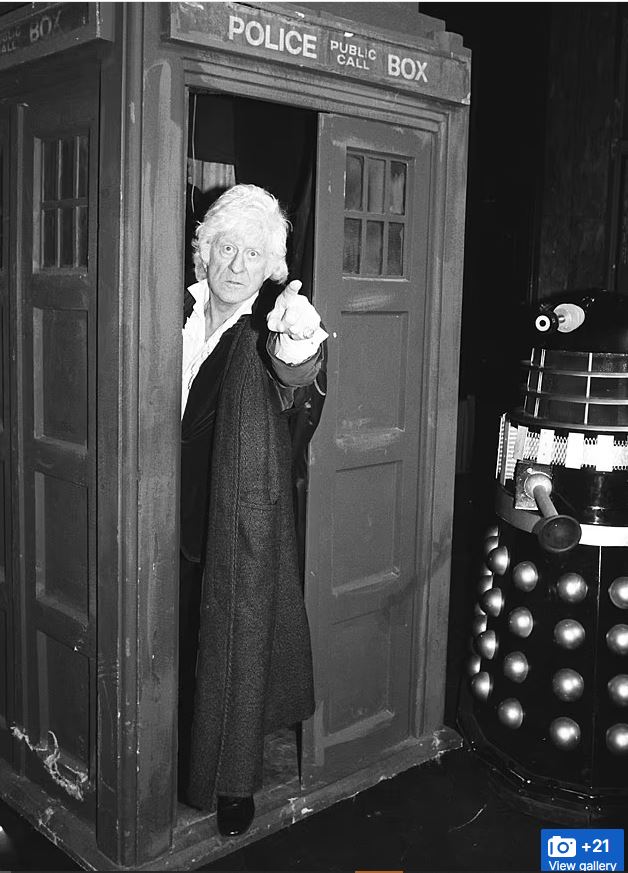
| Date | 1929-1980 Designed by Gilbert MacKenzie Trench, this blue-painted box became famous as the model for the TARDIS in Doctor Who. |
| Manufacturer | regional police forces |
| Usage | Public call box |


Development of the KP01 Police Call Boxes
| History of UK Police Call Boxes Police call boxes were once a ubiquitous feature of the British streetscape, serving as essential tools for communication between the public and the police in the pre-radio era. Their development reflected changes in policing, technology, and urban design over the 20th century. The earliest police boxes appeared in the UK in the late 19th century, with experimental types trialled in Glasgow around the 1890s. These early boxes were simple kiosks used by officers to write reports, take shelter, and communicate via telephone. The system expanded in the early 20th century, especially in larger cities where officers were expected to patrol on foot. The first widely adopted police call boxes in the UK were installed in Glasgow from 1901, then in Liverpool, and later in London and other cities. Most designs included a public access telephone behind a locked door (often accessible via a small door), allowing citizens to report crimes, fires, or request assistance. Inside, police officers could access a phone connected to the nearest police station, and many boxes included basic equipment such as a stool, desk, lamp, and heating. The most iconic design is the Metropolitan Police box introduced in London in 1929. Designed by Gilbert MacKenzie Trench, this blue-painted box became famous as the model for the TARDIS in Doctor Who. These boxes were made of precast concrete with a wooden door and featured a distinctive dome light that would flash to signal a call for the officer. Around 700 of these boxes were installed across London in the 1930s and 1940s. Different cities developed their own styles. Glasgow’s boxes, for example, were typically red and had a more classical architectural form. Edinburgh, Manchester, and Birmingham all had their own variations, usually made of cast iron or concrete and painted in different colours. The standardization of box design was limited, reflecting the independence of regional police forces at the time. By the 1960s, with the rise of personal radios, call boxes became obsolete for police use. Officers could be contacted directly, making the static box redundant. Vandalism and cost of maintenance also contributed to their decline. Most were decommissioned and removed in the 1960s and 1970s. A few examples remain today. London still has some surviving Met Police boxes, especially around tourist areas such as Earl’s Court and outside the Supreme Court on Parliament Square. Glasgow retains several preserved red and blue boxes, now listed as heritage items. The Gilbert MacKenzie Trench police box design (introduced 1929 for the Metropolitan Police) evolved through several recognisable versions: 1. Mark I (1929–early 1930s) Concrete construction with a timber door Large multi-pane windows Illuminated “POLICE” sign boxes beneath a projecting cornice Interior desk, stool, telephone and incident book External call panel with handset for the public 2. Mark II (early–mid 1930s) Refined glazing bars and slightly altered roof profile Improved ventilation and internal fittings Standardised signage panels 3. Mark III (late 1930s) Subtler mouldings and construction refinements Some simplification of window framing Minor dimensional adjustments 4. Wartime / Late Variants Material substitutions due to shortages Reduced glazing in some examples Functional simplifications All retained the square plan, pyramidal roof, corner posts, and blue paint. This lineage became globally famous as the visual basis for the TARDIS in Doctor Who. |
| A Commentary on the Metropolitan Police Call Box “Marks” Discussion among historians and enthusiasts of the Metropolitan Police call boxes has clarified that the familiar design — so often assumed to be a simple “Mk2” — was in fact part of a more nuanced sequence of marked variations. The Mk1 boxes were the original wooden structures. These early timber kiosks established the basic form, but were soon superseded by concrete construction. The Mk2 boxes were the first of these concrete examples and formed the foundation of what most people recognise today. Subsequent refinements produced additional marks. The Barnet design is now classified as a Mk3. The well-known Crich box — along with the Blackwall Tunnel North example — is identified as a Mk4. The Mk5 represented a later variation, distinguished by flat sides and three windows on each face. The principal differences between the Mk2, Mk3 and Mk4 boxes appear to have centred on practical details: notably the position of the door lock and the height of the roof stacks. It is also possible that internal construction methods varied between marks. One particularly interesting feature concerns the Mk4 boxes. The Blackwall Tunnel North example possessed the same “inside-out” door arrangement for which the Crich box is known. A Pathé film still of the Wimbledon Common Mk4 shows the same configuration. This suggests the reversed door was not an error, but a deliberate design feature of the Mk4 — perhaps intended to minimise rainwater pooling on the door rails and reduce rot. Accordingly, when observers suggest that the Crich box door has been fitted incorrectly, the historical evidence indicates that it is, in fact, correct for its mark. A further example of variation comes from a photograph taken at the entrance to Hendon Police College around 1972, during the period of the King Tut exhibition. The box there — painted dark brown and used as a kiosk for the police constable on gate duty — was plainly of the Barnet style (Mk3). Its subsequent fate is unknown. Today, the only surviving box at that location is a Mk3/Mk5 type — the version with three windows — leaving the earlier Barnet example unaccounted for. |


Leave a Reply