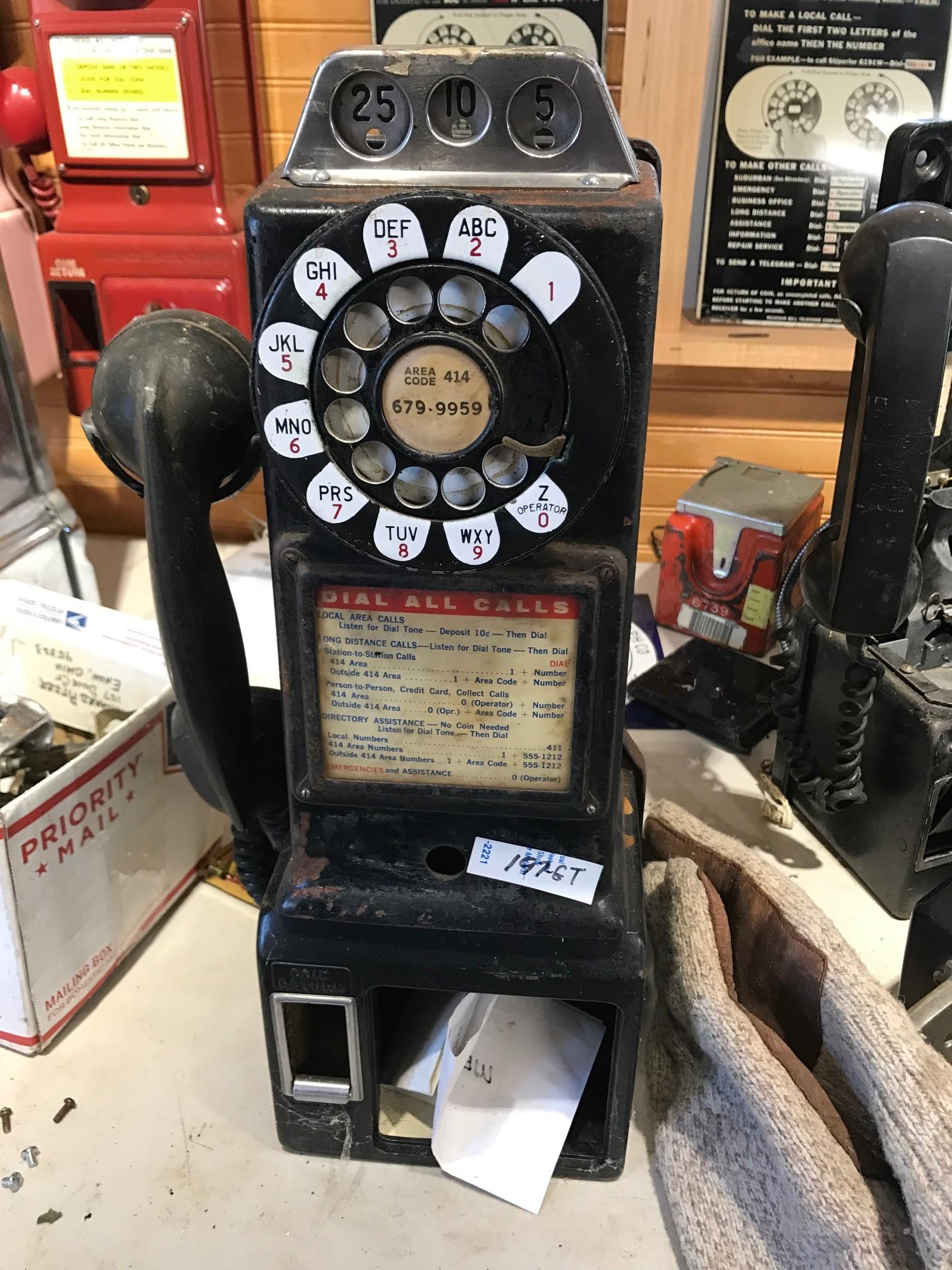
| Name | Western Electric 191G Payphone |
| Date | 1955 |
| Manufacturer | Western Electric |


Development of the Western Electric 191G
| The Western Electric 191G is a three-slot, ten-cent, central-office-controlled payphone introduced in the Bell System around the late 1930s to early 1940s as part of the evolution of 3-slot paystations. It followed earlier models such as the 50, 150, and 160 series, incorporating incremental design improvements including a more robust cast-steel upper housing, refined coin-control mechanics, and standardized Bell-System locking hardware. Key characteristics of the 191G include: Three coin slots for nickel, dime, and quarter prepay service. Central office control with electro-mechanical coin control (relay-based). Bell System locksets and stamping, indicating manufacture for Bell operating companies. Compatibility with standard Western Electric coin relays and hoppers of the era. A generally heavier, more standardized frame compared to many earlier 3-slot models. The 191G saw widespread deployment in urban and high-traffic institutional installations prior to the industry’s shift toward single-slot payphones in the 1960s. Like other three-slot payphones of its generation, most surviving examples have been retired or repurposed by collectors. |
Leave a Reply