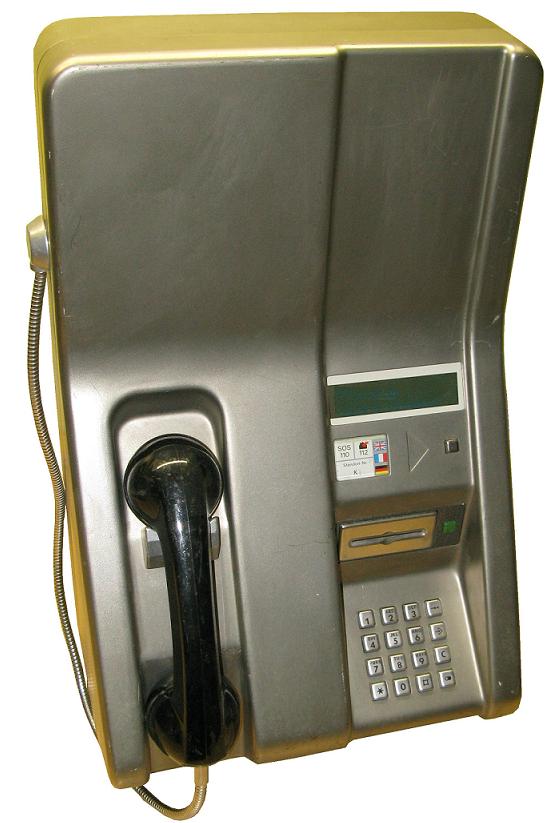
| Name | Münzfernsprecher Kartentelefone OeKart Bosch Telecom |
| Date | c. 1990 |
| Manufacturer | Bosch for Deutsche Telekom |


Development of the OeKart Bosch Telecom
| The ÖKartTel Bosch Telecom represents one of the alternative card-operated public telephone systems developed in Germany during the 1990s, following the liberalisation of the telecommunications market and the shift toward cashless operation. It formed part of the broader ÖKartTel (öffentlicher Kartentelefon) programme initiated by Deutsche Telekom, in which multiple manufacturers—including Siemens, Bosch, Telenorma, and Landis & Gyr—supplied compatible equipment. Developed by Bosch Telecom GmbH (following Bosch’s acquisition of Telenorma in the late 1980s), these units were designed for public outdoor use and operated using Telekom chipcards (Telefonkarten) rather than coins. Like other ÖKartTel systems, Bosch models were integrated into the central ÖKOM/REDÖK background system, allowing remote monitoring, tariff control, and system management across the national payphone network. Technically, the Bosch ÖKartTel phones were digitally controlled, requiring external power and supporting DTMF dialling. They featured robust, vandal-resistant housings suitable for street installations, with modular internal electronics reflecting Bosch Telecom’s broader expertise in digital communications systems. Compared to the more widely documented Siemens Interset range, Bosch Telecom units appear to have been less common but fully interoperable, highlighting the competitive supplier environment of the 1990s. Overall, they represent a parallel development stream in Germany’s transition from coin-based payphones to networked, card-based public telephony, just before mobile phones rendered such systems largely obsolete. |
| More info- https://oeffentlichetelefone.de/ |
Leave a Reply