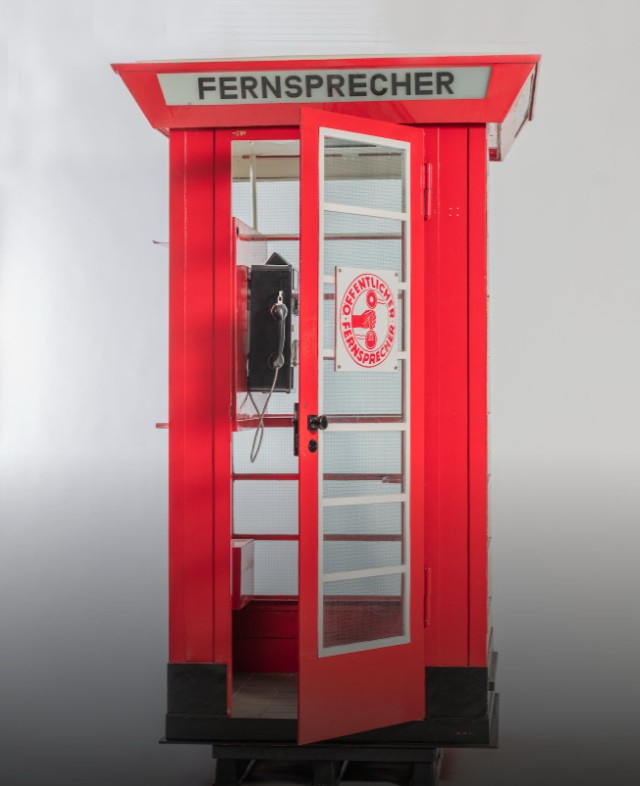
| Name | Fernsprechhäuschen 32 |
| Date | 1932 |
| Manufacturer | Deutsche Reichspost |


Development of the Fernsprechhäuschen 32
| The Telefonhäuschen – Fernsprechhäuschen FeH 32 (from 1932) marks a decisive turning point in the development of German public telephone kiosks. Introduced by the Deutsche Reichspost, it was the first nationally standardised booth design, replacing the diverse and often regionally produced kiosks of the 1920s. Before 1932, telephone booths in Germany varied widely in form, often resembling small kiosks or pavilions. The FeH 32 introduced a uniform system of design, including a consistent footprint, structural form, and colour scheme. This standardisation made booths more easily recognisable in the street and reinforced their identity as essential public infrastructure. The structure itself followed established principles: a metal frame with extensive glazing, ensuring visibility from outside for safety and supervision. Like earlier booths, it was compact and functional, typically housing a coin-operated telephone and sometimes additional fittings such as a stamp or postcard dispenser (“silent post office”) integrated into the rear wall. The FeH 32 also reflects broader political and visual changes. Initially produced in standardised colours (including blue and yellow), these booths were repainted red from around 1934, aligning with the visual identity imposed during the Nazi period. As a type, the FeH 32 established the template for later German telephone kiosks, leading directly to post-war standard models such as the FeH 53 and FeH 55. It represents the moment when the telephone booth shifted from a varied street object to a recognisable, systematised element of urban design. |

17.-20.7.1961


Leave a Reply