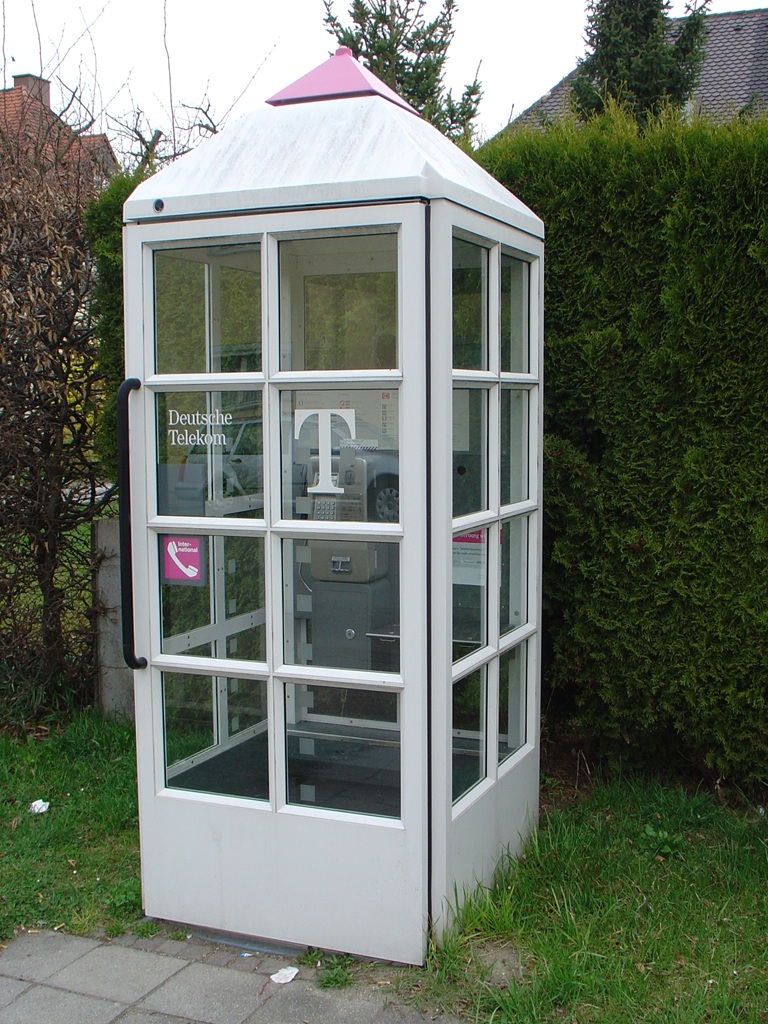
| Name | Fernsprechhäuschen 90SH |
| Date | 1990 Also exported to the UK Link- Eurobell TelH90S (UK) |
| Manufacturer | Deutsche Bundespost Wilhelm Quante Fernmeldetechnik GmbH, Germany |


Development of the Fernsprechhäuschen 90SH
| The Fernsprechhäuschen TelH 90 SH was a refined variant of the TelH 90 series, developed in Germany during the late 1980s and introduced in the early 1990s under Deutsche Telekom. The “SH” is generally understood to denote a special or architecturally sensitive design variant, created for use in historic or visually prominent urban environments where standard booths were considered too intrusive. The TelH 90 SH emerged from design competitions held in the mid-1980s, which sought to modernise Germany’s public telephone infrastructure following the long-running TelH 78. Unlike the bright yellow Bundespost kiosks, the 90 SH adopted the new Telekom grey, white, and magenta colour scheme, reflecting both corporate rebranding and a desire for a more subdued street presence. Architecturally, the booth was more minimalist and transparent, typically using slim metal framing with large glass panels, giving it a lighter visual footprint. The form was more geometric and restrained than earlier designs, aligning with contemporary urban design principles. Technologically, the TelH 90 SH was part of the shift from coin to card-operated telephones, commonly housing ÖKart card phones such as those produced by Bosch Telecom. The TelH 90 SH represents one of the final purpose-designed German phone booths, marking the transition from iconic street furniture to a more discreet, modern—and ultimately short-lived—generation. This model was introduced around 1989 as part of the late-generation German telephone booth family. It was specifically developed to suit historic urban environments, often incorporating design cues like timber framing or more subdued forms so the standard yellow booth wouldn’t visually disrupt heritage streetscapes. For context (useful for your catalogue work), the TelH 90 series wasn’t produced by a single manufacturer—different variants were made by different firms: 90SH (historic version): Quante 90S (modern urban version): Stewing Kunststoffbetrieb Other TelH 90 variants: companies like W. Kücke & Co So the 90SH sits within a multi-manufacturer standard family, but Quante handled the heritage-sensitive version. |


Above- Unlike the bright yellow Bundespost kiosks, the 90 SH adopted the new Telekom grey, white, and magenta colour scheme, reflecting both corporate rebranding and a desire for a more subdued street presence.
Leave a Reply