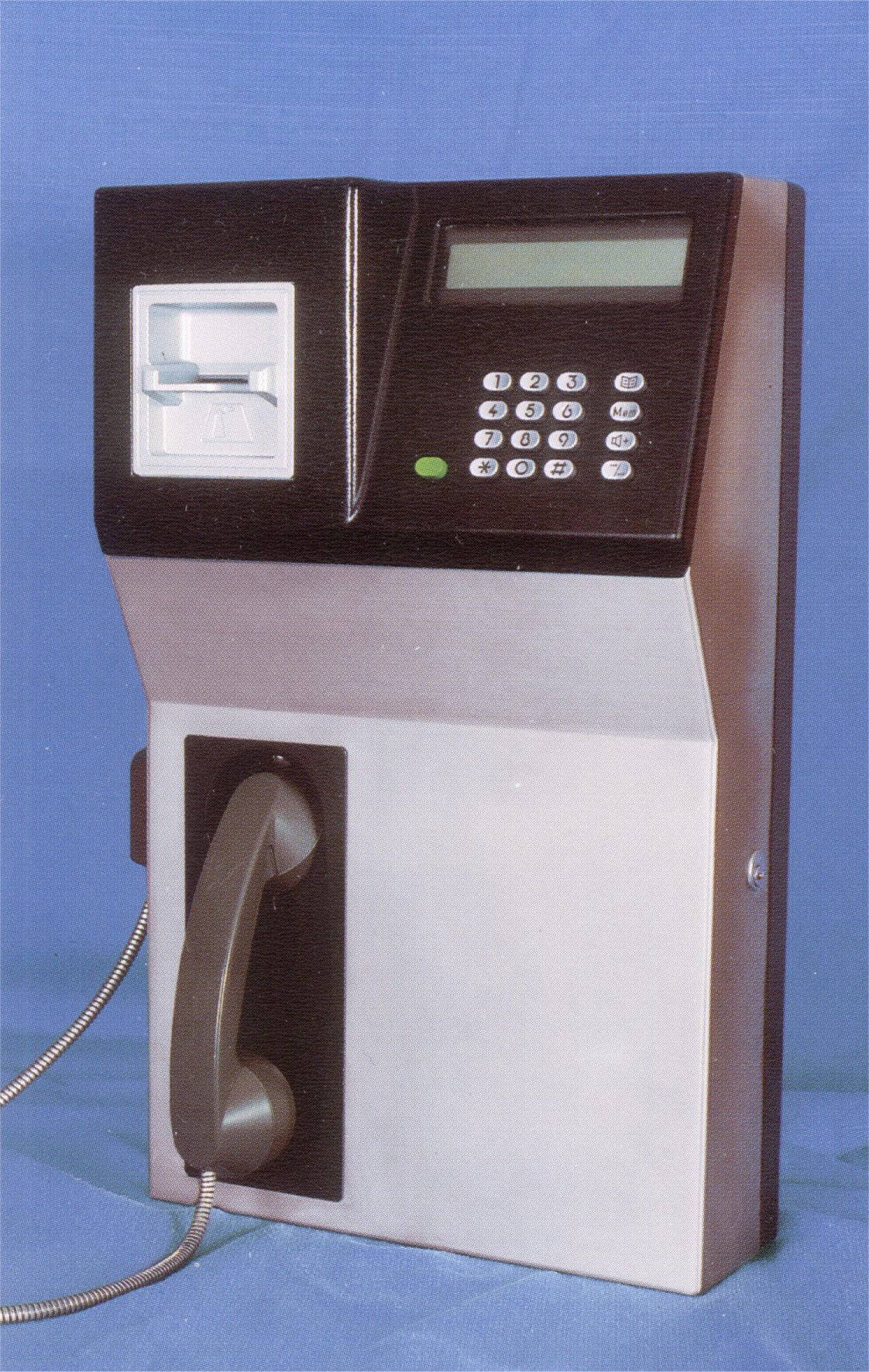
| Name | PC31P publiphone |
| Date | 1985 |
| Manufacturer | Crouzet for PTT |


Development of the PC31P publiphone
| The PC31P publiphone, manufactured by Crouzet, was one of the principal first-generation prepaid card payphones deployed across France from 1984. Produced in approximately 45,000 units, it formed a key part of the early rollout of télécarte-based public telephony, with initial installations in Paris beginning in January 1985 at major stations including Gare de Lyon and Gare Montparnasse. The original PC31P design featured a motorised tilting flap card reader. This mechanism was developed as a response to widespread fraud in the early days of prepaid cards, when modified télécartes connected to external decoding devices allowed users to make free calls. The motorised flap prevented such tampering by securely enclosing the card during operation. However, this anti-fraud solution introduced significant reliability issues. The system depended on Ni-Cd accumulator batteries, which, under heavy or continuous use, could discharge faster than they recharged. When this occurred, the flap mechanism would fail, often trapping users’ cards inside the machine. Weighing 17 kilograms and identified under PTT nomenclature number 722-882 A, the PC31P became notorious for these operational problems. In response, a revised version of the motorised flap reader was introduced in January 1990, incorporating a red emergency release button to retrieve blocked cards. Despite this improvement, the solution proved short-lived and was only deployed for about a year. From January 1991, the PC31P was redesigned with a fixed card reader, either in new units or through conversion of existing machines. This version operated on a simplified 96-volt, two-wire power supply, improving reliability and enabling continued use into the early 2000s. Most earlier flap-reader units were either removed or converted between 1991 and 1992, marking the end of this problematic but innovative phase. |
| More info- https://www.publiphonie.fr/ |
Leave a Reply