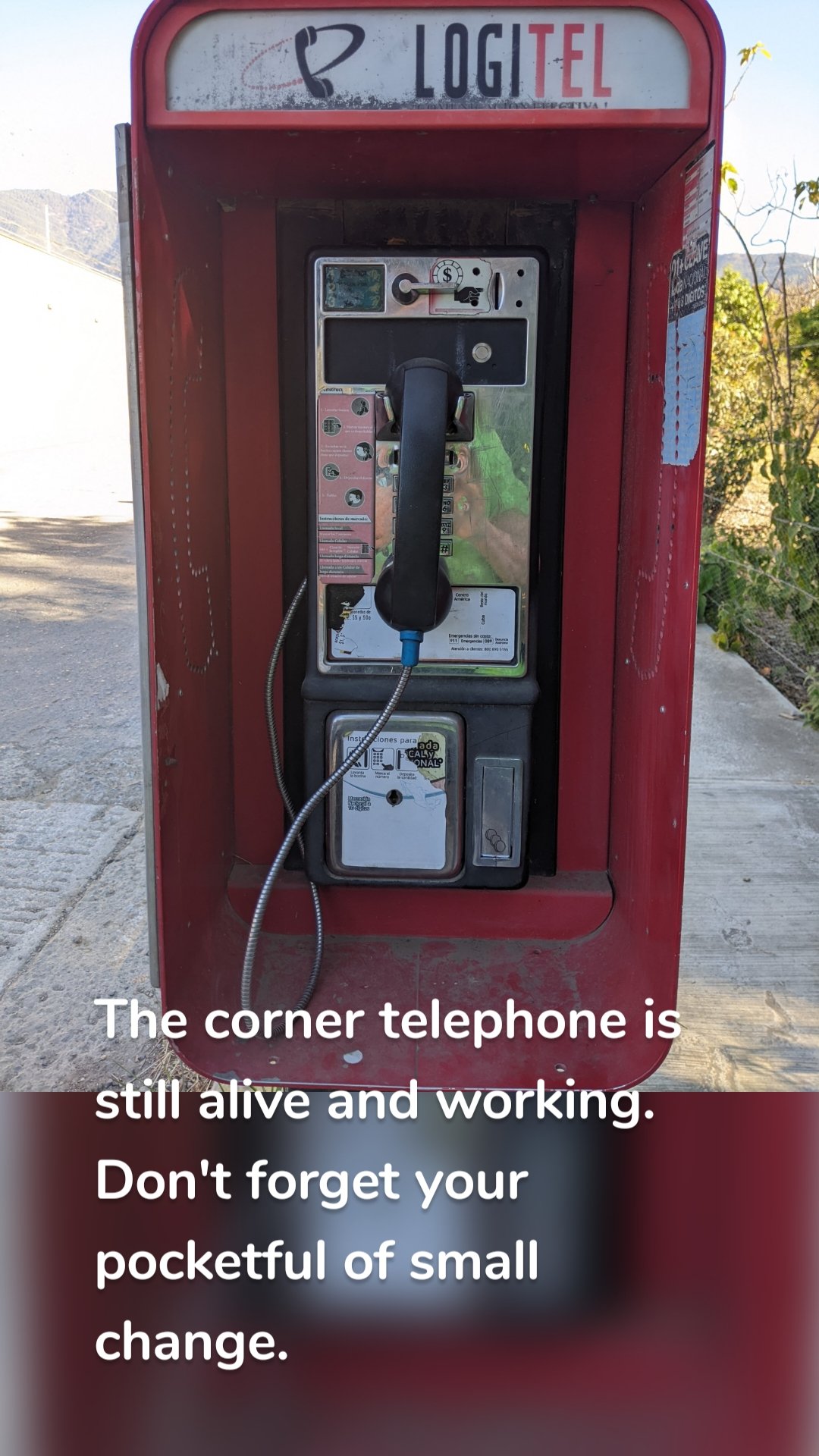
| Name | Logitel Private Payphone Coin phones |
| Date | Late 1990s. |
| Manufacturer | Unknown, possibly Protel |


0
0
0
0
0
0
0
8/22/2020 9:41:23 PM
0
1
0
0
0
0
0
0
0
1
0
583
266
Development of the Logitel Private Payphone
Logitel was one of several private public telephone operators that emerged in Mexico after the country’s telecommunications market was progressively liberalised during the 1990s. Rather than operating the nationwide network like Telmex, companies such as Logitel focused on installing and managing independently operated payphones in busy urban areas, shopping precincts, transport hubs and neighbourhood streets. Their distinctive branding and kiosks became a familiar sight in many Mexican cities during the late 1990s and early 2000s.
Logitel’s payphones typically used robust, vandal-resistant enclosures manufactured in the USA, housing coin-operated telephones produced by specialist manufacturers such as Protel or Elcotel. The phones accepted Mexican coins and, on some installations, could also support prepaid calling cards or operator services. Their stainless-steel fascias and heavy-duty handsets were designed to withstand intensive public use while remaining relatively inexpensive to maintain.
Unlike Telmex’s iconic blue LADA public telephones, Logitel competed by installing its own branded booths, often painted white or red and prominently displaying the company’s logo. Many installations also carried advertising panels on their sides, generating additional revenue while helping offset the costs of operating the network. It was common to see Logitel phones standing alongside those of competitors such as Monedas S.A., Cambifón and Megacable, reflecting the increasingly competitive payphone market that developed after deregulation.
As mobile phone ownership expanded rapidly during the 2000s, demand for public telephones declined sharply. Many private operators disappeared, and thousands of payphones were removed. Nevertheless, a small number of Logitel payphones remain in service today, particularly in rural communities and lower-income neighbourhoods where reliable mobile coverage or personal phone ownership is less common. These surviving telephones provide a tangible reminder of Mexico’s brief but vibrant era of competing private payphone operators.
Leave a Reply