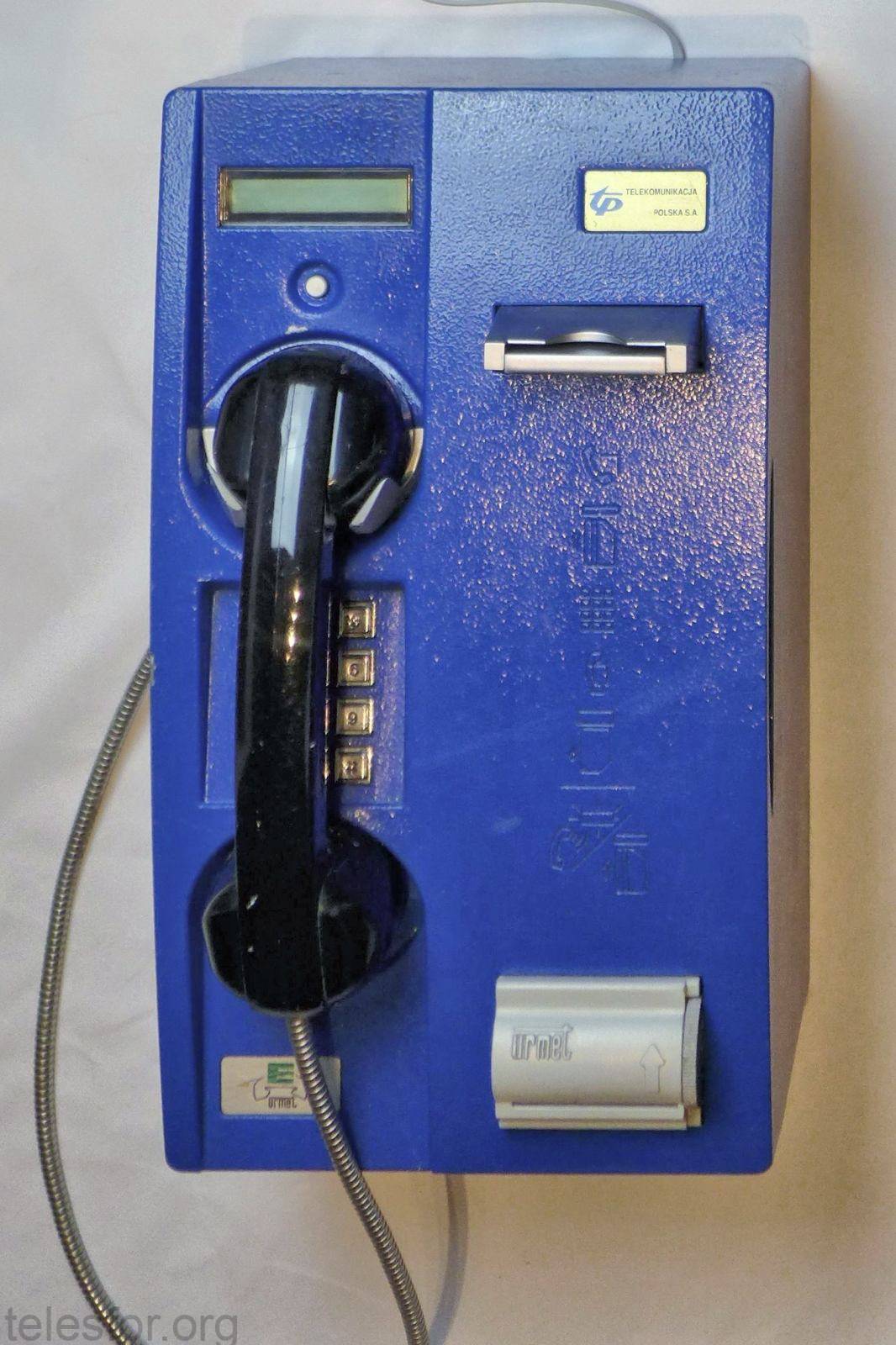
| Name | Urmet TSP-91 Blue |
| Date | 1991 |
| Manufacturer | Urmet (Italy) |
| Credit | For information and images on Polish payphones, special thanks to our friends at https://telesfor.org/ |
Urmet TSP-91 Blue Polish Payphone
The Urmet TSP-91 was the distinctive blue magnetic-card payphone that came to symbolise Polish public telephony during the 1990s. In 1991, Telekomunikacja Polska tested systems from GPT, Landis & Gyr, Alcatel and Italian manufacturer Urmet, ultimately selecting the latter. The first Urmet machines appeared in Częstochowa during World Youth Day in August 1991, followed by nationwide deployment from 1992.
The TSP-91 used prepaid magnetic-stripe telephone cards, commonly containing 25, 50 or 100 charging units. Its rugged blue aluminium housing contained surprisingly sophisticated electronics, including a Motorola 68HC11 processor, LCD display, keypad and motorised card reader. The machine was powered directly from the telephone line.
An important feature was connection to Urmet’s C90 Supervision Centre. Individual payphones could automatically report faults, tampering, casing openings and usage statistics, while receiving updated operating information remotely.
The machines nevertheless became favourite targets of Poland’s 1990s “phreaking” culture. Users discovered numerous methods of obtaining free calls or copying magnetic cards, prompting repeated software and hardware modifications. Vandalism and card theft also led to changes such as a roller-operated card outlet.
The blue Urmets were gradually replaced by newer chip-card payphones, with most withdrawn in 2004 and the last surviving examples remaining operational until 2005.


Leave a Reply