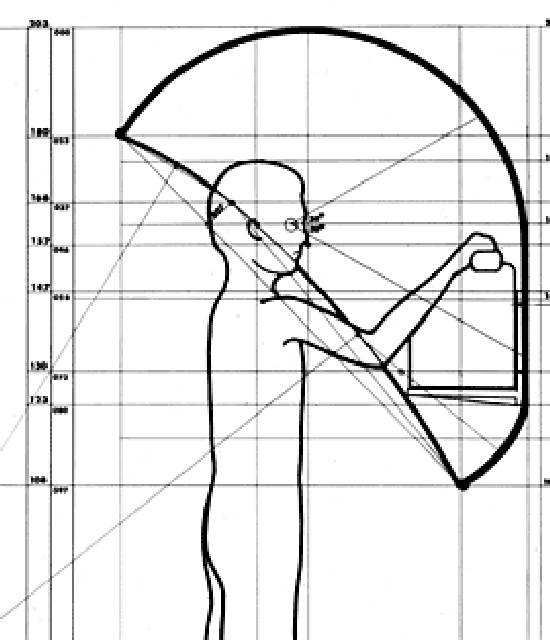
| Name | Brazilian Phone Booths Orelhão shelters |
| Date | mid 1990s |
| Manufacturer | Icatel |
| Credit | With thanks to- https://acervo.institutofuturos.org.br/ Images copyright Musehum, Museum of Communications and Humanities (Brazilian Telecommunications Museum) |


Above- the ICATEL TP-102
Development of Orelhão shelters
Brazil’s telephone shelters evolved from indoor facilities into distinctive street designs. During the 1920s, semipublic telephones operated inside businesses. CTB introduced prepaid public telephones in Santos in March 1934; Rio’s Galeria Cruzeiro received a public telephone post in 1935. Later facilities included airports, shopping districts and bus terminals.
In 1971, CTB experimented with cylindrical booths, including fibreglass and acrylic examples in São Paulo. Fragility, vandalism and poor public acceptance undermined these trials.
Architect Chu Ming Silveira developed three alternatives: small acrylic Orelhinha shelters for interiors, transparent Concha shelters for partly open locations, including petrol stations, and fibreglass Orelhão shelters for streets. Orange Orelhões debuted in Rio on 20 January 1972 and São Paulo on 25 January, subsequently spreading nationally and overseas.
In April 1980, Telesp piloted concrete booths incorporating clear tempered glass in São Paulo, Santos, Guarujá, São Vicente and Campinas, subsequently extending them statewide.
Vila Prudente received a community telephone capable of receiving calls in August 1982. Card telephones debuted in 1992. Telefónica introduced lime-green shelters in November 1998 and European-imported telephone totens in 1999. Indoor instruments and external card readers followed. In 2003, a more comfortable indoor cabin appeared, allowing payment after calls, according to the Santos account.
Sources: Novo Milênio’s Santos history and Chu Ming Silveira’s design archive.
https://musecom.com.br/cabines-telefonicas/


Above- interesting stumpy card phone version with no coin box area

Leave a Reply