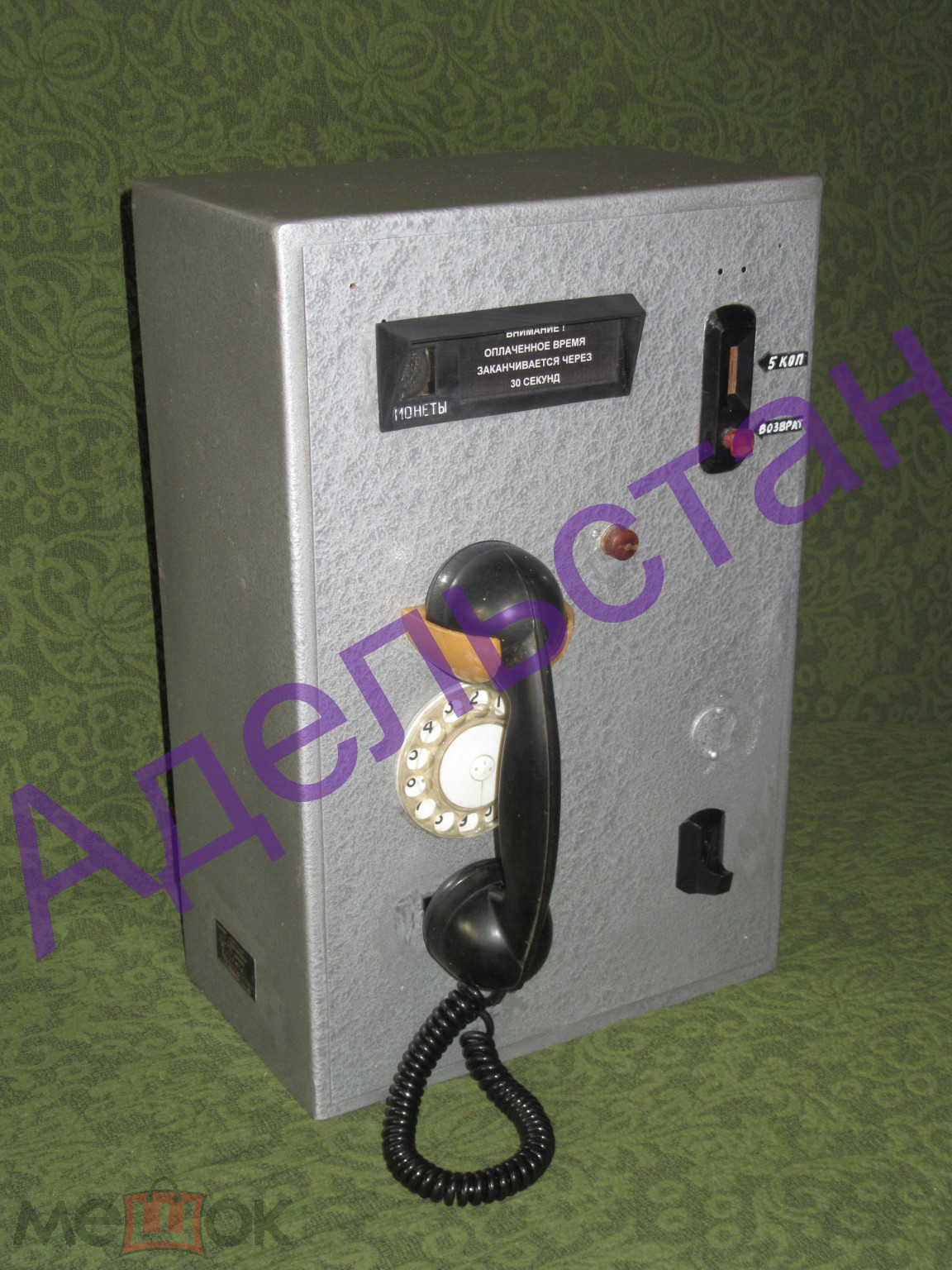
| Name | MTA-15 Long-Distance Payphone |
| Date | late 1960s and 1970s. |
| Manufacturer | Kaunas Promsvyaz experimental factory in Lithuania |
| Credit | Image with special thanks to George Kirko. Information below with thanks to the Moscow payphone museum- https://amt69.ru/ |
| Link- manufacturing details (in Russian) | https://ru.djvu.online/file/F4WdMzw54DOcU?utm |

Above- The MTA-15 Long-Distance Payphone. Note- the brass instruction plaque may be a later addition.
Soviet MTA-15 Long-Distance Payphone (c. 1960s–1970s)
The MTA-15 (Mezhdugorodny Taksofon Avtomatichesky) was a Soviet automatic long-distance payphone manufactured at the Kaunas Promsvyaz experimental factory in Lithuania during the late 1960s and 1970s.
Unlike the familiar Soviet AMT-47 and AMT-69 local payphones, which accepted 2-kopek coins, the MTA-15 was designed for intercity telephone calls. It accepted 15-kopek coins and incorporated a mechanism for returning unused money.
The telephone featured a rotary dial, substantial metal housing and an illuminated numerical display, reportedly using gas-discharge technology to indicate the remaining credit. A warning appeared approximately 30 seconds before the available calling time expired. The equipment was designed for operation with a 130-volt AC supply.
MTA-15 telephones were installed in locations such as post offices, railway stations and long-distance telephone offices, where customers could make calls to other Soviet cities.
The model reportedly appears in the 1982 Soviet film Station for Two, during a railway-station telephone scene.
Surviving examples are considered uncommon by collectors. A later version, the MTA-15-2, appeared during the 1980s.


Leave a Reply