| Name | Singapore Phone Booths |
| Date | 1970-2020 |
| Manufacturer | Various |


Singapore Phone Booths
Singapore’s public telephone booths evolved considerably from the 1960s onwards, reflecting the country’s rapid urbanisation and expanding telecommunications network. Early installations included relatively simple timber or metal cabinets serving kampongs (villages), roadside locations and neighbourhood shops.
During the 1970s and 1980s, the development of high-rise public housing, new towns, shopping centres and transport infrastructure created an increasing need for conveniently located public telephones.

By November 1975, the Telecommunications Authority of Singapore (TAS) had installed 1,430 public telephones at a cost of S$3 million. In 1977, waiting periods for residential telephone connections reached 18 months in some districts, prompting a programme to provide at least one public telephone at ground level in every HDB residential block. Authorities also planned to double public telephone density from seven to fourteen per square kilometre. nas.gov.sg+1
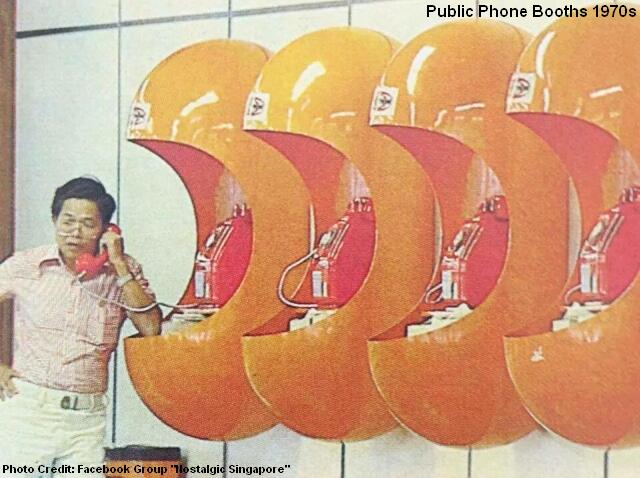
The 1970s saw distinctive orange moulded telephone hoods, followed by red wall-mounted and freestanding cabinets. Open-fronted designs provided ventilation and partial protection from tropical weather.
By 1987, Singapore had approximately 20,000 public telephones. Following the introduction of cardphones in 1985, larger banks of telephones appeared, including distinctive curved shelters with red-and-white striped canopies. World Bank+1


Later Singapore Telecom and SingTel installations featured rectangular glazed booths, circular enclosures, illuminated signage and advertising panels. These gradually disappeared following the widespread adoption of mobile telephones.


Below- note the “pacman” style orange wall enclosures. These ones shown hold the Japanese red Tamura payphones (the only example I have of these in use in Singapore, but I suspect that there were many more!

Leave a Reply