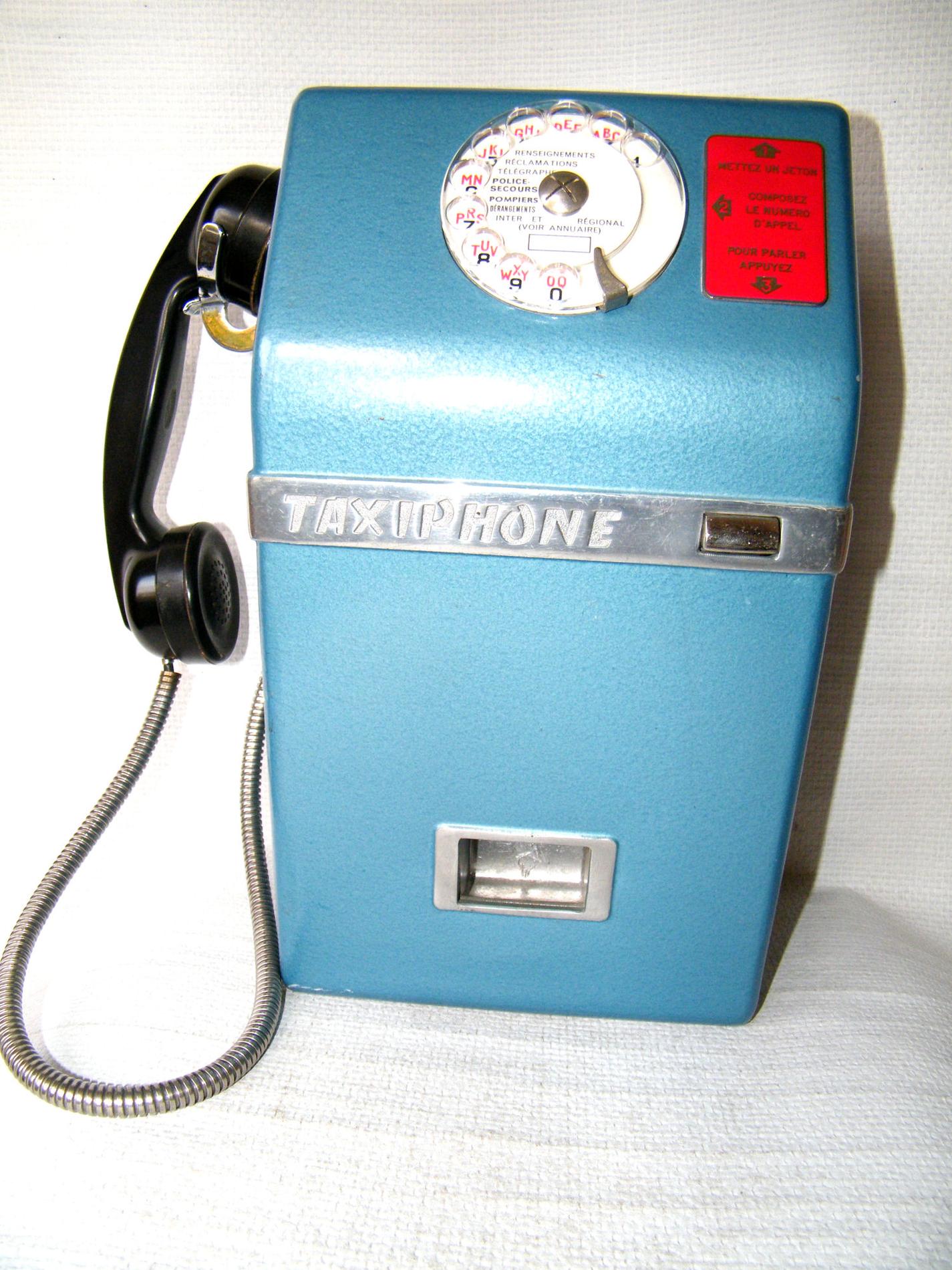
| Name | Type 100 200 Urbain 57 |
| Date | 1957 |
| Manufacturer | Compagnie le Taxiphone for PTT |


Development of the Type 100 Urbain 57
| The Type 100 urbain automatic payphone, introduced in 1957, was a coin-operated public telephone designed by Lagriffoul for use with 20-centime coins. Classified under the French PTT nomenclature number 277-100, it was equipped with a telephone circuit identical to that used in the approved U43 subscriber sets of the period, ensuring technical consistency across the national network. Installed widely in post offices and public booths, the Type 100 represented a standardised and robust solution for urban telephony in post-war France. Its design reflected the growing demand for accessible, self-service communication in both civic and commercial settings. During the 1970s, the model underwent a significant internal modernisation. While its outward appearance and nomenclature remained unchanged, the internal circuitry was updated to match that of the newer S63 non-regulated telephone sets, aligning it with contemporary technological standards and improving reliability. Production and delivery of new units continued until 1976, marking nearly two decades of service. In total, approximately 25,000 Type 100 Taxiphones were installed across France, highlighting its importance as a key component of the country’s public telephone infrastructure during a period of rapid social and technological change. The Type 200 urbain automatic payphone, introduced in 1957, was a token-operated variant of the French Taxiphone system designed for urban use. Classified under PTT nomenclature number 277-200, it was equipped with a telephone circuit identical to that of the approved U43 subscriber sets, ensuring compatibility and reliability within the national network. In practical terms, the Type 200 was essentially identical to the Type 100 model in both form and function, with the key distinction being its use of tokens rather than coins. This made it particularly suitable for controlled environments where token distribution could be managed, such as transport systems and institutional settings. The model was supplied new until 1969, representing over a decade of deployment during a period of expanding public telephony in France. Approximately 5,000 Type 200 Taxiphones were installed, primarily within post offices, where they complemented other public communication services. In addition, the Type 200 saw extensive use within the Paris Métro, where its token-based operation aligned well with the transit system’s infrastructure and passenger flow. Its presence in such high-traffic environments underscores its practical design and adaptability to urban mobility contexts. |
| More info- https://www.publiphonie.fr/ |

Above images- kiosks showing the Type 100 urbain automatic payphone. Source- Orange-DANP collection. More information on the images- https://www.publiphonie.fr/page-562f584bb7200.html
Leave a Reply