| Name | Amper–Siemens-Elasa TMI/TPM payphone |
| Date | 1990s and early 2000s. |
| Manufacturer | manufactured in Spain by Amper–Siemens-Elasa |
| Notes | This reinforced unit housing was first developed for the Australian market and is still in widespread use there. Note that this model was intended for card use only and there is no coin safe (and the coin return area is blanked off). |
| Links | Amper TMI-CB in use in Spain Amper TMI-CB in use in Berlin Amper in use in Australia Amper TMI used in South Africa |
| Additional information at Moscow based payphone museum website- https://amt69.ru/ |


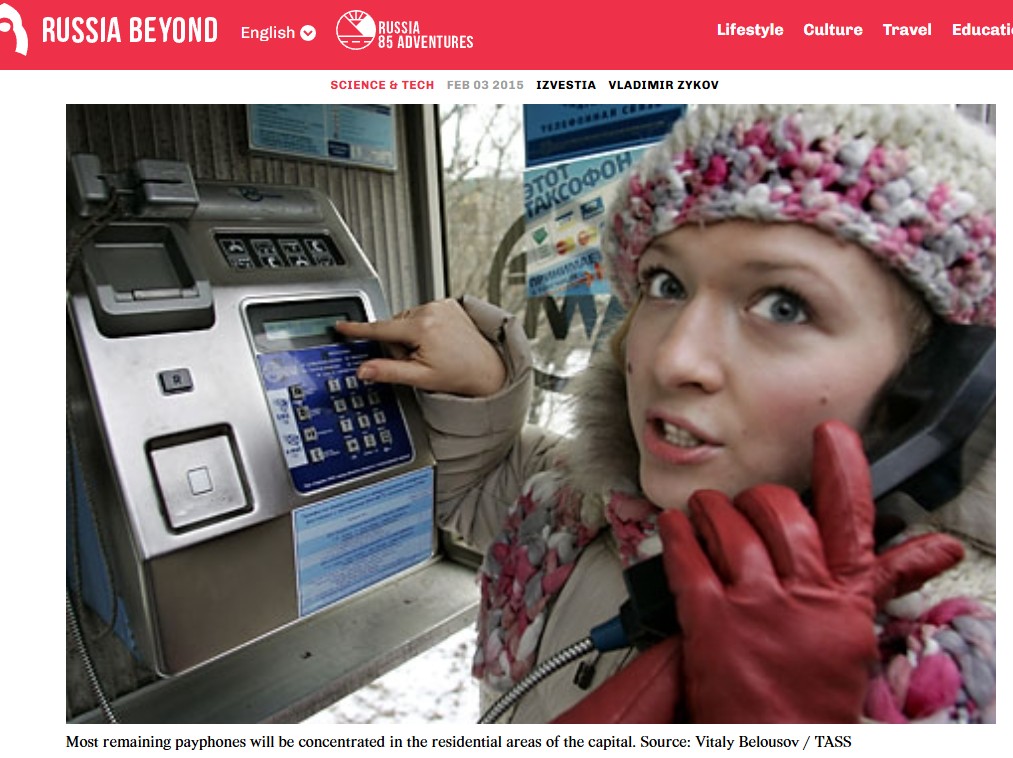
Above- images of the TMI-PC/S payphone. Note that the example on the left is in the usual stainless steel finish. The other units have been powdercoated red for the Russian market.
Amper–Siemens-Elasa TMI/TPM payphone in Russia
The red electronic payphone was manufactured in Spain by Amper–Siemens-Elasa, a partnership combining Amper’s public-telephone business with Siemens-Elasa technology. The design belongs to the same broad family of Amper electronic payphones exported to numerous countries during the 1990s and early 2000s. Amper and Siemens-Elasa had begun international cooperation by 1996; in 1998 their agreement was renewed specifically including cooperation in Russia through the Russian company Telur. Around 70,000 public telephones had already been exported under their collaboration.
The precise Russian designation is a little complicated. Russian certification records identify Amper-Siemens-Elasa TPM-PC/S and TPM-MM/P modular card-payphone tariff units. Both were manufactured in Spain and formally entered the Russian State Register in 2002, with certification valid until August 2007.
The telephone was substantially more sophisticated than the old Soviet AMT-69 generation. It incorporated a numeric keypad, LCD information display and electronic card reader, with the Russian TPM-PC/S specifically designed to debit stored tariff units according to call duration and tariff zone. The card system complied with ISO 7816 smartcard standards.
Your photographs also show how distinctive the Russian installation became: the bright red casing, contrasting blue/grey handset, and compact corrugated-metal street shelter marked ТАКСОФОН (Taksofon — Payphone). Some carry Россвязь / Universal Communications Service markings, suggesting that these machines remained in the public network well into the period of Russia’s universal-service programme.
Interestingly, Amper-Siemens-Elasa continued supplying Moscow. In 2003, MGTS planned an experimental network of 60 Web-payphones, with the Spanish company responsible for manufacture and supply.
Name: Amper–Siemens-Elasa TMI/TPM electronic payphone
Variant: TMI-PCS / closely related TPM-PC/S Russian version
Manufacturer: Amper–Siemens-Elasa
Country of manufacture: Spain
Russian deployment: late 1990s–2000s
Payment: electronic telephone/smartcard
Features: LCD display, keypad, ISO 7816 card processing, electronic tariff calculation
Typical installation: freestanding Russian metal Taksofon shelter


Above- the Amper in phone boxes
Russia’s Universal Communications Service programme
Russia’s Universal Communications Service programme (Универсальные услуги связи) still exists in 2026, and surprisingly, public payphones remain explicitly part of it.
Russia’s current Federal Law No. 126-FZ On Communications, updated through 2026, still contains an entire chapter governing Universal Communications Services. The statutory definition includes telephone services delivered through collective-access equipment, specifically mentioning таксофоны (payphones) alongside multifunction terminals and information kiosks.
Even more convincingly, Russia introduced new communications-licensing regulations effective 1 March 2026, and these still contain a separate category for “local telephone communication services using payphones.” Those regulations are scheduled to remain in force until 2032.
The programme has, however, evolved enormously from what your photographs show. Originally it was heavily associated with providing a basic telephone connection to small and remote settlements. Today universal service encompasses internet/data access and mobile communications access as well as public telephony.
So the Россвязь – Универсальные услуги связи lettering visible on your red Amper-Siemens payphone is significant. That machine wasn’t simply an ordinary commercial street phone: by that stage it was operating as part of Russia’s state-backed effort to guarantee basic communications access.
And there is an interesting historical twist for your payphone research: Russia has retained public payphones in its legal universal-service framework long after their practical importance collapsed. Current regulations even continue to specify tariff regulation for telephone calls made from payphones.
Leave a Reply