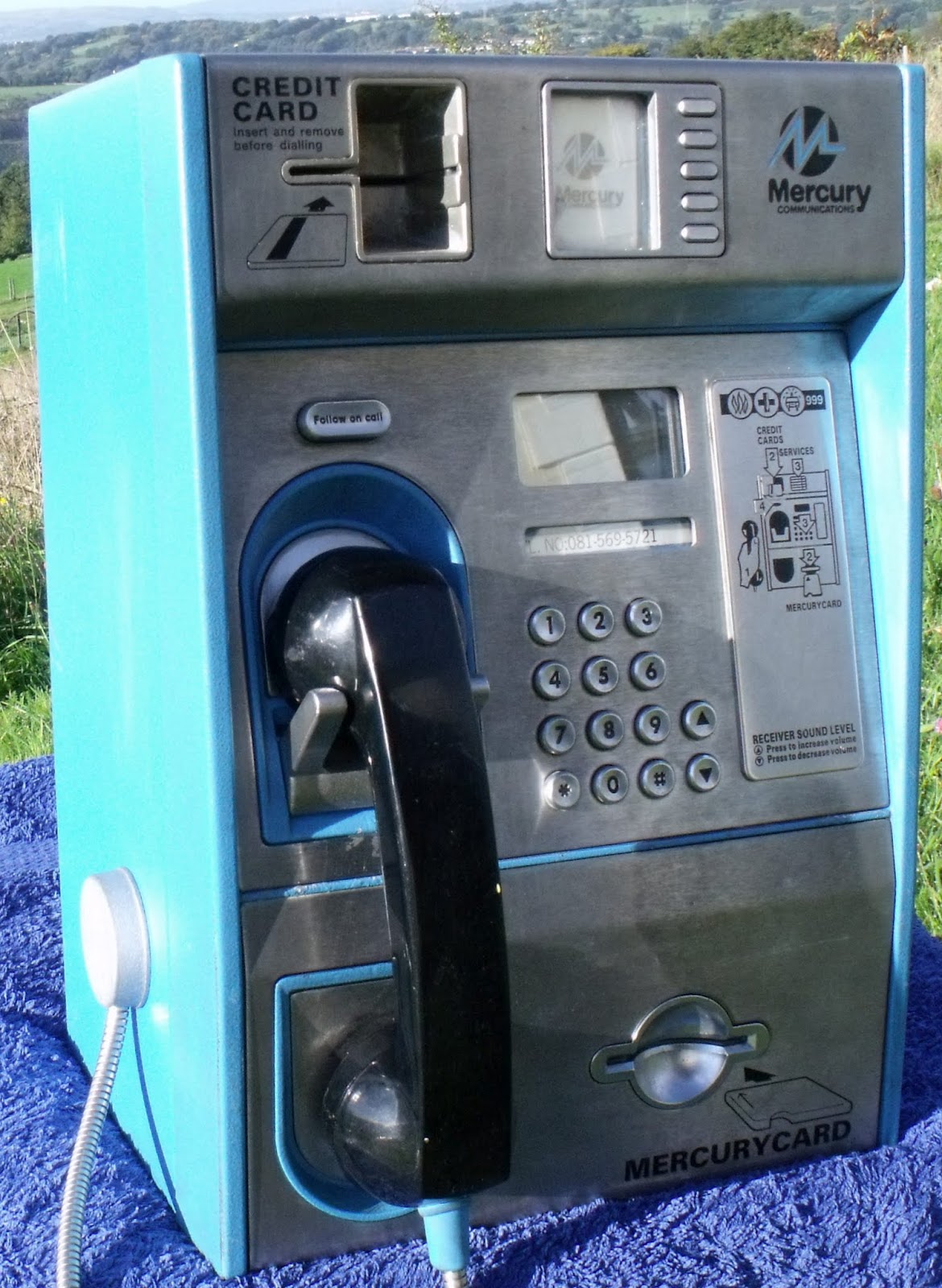
| Name | Mercury Card Phone |
| Date | 1990. Mercury Communications Ltd was established in the UK in 1981 as a competitor to British Telecom (BT) |
| Manufacturer | GPT Telecoms Products. A division of GEC PLESSEY Telecommunications Limited. There is some connection to Telkor Payphones (TMSA – Telephone Manufacturers of South Africa Ltd.) |
| Usage | in Mercury booths |

Development of the Mercury Card Phone
| Mercury Payphones (UK): Overview and Deployment Background: Mercury Communications Ltd was established in the UK in 1981 as a competitor to British Telecom (BT), following the liberalisation of the UK telecommunications market. It was a subsidiary of Cable & Wireless and aimed to introduce competition in long-distance and public telephone services. Payphone Deployment: Introduction of Mercury Payphones: Mercury began deploying public payphones in the mid-1980s. These were distinguishable by their sleek, modern design (often grey or silver with purple and white signage) and the iconic Mercury logo — a stylised figure of the Roman god Mercury with wings on his helmet. Technology: Mercury phones often used card-based systems instead of coins, relying on pre-paid Mercuryphone cards. This was a notable distinction from BT’s dominant coin-based infrastructure. Numbers: By the early 1990s, Mercury had deployed an estimated 3,000–4,000 payphones across the UK. This was a relatively small number compared to BT’s vast network, but significant for a private challenger. Locations: Mercury targeted urban centres with high pedestrian traffic, particularly: London Manchester Birmingham Bristol Glasgow Near train stations, airports, shopping centres, and business hubs Mercury booths were also seen at universities, tourist hotspots, and within privately managed sites like shopping malls, often where BT did not have exclusivity. Design and Appearance: Mercury phone boxes were notably different from BT’s red K6 kiosks or the more modern silver/grey styles: Sleek, modular steel or aluminium cabinets Transparent glass sides Card-reader slot (no coin mechanism) Branding with purple Mercury signage and logos Cultural Impact: Mercury payphones were seen as symbols of modernisation and competition in the Thatcher-era UK. In pop culture, they were sometimes featured in news articles and documentaries discussing telecom privatisation. Their distinctive appearance occasionally featured in film or TV set in the late ’80s and early ’90s, especially in urban scenes, but they were never as iconic as the BT red boxes. Decline and Phase-Out: Mercury struggled to gain widespread market share in public payphones, mainly due to BT’s dominance and extensive network. In the mid-1990s, Mercury merged with NTL (now part of Virgin Media), and public payphone operations were gradually wound down. Most Mercury booths were removed or rebranded by the late 1990s. Their unique card format and maintenance costs were factors in their removal. Surviving Examples: A few decommissioned Mercury payphone boxes were preserved by collectors or museums. Occasionally, defunct booths are spotted in disused areas or stored privately. |
| UK-PPR05 Mercury Card Phone Plessey Mercury Card Phone Model No. PP5043 Approval Number: S/3343/3/K/601442 Manufacture code : PML GPT Telecoms Products. A division of GEC PLESSEY Telecommunications Limited. Made in Great Britain Circa 1990 |
Leave a Reply