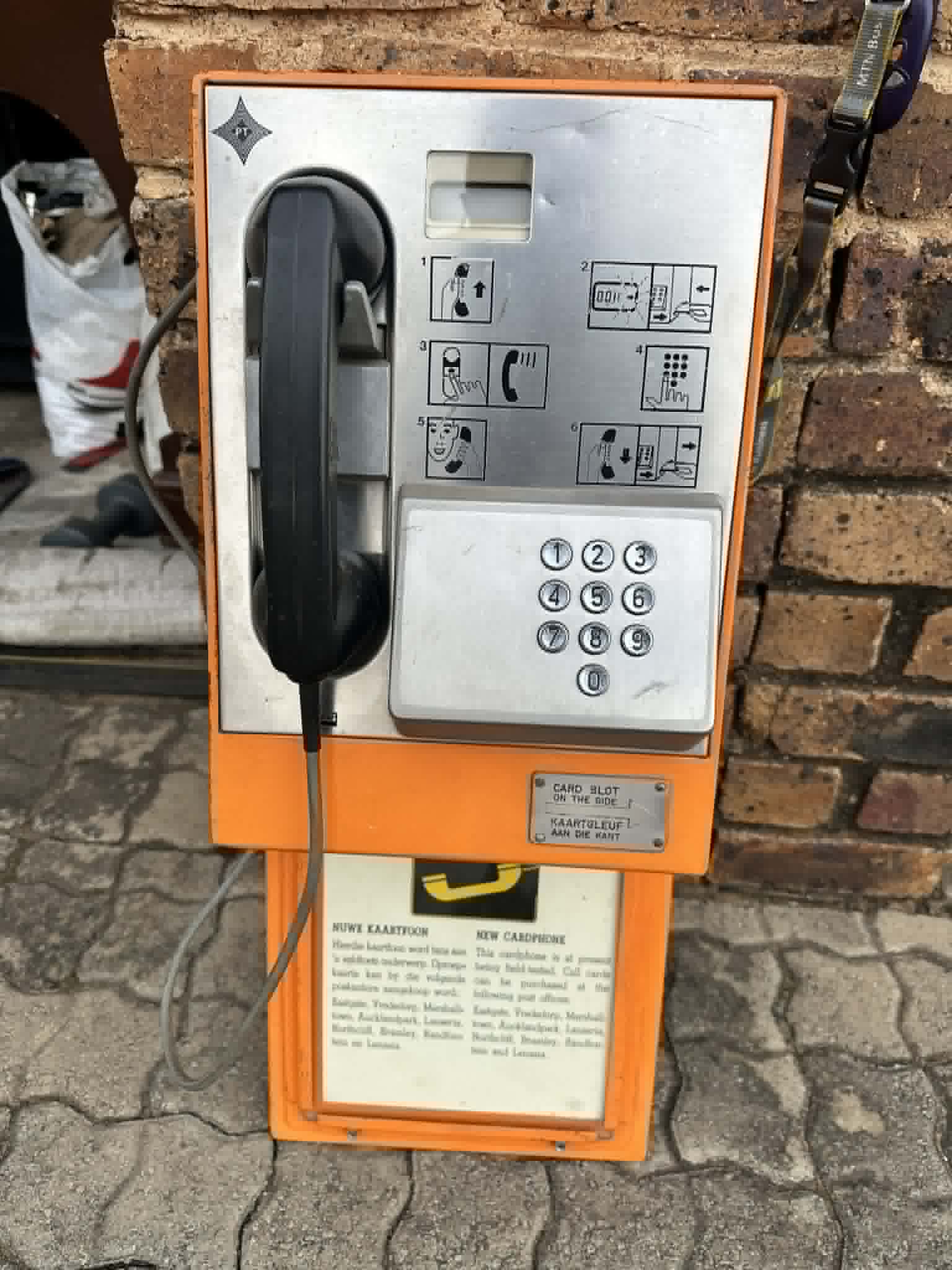
| Name | ORANGE CARDPHONE |
| Date | c. 1988 |
| Manufacturer | Telkor Payphones (TMSA – Telephone Manufacturers of South Africa Ltd.). Based on the Danish GN 203 Telematic payphone |


Information and images with special thanks to Mark Van Der Heever and Peter Van Almelo
Development of the ORANGE CARDPHONE (1988)
Introduced in March 1988, the Orange Cardphone was South Africa’s first public telephone designed to operate with prepaid magnetic-stripe calling cards rather than coins. It marked a major technological milestone in the country’s public telecommunications network, providing faster, cleaner and more reliable operation while eliminating many of the maintenance problems associated with coin collection and vandalism. The first market trial used two magnetic cards, valued at R5 and R10, issued by the Department of Posts and Telecommunications (P&T).
Manufactured by Telkor (TMSA), the cardphone retained the robust electronic platform developed for the successful TSA prepayment coinphones but incorporated a side-mounted magnetic card reader. Finished in the Department’s distinctive orange corporate colour, it featured an electronic display, push-button keypad and multilingual operating instructions. Field trials were conducted at selected post offices and public locations around Johannesburg, including Eastgate, Vrededorp, Marshalltown, Auckland Park, Lanseria, Northcliff, Bramley, Randfontein and Lenasia, where customers could also purchase the new call cards.
Following the creation of Telkom SA Ltd in October 1991, the corporate colours changed to blue and green and a redesigned cardphone was introduced with a front-loading card reader compatible with newer chip-card technology. Although eventually superseded by later Telkor and Plessey models, the Orange Cardphone represents the beginning of South Africa’s transition from coin-operated telephones to electronic card-based public telephony.

The South African Orange Cardphone and later Telkor GPT cardphones appear to have been derived from the British GPT Telecom Products public telephone platform. While adapted and manufactured by Telkor (TMSA) for South African conditions, the striking similarity in cabinet design, component layout and operating features strongly suggests a technology transfer or licensing agreement between GPT Telecom Products and Telkor during the late 1980s. Direct documentary evidence of the agreement has yet to be located, but the physical similarities and Telkom’s later reference to a “GPT type cardphone” provide compelling circumstantial evidence.


Leave a Reply