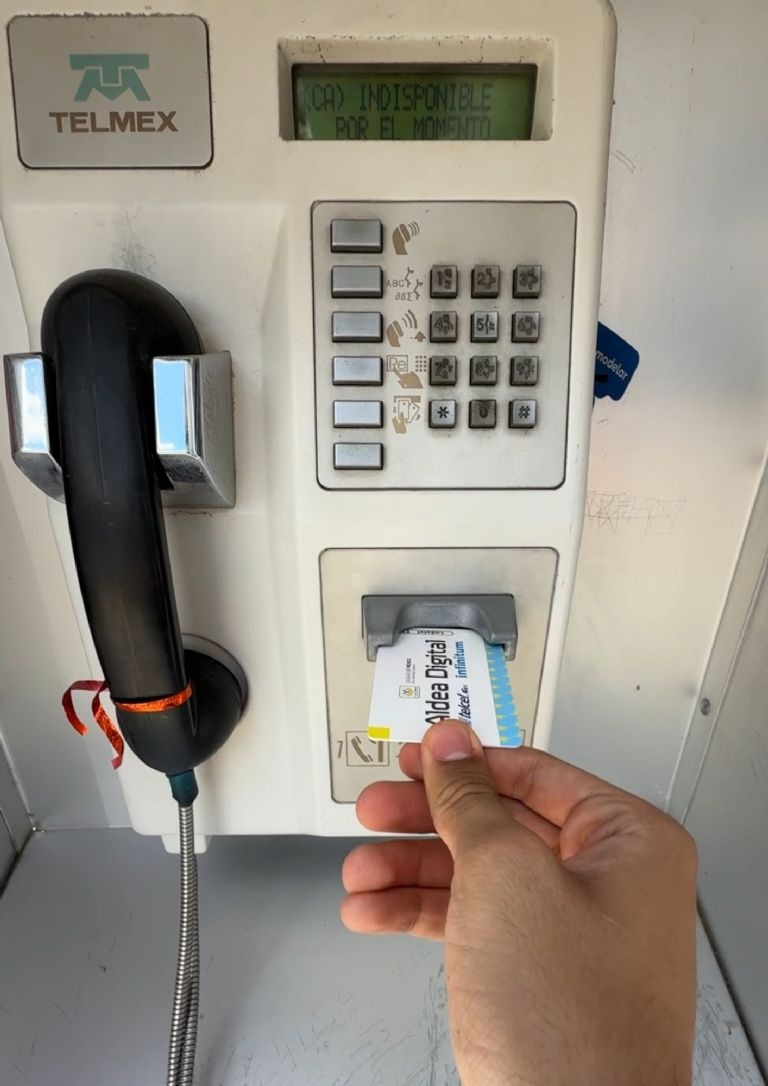
| Name | Telmex PLESSEY MIDORI Anritsu Card Payphone |
| Date | Late 1990s |
| Manufacturer | Anritsu of Japan. The card system, however, was influenced by the magnetic-card technology pioneered by Plessey UK, later GEC Plessey Telecommunications (GPT). |
| Link | Anritsu Card Payphone used in Australia |


Development of the PLESSEY MIDORI Anritsu Card Payphone
The TELMEX Plessey Midori card payphone represented one of the final stages in the evolution of Mexico’s public telephone network before the widespread adoption of mobile phones. Introduced during the 1990s, the unit replaced many earlier coin-operated telephones with a cleaner, more secure prepaid card system. It formed part of TELMEX’s nationwide programme to modernise public communications while reducing the maintenance costs associated with collecting coins and repairing vandalised cash mechanisms.
The telephone itself was manufactured by Anritsu of Japan, based on technology originally developed for the Japanese market. The card system, however, was influenced by the magnetic-card technology pioneered by Plessey UK, later GEC Plessey Telecommunications (GPT). During the late 1980s and early 1990s, Plessey conducted international trials of its magnetic phonecard system in numerous countries, including Mexico. The company’s magnetic-card technology demonstrated significant advantages over conventional coin telephones, reducing theft, simplifying accounting and allowing telephone operators to introduce flexible prepaid calling products.
In Mexico, these payphones accepted Lada Digital magnetic prepaid cards, which became a familiar sight throughout the country. Users inserted the card into the reader beneath the keypad, with the remaining credit stored magnetically on the card itself. The LCD display provided instructions, call status and credit information. The keypad also incorporated dedicated service buttons for operator assistance and emergency services.
The phone was typically installed inside a robust aluminium hood mounted on a steel pedestal. This simple enclosure provided protection from sun and rain while remaining inexpensive to manufacture and easy to maintain. Many cabinets also carried advertising for Infinitum, TELMEX’s broadband internet service, illustrating how the company used its extensive payphone network as an advertising platform during the 2000s and 2010s.
Although mobile phones caused a dramatic decline in public telephone usage, thousands of these card payphones survived well into the 2020s. Many remain standing across Mexican cities, often abandoned or vandalised, serving as distinctive reminders of an era when prepaid phonecards were the principal means of affordable public communication. Today, the TELMEX Plessey Midori payphone represents an important transitional technology, bridging the gap between traditional coin-operated telephones and the fully digital, mobile communications age.
Leave a Reply