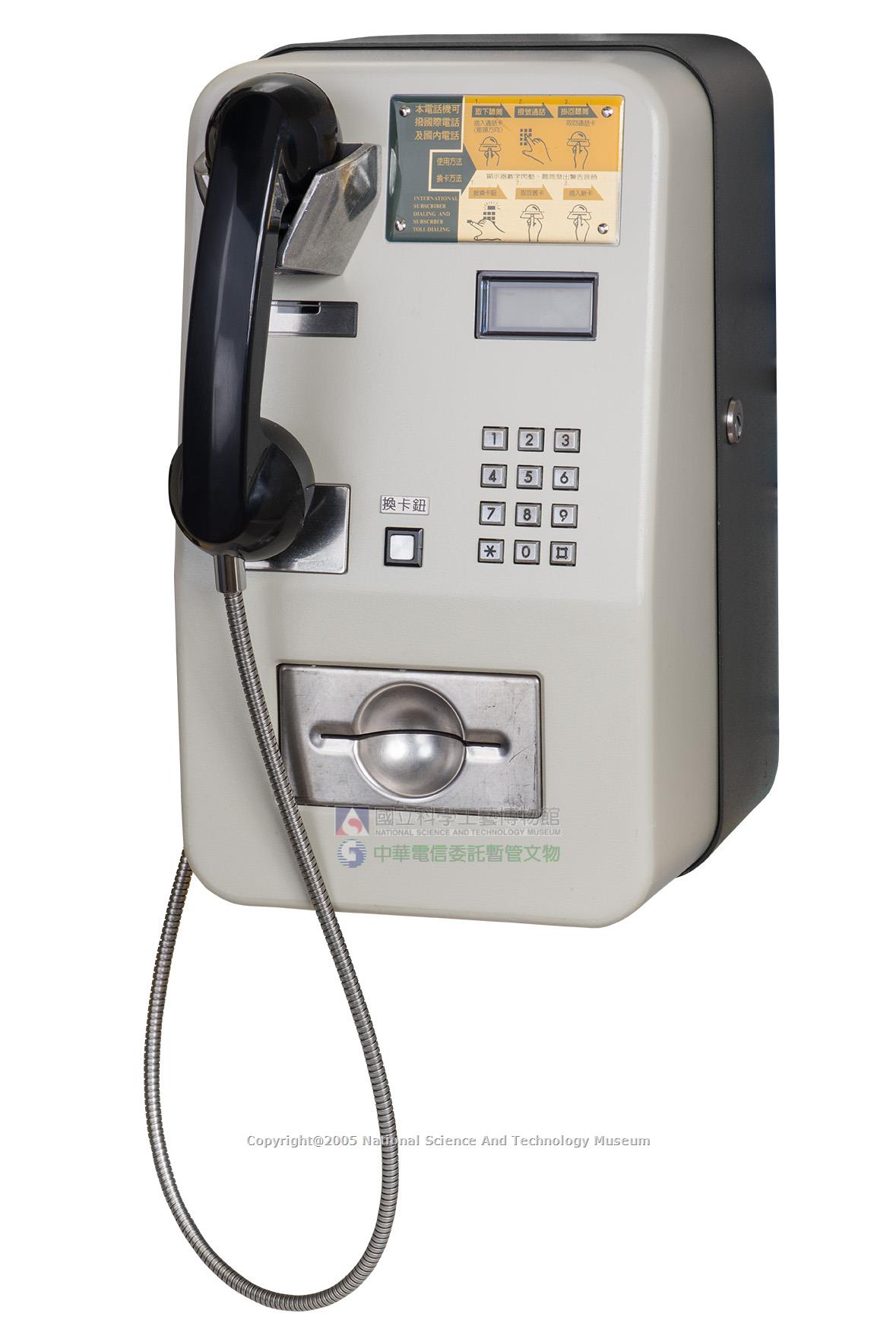
| Name | TK-123 Optical Card Public Telephone |
| Date | 1984 |
| Manufacturer | manufactured by Tongya Telephone Co., Ltd. for the Directorate General of Telecommunications (DGT) This payphone was developed by Tongya and Landis and Gyr (Switzerland) using the L&G optical phonecard technology. |
| Link | Design precedent- French late 70s card phone The British CP-1 card payphone as manufactured by Landis & Gyr Switzerland (identical) |

Development of the Taiwan TK-123 Optical Card Public Telephone
The TK-123 Card Public Telephone (also known as the BTK-123 Optical Card Payphone) marked a major turning point in Taiwan’s public telephone network. Introduced in 1984 by the Directorate General of Telecommunications (DGT), it was Taiwan’s first large-scale prepaid optical phonecard payphone. The system replaced the inconvenience of carrying coins with a durable optical card that stored call credit using an optical value track, making calls faster, cleaner and more secure. The phone accepted local, long-distance and international calls, displayed the remaining credit, reminded users to remove their card, and even allowed card changes during a call. The optical card technology proved highly resistant to fraud because each call permanently altered the card’s optical value strip.
The distinctive industrial design originated with the Swiss company Landis & Gyr, whose optical card technology was introduced into Taiwan in the mid-1980s. Taiwan adopted the system for its rapidly expanding public telephone network, and the BTK-123 became one of the country’s most recognisable payphones. The same basic Landis & Gyr design was subsequently marketed internationally and evolved into the CP1 series, which was widely installed throughout Britain by British Telecom during the late 1980s and 1990s, as well as in many European countries. Although the electronics and software varied between operators, the external styling, handset arrangement and card reader remained unmistakably similar, demonstrating how one successful Swiss design became a de facto international standard for optical card payphones. This international influence makes the TK-123 an important link between Taiwan’s telecommunications history and the wider global evolution of card-operated public telephones.


Leave a Reply