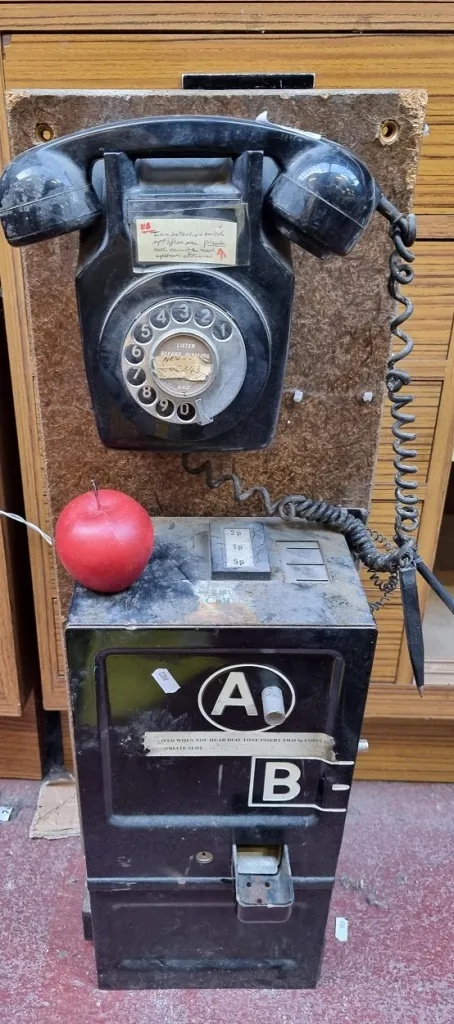
| Name | Irish P&T payphone A/B box (stand alone unit) A/B boxes were used by the Irish P&T as they were not advanced with the introduction of STD. Later versions used the old prepayment boxes but with new style cases. |
| Date | C. 1925 – 1995 |
| Manufacturer | Hall Telephone Co. |
| Link | AB Multi-coin used in the United Kingdom AB MULTI COIN use in Australia AB MULTI COIN use in New Zealand |


Development of A.B. Button Box Multicoin — Ireland
Ireland A/B box (stand alone unit)
The pictures of an A/B box with a 700 type wallphone above are Irish ones. BPO Never used 700 type telephones with A/B boxes. GEC manufactured a version of the Telephone 711 for use with A/B boxes.
The A.B. Button Box Multicoin was a British-designed prepayment payphone system widely used by the Irish telephone service during the mid-20th century. Developed by Hall Telephone Accessories Ltd, later Associated Automation/Elliott Automation, the mechanism was adopted in a number of countries with telephone systems derived from British Post Office practice.
In Ireland, the equipment appears to have been procured for both public call offices and rented installations, including pubs, hotels, railway premises and other businesses. Surviving Irish examples frequently combine the large black A/B coin collector with a conventional rotary telephone mounted above it on a wooden backboard. They were also installed in Irish telephone kiosks, including the distinctive cream-and-green TELEFÓN boxes.
Operation was straightforward. Coins were inserted before or during connection. Once the called party answered, Button A was pressed, committing the coins to the cash compartment and permitting the conversation. If the call failed, Button B returned the deposited money. Operator-assisted trunk calls could require several denominations, with the operator instructing the caller how much to insert before saying “Press Button A”.
Ireland retained A/B equipment remarkably late. Examples remained in pubs and other rented locations into the 1980s and reportedly the early 1990s, long after newer payphone technologies had appeared.
Below- a more recent version (the buttons are triggered electrically).


Leave a Reply